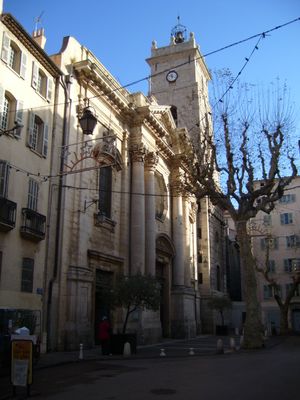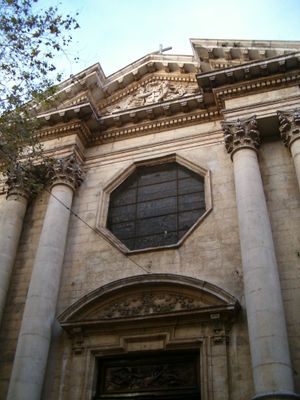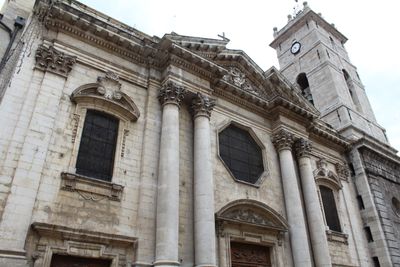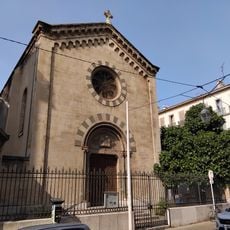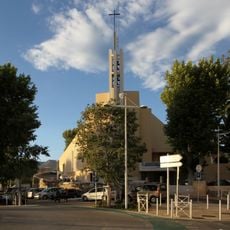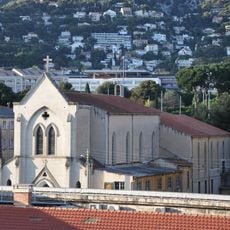
Toulon Cathedral, Romanesque cathedral in Toulon, France.
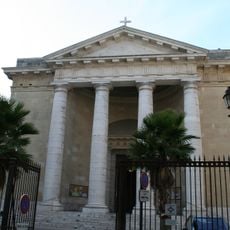
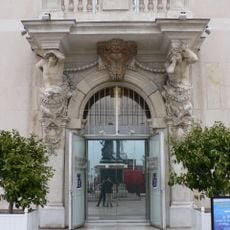
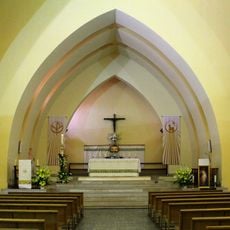
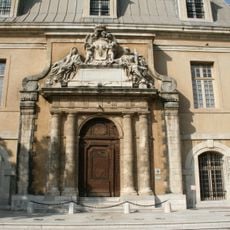
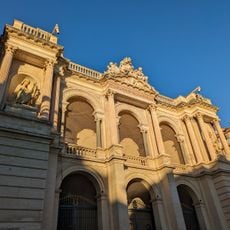
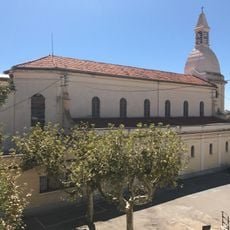
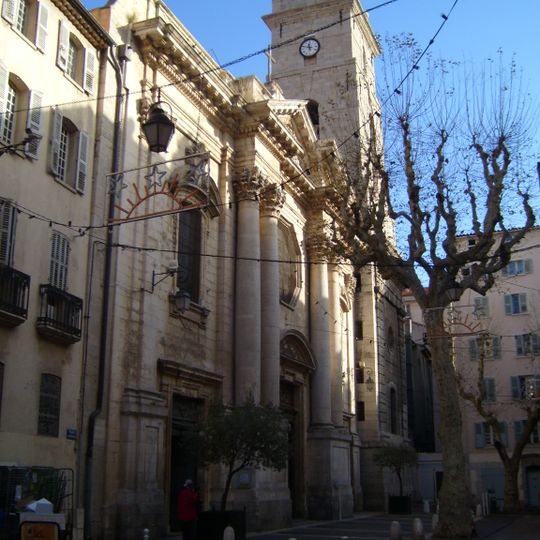
Toulon Cathedral is a Catholic church whose 11th-century Romanesque nave of three unequal vessels and five bays, 50 metres long, was enlarged in 1654–1659 and given a classical facade in 1696–1701 by Albert Duparc. The facade has Corinthian columns and a porch tympanum with angels holding the arms of Toulon, while the 1737–1740 clock tower rises 36 metres. Inside, the choir walls carry 1864 frescoes by Ludovic Bonifay.
The cathedral was founded in 1096 by a local noble returning from the Crusades who wanted to establish a religious center for the city. The building underwent several changes over centuries, eventually receiving its classical exterior during renovations in the late 1600s.
The name "la Seds" comes from the Latin sedis, meaning seat, a reference to the bishop's chair. The cathedral keeps works by Pierre Puget, including L'Annonciation (1650) in the Chapel of the Virgin, and a gilded wooden Virgin by Vian de Pignans (1838). Since 1864 the walls carry frescoes by Ludovic Bonifay, Moses and Elijah and The Twelve Apostles.
The cathedral operates as an active place of worship where visitors can enter and explore the interior at their own pace. Keep in mind that this is a functioning religious space, so visitors should dress and behave respectfully while inside.
The claim that the cathedral became a mosque in the winter of 1543–1544 is disputed: Toulon's 19th-century historians and the cathedral registers, which record about ten baptisms a month during Barbarossa's stay, say nothing of it, and Voltaire wrote that the admiral turned a large house, not the church, into a mosque.
The community of curious travelers
AroundUs brings together thousands of curated places, local tips, and hidden gems, enriched daily by 93,467 contributors worldwide.