Château de Châteaubrun, Medieval castle ruins in Cuzion, France.
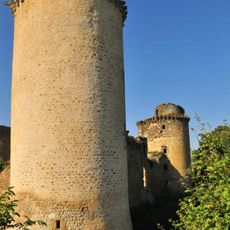
Château de Châteaubrun is a ruined castle on the tip of a spur detached from the Cuzion plateau, overlooking the Creuse, 1.4 km south-southeast of Cuzion in the Indre. Its square seigneurial lodging, dating from the 14th century, was flanked by a round bartizan at each corner and stood in the southern part of the enclosure. In the courtyard rises the keep, a large circular tower of seven levels entered several metres above ground. At the Revolution the site had a moat ringed by a wall with outworks, and a drawbridge led to an ogival double-portcullis gate defended by a tower with machicolations and arrow slits.
Châteaubrun marked the boundary between the châtellenies of Gargilesse and Crozant. The late construction by the Naillac family is documented only from the reign of Philip the Fair (1285–1314), though tradition credits Hugues le Brun, lord of Lusignan and count of La Marche from 1180 to 1208. The castle was listed as a monument historique on 27 March 1926.
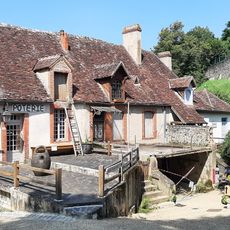
The castle's name is not explained by the sources, which record only that the site marked the boundary between the châtellenies of Gargilesse and Crozant in the Middle Ages. The ruined castle inspired George Sand's novel Le Péché de Monsieur Antoine, part of whose action takes place here. Today sculptor and potter Guy Baudat shows monumental works at the site.
Guided tours organized by the Eguzon Tourist Office run during summer months, making the site accessible for exploration of restoration efforts and architectural details. Wear sturdy footwear since the terrain is uneven and paths wind between scattered stones.
The sculptor and potter Guy Baudat shows monumental works at the castle, which is being restored. The ruins also inspired George Sand's novel Le Péché de Monsieur Antoine, part of whose action takes place here.
The community of curious travelers
AroundUs brings together thousands of curated places, local tips, and hidden gems, enriched daily by 95,245 contributors worldwide.