Château Bel-Air, Historic château in Le Haillan, France
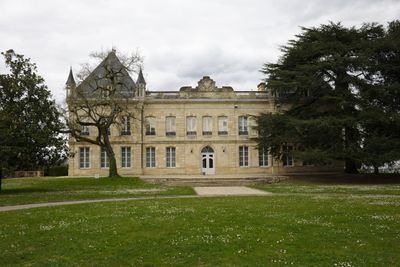
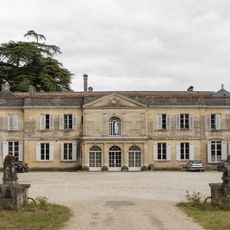
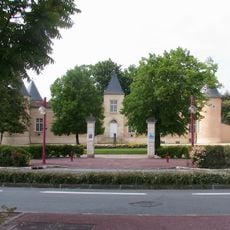
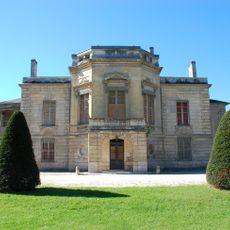
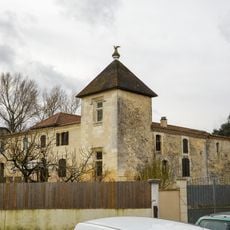
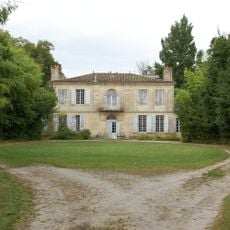
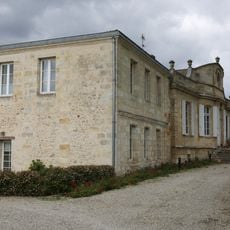
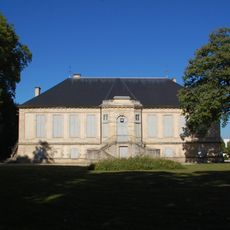
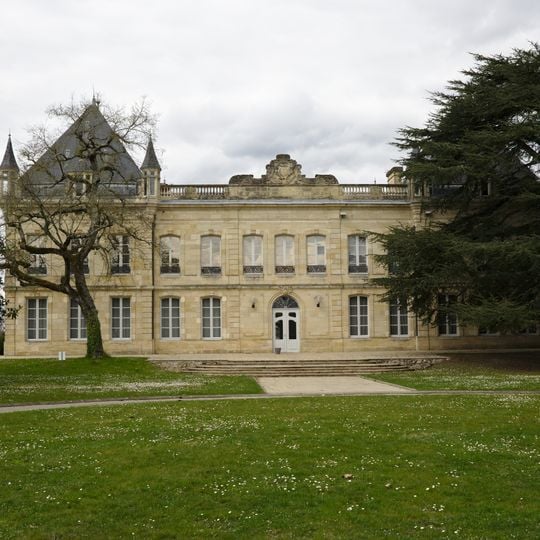
Château Bel-Air is a stone château in Le Haillan, built of pale ashlar with a symmetrical facade, a projecting central entrance bay and steep dark roofs ending in pointed pavilions. Its three levels of windows are separated by a horizontal band, and a carved stone crest tops the central pediment. The building stands within the Girondins de Bordeaux training centre, whose 11 hectares hold nine pitches, two of them synthetic, and a 3 km jogging path through the woods.
A first manor, the bourdieu de Lanneblanque, stood here in the 16th century. In 1781 Dominique Leblanc-Nouguès had it demolished and built the stone château; Pierre Lafargue, who bought it in 1787, planted the cedars and renamed it Bel-Air. Francisco de Los Heros raised the main block by a storey around 1845 and obtained the separation of Le Haillan from Eysines as a parish in 1858. Occupied by German troops as a munitions depot, the château was damaged when their stock exploded on 23 August 1944.
The name Bel-Air was given by Pierre Lafargue, who bought the estate in 1787 and replanted its vines; the château's cedars, still standing, were planted in that period. Francisco de Los Heros, owner from 1845, obtained the separation of Le Haillan from Eysines as an autonomous parish in 1858 and gave two plots for a church, a cemetery and a girls' school. He is called the father of the parish and the commune.
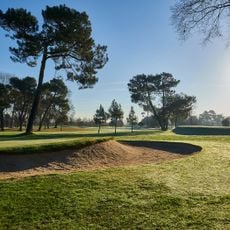
The château stands at the centre of an 11-hectare complex with nine football pitches, two of them synthetic, and a 3 km jogging path through the woods. The professional centre, a light building with glass walls, sits among the practice fields. The basement holds offices, the restaurant kitchen and the shop; the ground floor has the restaurant, reception rooms and bar.
The château's name comes from Pierre Lafargue, who bought the estate in 1787 and renamed it Bel-Air; he also planted the cedars that still stand on the grounds. The site itself was the Bourdieu de Lanneblanque, and on 1 November 1450 the Battle of Haillan was fought here, remembered in Bordelais history as La Male Journade, "the bad day".
The community of curious travelers
AroundUs brings together thousands of curated places, local tips, and hidden gems, enriched daily by 93,518 contributors worldwide.