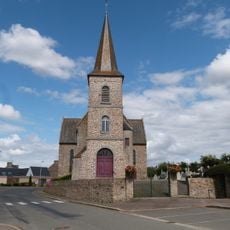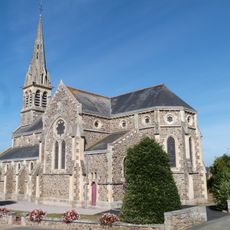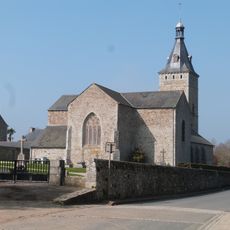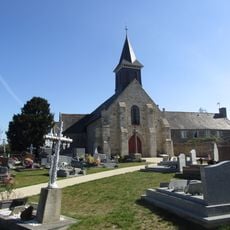
Collégiale Notre-Dame de Lamballe, Gothic church building in Lamballe-Armor, France.
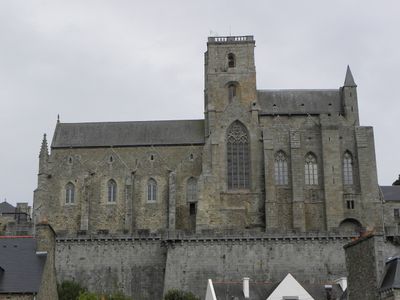
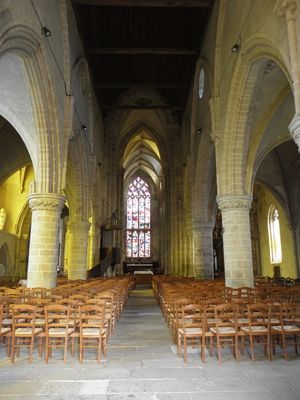
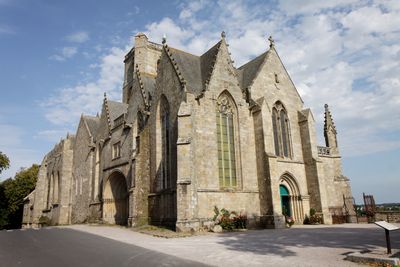
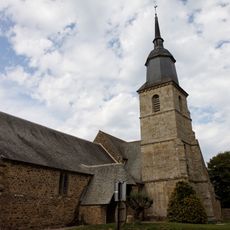
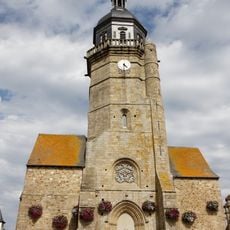
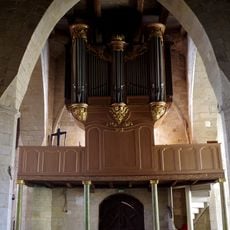
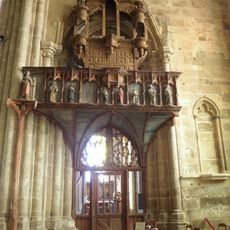
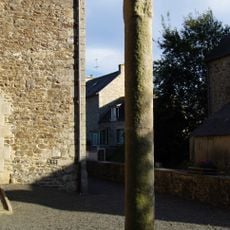
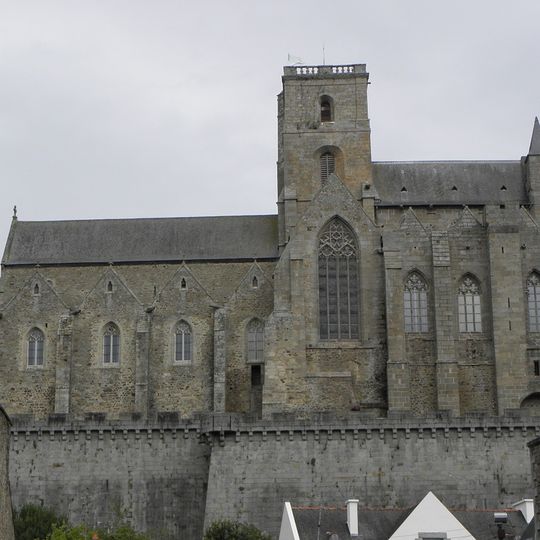
Collégiale Notre-Dame is a Gothic church of rough grey stone, with a tall square tower topped by a crenellated balustrade and pierced by narrow arched openings. A long body with pointed windows under gabled dormers runs left of the tower, and a massive crenellated retaining wall runs below. Inside, clustered columns with carved capitals carry pointed ribbed vaults; a low dark wooden screen stands before the stained-glass choir window.
A castle chapel existed by 1083, and Notre-Dame was dedicated around 1202 by Bishop Geoffroy Hernon. In the 14th century Charles de Blois integrated the church into Lamballe castle's defences, fortifying the choir with turrets and crenellated walls. Jean V made it a collegiate church with six canons in 1437; the castle was demolished in 1420 and again in 1626, but the church survived.
Pilgrimages to Notre-Dame, important in earlier centuries, were banned during the Breton War of Succession to prevent spying. In 1437 Jean V installed a college of six canons, making the church a collegiate foundation. Stained glass by Geneviève Asse and Olivier Debré, made in 1995, now fills windows of the church.
The church stands in the centre of Lamballe-Armor, its chevet and south wall still carrying the crenellated parapets and turrets of the 14th-century fortification, best seen from outside. Guided tours run regularly in summer. The nave pillars lean under the vaults, a problem experts assessed throughout the 18th century.
The church was fortified in the 14th century and folded into the defence system of Lamballe Castle, which stood on the site of the park north of the church. The castle was demolished in 1420 and again in 1626, but the church kept its crenellated parapets, turrets and a casemate beneath the choir.
The community of curious travelers
AroundUs brings together thousands of curated places, local tips, and hidden gems, enriched daily by 94,475 contributors worldwide.