Château de Chambonneau, Medieval castle in Gizay, France.
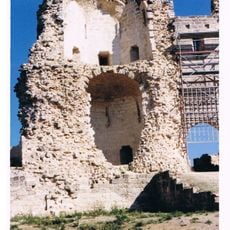
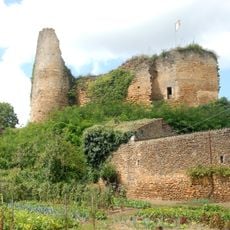
Château de Chambonneau is a castle with a square layout and four round corner towers forming a strong defensive structure. Additional fortification features flank the main entrance gate and reinforce the original defensive design.
Built from 1335 to 1345 by Jean Frotier de Melzéard and Mahaut de Vivonne on the orders of King Philip VI, the castle was taken without a fight in 1356 after the Battle of Poitiers; the Black Prince and the captive John II dined there. Bertrand du Guesclin retook it in 1373. Under Louis XI, Guy Frotier demolished the west curtain wall and added a south wing.
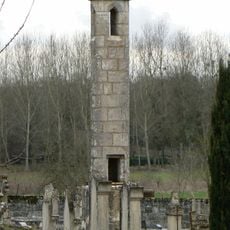
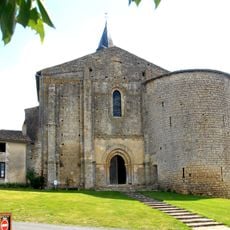
The name Chambonneau is often read as champ bon, "good field", though it may come from a stem meaning a bend in the river. Two pigeon lofts with 4,000 holes were built around 1605–1609; the southern one keeps its spiral staircase from the time of Henri IV. A chapel was added in 1578, and in 1686 César Palustre gave it a classical door with a broken Greco-Roman pediment bearing the Palustre arms.
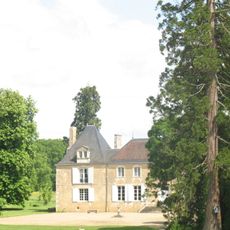
The castle stands at the foot of a hill beside the Miosson, which feeds its moats, in the commune of Gizay. It has been listed as a monument historique since 1964. The two gatehouse towers were removed in 1953 to let a car through, so the entrance front differs from the medieval arrangement.
The castle's name may come from the Xambo stem, meaning a bend in a river, later reinterpreted as champ bon, good field. Other private archives point to an old Campus Bonac, good camp, said to have protected the surroundings from enemies.
The community of curious travelers
AroundUs brings together thousands of curated places, local tips, and hidden gems, enriched daily by 94,468 contributors worldwide.