Côte 108 Berry-au-Bac, Military memorial site in Berry-au-Bac, France
Côte 108 Berry-au-Bac is a low, irregular mound of pale exposed earth and rubble in a grassy clearing bordered by scrub and trees at Berry-au-Bac, at the eastern end of the Chemin des Dames ridge. Its surface is mottled with grey-white patches and darker brown soil, with moss and grass along the lower edges and several leafless saplings growing from it. No inscription or sign is visible.
From September 1914 the hill marked the eastern end of the Chemin des Dames front between French and German armies. French sappers, many of them miners from the Nord and Pas-de-Calais, dug nearly 8 km of galleries and used over 200 tonnes of explosives between June 1915 and February 1916, creating more than 25 mine craters. The site was classified as a monument historique in 1937.
The hill's name comes from its elevation of 108 metres, and French and German military reports called this sector after the villages of Berry-au-Bac and Sapigneul. Since 2014, guided tours have been organised with the Caverne du Dragon museum, and the site still holds the bodies of French and German soldiers.
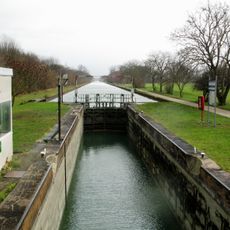
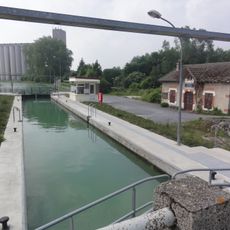
The hill is private land in the red zone and is not open to the public; access is only possible on guided tours, organized since August 2014 with the Caverne du Dragon museum. The site lies near the Canal de l'Aisne à la Marne and the Reims–Laon road, and the ground remains uneven, with mine craters and trench remnants.
This site preserves one of France's largest crater holes from a mine explosion, a detail that many war history visitors overlook. The crater offers a direct connection to underground warfare that is often forgotten in popular accounts of the conflict.
The community of curious travelers
AroundUs brings together thousands of curated places, local tips, and hidden gems, enriched daily by 93,787 contributors worldwide.