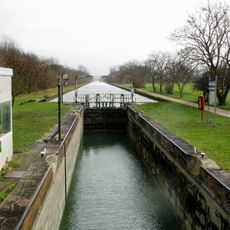
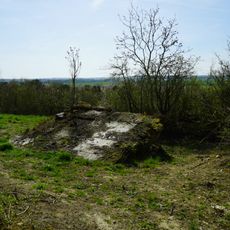
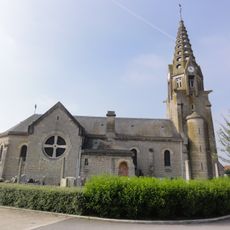
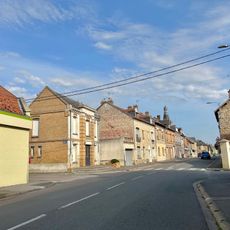
Vieux-Reims, Iron Age fortified settlement in Condé-sur-Suippe and Variscourt, northern France.
This ancient fortified settlement covers roughly 420 acres (170 hectares) on an alluvial terrace at the confluence of the Aisne and Suippe rivers, featuring ramparts 6 to 10 feet (2 to 3 meters) high surrounding residential and craft areas from the second and first centuries BC.
The site was occupied primarily during La Tène D1B period between 120/110 and 90/80 BC, with significant discoveries including bronze coin hoards from the first century BC and evidence of organized urban planning with orthogonal street layouts and storage facilities.
Archaeological excavations have revealed residential quarters, metallurgical workshops, and a stone granary measuring about 20 feet (6 meters) long by 14 feet (4.25 meters) wide, demonstrating advanced agricultural and artisanal activities including local salt extraction from basins and bronze jewelry production.
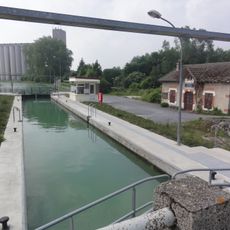
The site has been designated as a protected historical monument since 1992, though much of it was destroyed during the nineteenth and twentieth centuries by the construction of the Aisne canal, railway lines, and industrial facilities.
Historical place names such as Mur de Rome and Le vieux Rains, recorded on eighteenth-century Cassini maps, reflect centuries of local memory about the visible ancient ruins before systematic archaeological investigation confirmed the settlement's Iron Age origins.
The community of curious travelers
AroundUs brings together thousands of curated places, local tips, and hidden gems, enriched daily by 90,777 contributors worldwide.