Plougonven Parish close, Parish close in Plougonven, France
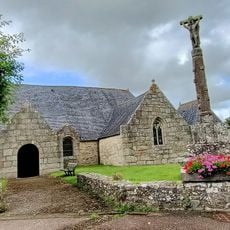
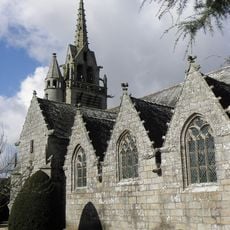
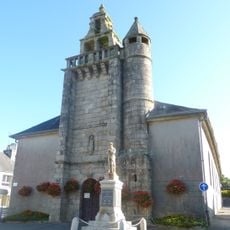
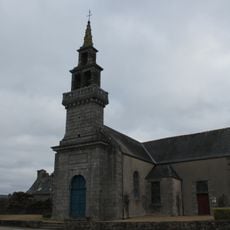
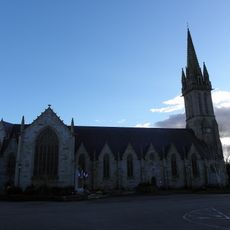
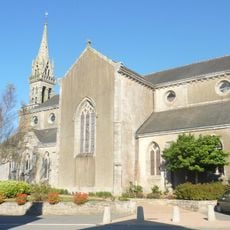
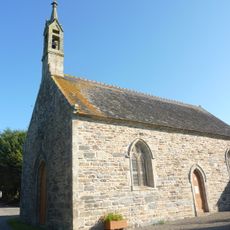
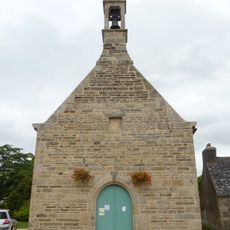
The Plougonven parish close is a Gothic religious complex featuring a church, calvary, funeral chapel, and ossuary surrounded by stone walls on elevated ground. The arrangement shows the complete religious structures that served a medieval and early modern Breton community.
The church was built between 1511 and 1523 in flamboyant Gothic style under Philippe Beaumanoir and stands as an example of this architectural period in Brittany. A major fire in 1930 caused significant damage, though a comprehensive restoration in 1933 returned the structures to their former state.
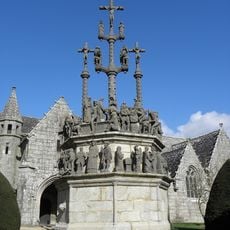
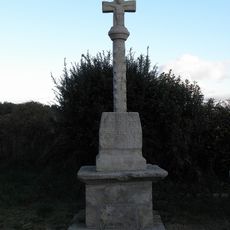
The calvary displays carved figures depicting scenes from the life and Passion of Christ for those who could not read or write. These visual representations served as a way to teach religious stories to the entire community.
The parish close stands in the centre of Plougonven, in the arrondissement of Morlaix, Finistère. The church, calvary, ossuary and chapel of Christ are grouped together within the enclosure wall, so the whole set can be seen on foot in a short visit. The church was badly damaged by fire on the night of 1 May 1930 and restored in 1933; the calvary, thrown down in 1794, was re-erected in 1810.
The inscription on the calvary's base, carved in 1554, is a collective prayer rather than a personal dedication: it names the year in Roman numerals and asks for prayers for the dead, honouring God, Notre-Dame-de-Pitié and Saint Yves. Traces of paint and gilding survive, since such calvaries were originally painted.
The community of curious travelers
AroundUs brings together thousands of curated places, local tips, and hidden gems, enriched daily by 94,460 contributors worldwide.