City walls of Rocroi, Military fortifications in Rocroi, France.
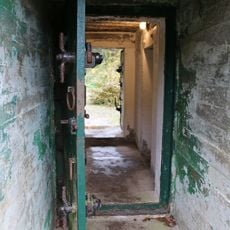
The city walls of Rocroi enclose the town in a pentagon of five bastioned fronts, with a pentagonal former parade ground at the centre from which ten streets run out to the ramparts. The ramparts are low, grass-covered earthworks with dry ditches between angular bastions; the escarpes were faced with masonry. A paved road enters through a gap in the walls, and the Bastion du Roy was cut off from the town by a ditch to form a citadel.
Henri II had the first enceinte built in 1555 to shield the Champagne border from Spanish attacks launched from Chimay, Philippeville and Charlemont. Vauban, who judged its plan severely in 1673, still integrated it into the second line of his Pré carré, adding advanced works, half-moons and a covered way. Four advanced lunettes were added in 1792, and the place was declassified in 1889 after the invention of the torpedo shell.
The walls define how Rocroi looks and functions today, shaping the pentagonal layout that frames daily life in the town. Walking through the streets, you notice how this geometric design remains central to the town's character and spatial organization.
The ramparts can be reached by several walking paths, and guided tours are available if you visit with a group. Walking around the site on foot is the best way to appreciate the geometric layout and see each bastion up close.
The walls were repeatedly altered: Louis XIII added five half-moons and cut the King's bastion off as a citadel, 1832 brought earth cavaliers and counterguards, and four arrow-shaped lunettes were added in 1792. The bastion du Roy has been a classified monument historique since 1981, the rest of the ramparts inscribed since 1935.
The community of curious travelers
AroundUs brings together thousands of curated places, local tips, and hidden gems, enriched daily by 93,045 contributors worldwide.