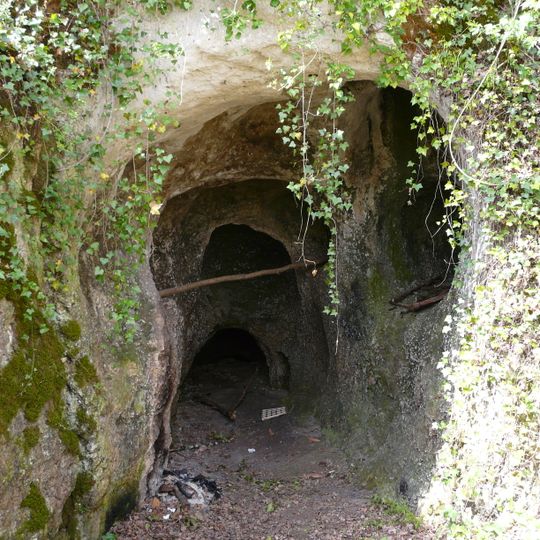
Gisement préhistorique de Rochereil, Prehistoric archaeological site in Grand-Brassac, France
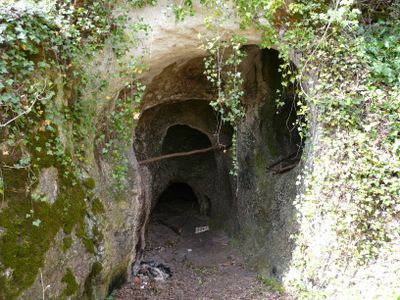
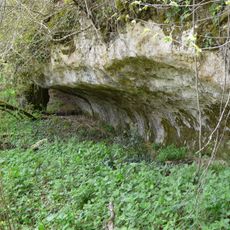
Rochereil is a rock shelter along the Dronne River with multiple excavation layers that reveal human occupation from the Upper Paleolithic period. The stratified deposits show how people used this location across different time periods in prehistory.
The site was first explored in the early 20th century by M. Féaux and the Marquis de Fayolle, then extensively excavated between 1935 and 1939 by Dr. Paul-Émile Jude. It received official protection as a classified historical monument in 1952.
The shelter yielded probable burials from two periods: a child from the Magdalenian and an adult with adolescents from the Azilian. The attribution of these remains is noted as needing confirmation, so the burial evidence is treated cautiously in the research literature.
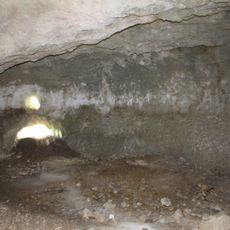
The shelter opens in a stone face at the edge of the Dronne, by the Rochereuil mill, northwest of Grand-Brassac in the Dordogne. It lies on private ground and is a classified monument, so visits must be arranged beforehand with the owners or the research team led by Patrick Paillet. The floor is dirt and the interior dark; bring a torch.
The shelter sits at the Moulin de Rochereuil on the edge of the Dronne, and since 2011 a research programme led by Patrick Paillet has returned to study it, first as a thematic survey and then as a collective research project. The earlier work of Dr Paul-Émile Jude from 1935 to 1939 remains the reference excavation.
The community of curious travelers
AroundUs brings together thousands of curated places, local tips, and hidden gems, enriched daily by 92,781 contributors worldwide.