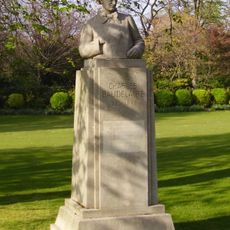
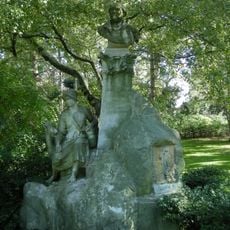
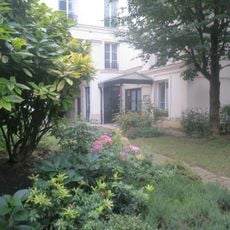
Jardin des grands explorateurs : Marco Polo et Cavelier-de-la-Salle, Public garden in 6th arrondissement, France
The Jardin des Grands-Explorateurs Marco-Polo et Cavelier-de-la-Salle is a public garden in the 6th arrondissement of Paris, laid out in geometric sections of lawns bordered by low hedges and paved paths. Tall dark stone columns topped with light stone statues and pedestals bearing sculpted heads line the walks. In the foreground a bronze-colored rearing horse rises above a stone basin, with smaller bronze figures at its base and on the basin edge; benches, a metal fence and rows of trees complete the garden.
This public garden was established in the middle of the 19th century in response to urban development in this central district. The sculptural fountain at its center was completed shortly after and became one of the quarter's recognizable monuments.
The garden is named after Marco Polo (1254–1324) and René-Robert Cavelier de La Salle (1643–1687). Regulars call it the "petit Luco" because it continues the Luxembourg Gardens beyond the place André-Honnorat. Two paths carry the names of Resistance member Denise Vernay and politician Nicole Fontaine.
The garden lies between place Ernest-Denis and avenue de l'Observatoire, reached by metro line 4 at Vavin or RER B at Port-Royal. It is open at set hours. Inside are benches, a playground, sandpits, exercise equipment, ping-pong tables, drinking fountains and a dog area.
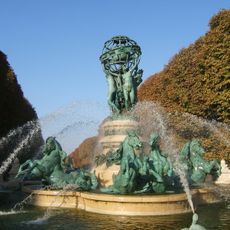
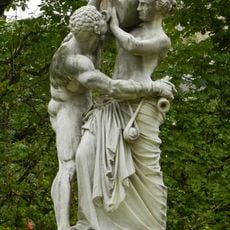
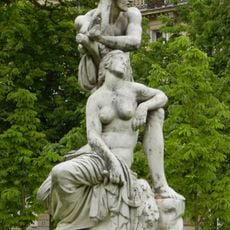
The Fontaine des Quatre-Parties-du-Monde (1875) was made by Gabriel Davioud with sculptures by Jean-Baptiste Carpeaux and Emmanuel Frémiet. Carpeaux's four figures personify Europe, Asia, Africa and America, which turn around a globe held by a group of children. In 1959 the garden was one of the sites of the so-called Observatoire affair.
The community of curious travelers
AroundUs brings together thousands of curated places, local tips, and hidden gems, enriched daily by 92,828 contributors worldwide.