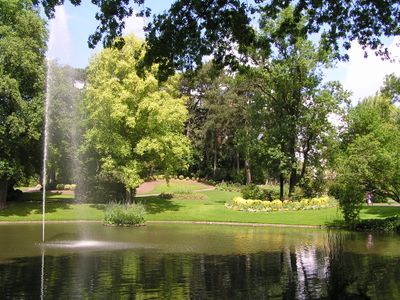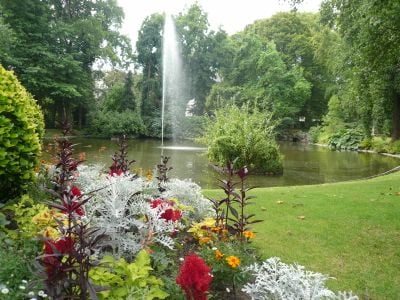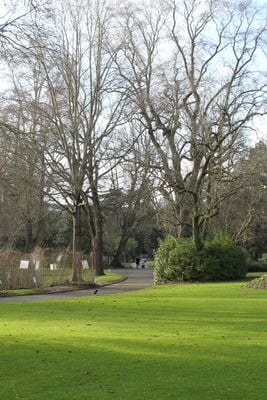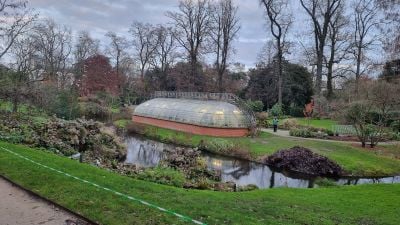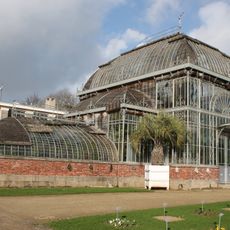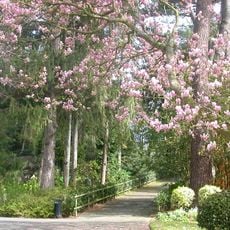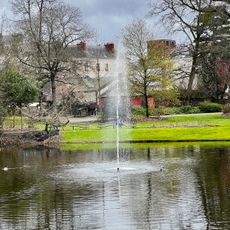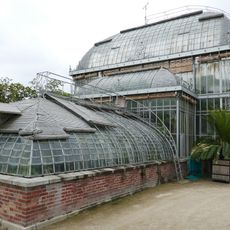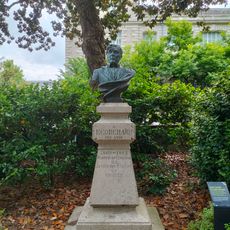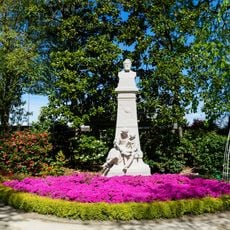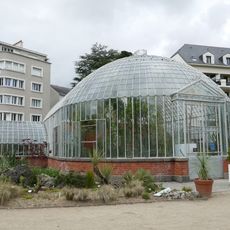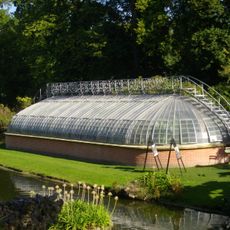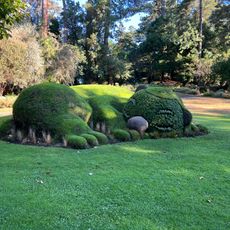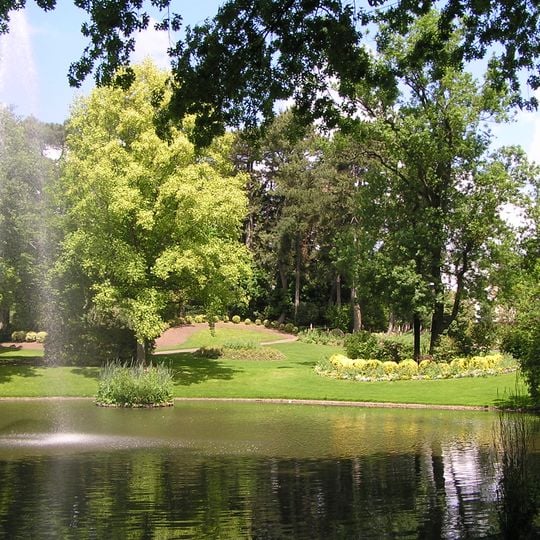
Jardin des plantes de Nantes, Botanical garden in city center, Nantes, France.
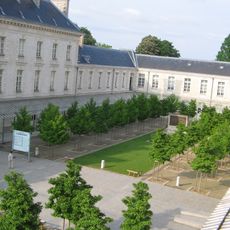
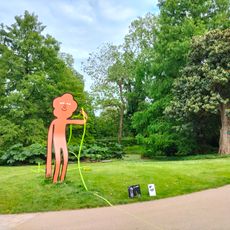
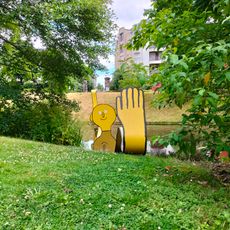
Jardin des plantes de Nantes is a botanical garden and city park in central Nantes that displays over eleven thousand plant species across more than 17 acres (7 hectares). Waterways run through the grounds between wide lawns, ponds, and paved paths just minutes from Gare de Nantes.
The grounds began in 1687 as an apothecary garden and served as a Royal Garden for exotic plants from 1726. Public access started in 1829 when the city opened the gates and expanded the area.
Plant labels carry both scientific names and local references that help strollers connect with regional botany. Visitors regularly see families picnicking on the lawns while students sit under old trees reading in shaded corners.
The grounds are free to enter and offer wide paths that work well for strollers or wheelchairs. Mornings tend to be quieter while afternoons and weekends see more visitors moving through.
A Magnolia grandiflora planted in 1807 still grows on the grounds and ranks among the oldest living trees of its kind in Europe. The collection also holds six hundred camellia varieties, including several Japanese cultivars from the 19th century.
Location: Nantes
Official opening: 1687
Address: Rue Stanislas Baudry, 44000 Nantes, France
Opening Hours: Monday-Sunday 08:30-21:30
Phone: +33240416509
Website: https://nature.metropole.nantes.fr/parcs-jardins/jardin-des-plantes
GPS coordinates: 47.21944,-1.54278
Latest update: December 5, 2025 22:31
These botanical gardens in France contain rare plant species, historic grounds and Mediterranean landscapes. Collections include the Jardin des Serres d'Auteuil in Paris with its 19th century greenhouses, the Parc Oriental de Maulévrier featuring Japanese garden design and the Jardin Botanique de la Villa Thuret in Antibes with Mediterranean and exotic plants. The Domaine du Rayol presents plants from climate zones around the Mediterranean Sea. The gardens represent different styles and periods. The Campo Santo in Orléans displays medieval monastery gardens while the Jardins de Marqueyssac in Vézac are known for their sculpted boxwood hedges. The Arboretum de Balaine ranks among France's oldest private arboretums. From the Jardins Suspendus de Marqueyssac in the Dordogne to the Parc Phœnix in Nice, these locations offer views into botanical collections and historic garden artistry.
France has a notable horticultural heritage expressed through gardens of various styles spread across the country. This collection includes historical creations like the Renaissance gardens of Villandry, urban parks such as the Parc de la Tête d'Or in Lyon with its 290 acres and four tropical greenhouses, as well as mountain gardens like the Jardin Alpin in Chamonix. Visitors also discover specialized sites, including the Val-de-Marne Rose Garden with 3,300 rose varieties organized by historical periods. These spaces exhibit considerable botanical diversity, from the Mediterranean collections at Domaine du Rayol on the Côte d'Azur to tropical plants at the Serres d'Auteuil in Paris. Some gardens like the Jardin des Plantes in Nantes host more than 10,000 species from different climates, while others focus on specific collections like magnolias and hydrangeas at the Gaston Allard Arboretum in Angers. These sites combine scientific interest, botanical conservation, and the pleasure of strolling, offering visitors the chance to explore the plant richness of the entire world within carefully arranged settings.
France has several dozen botanical gardens combining scientific research and plant conservation. The greenhouses of the National Museum of Natural History in Paris host over 4,500 species in climate-controlled zones, while the Lyon Botanical Garden cultivates around 15,000 plants divided between historic greenhouses and thematic sections. Universities such as Strasbourg maintain scientific collections over 2.5 hectares with greenhouses dating from 1881, and the Nantes Botanic Garden conserves 11,000 species, including 50 protected French varieties. These facilities document four centuries of botanical study and serve both education and research. Coastal gardens utilize temperate maritime conditions to display unusual plants. The Roscoff Exotic Garden gathers 3,500 species from the Southern Hemisphere on a rocky promontory, cultivating Australian and New Zealand plants adapted to Brittany’s climate. On the French Riviera, the Èze Garden showcases Mediterranean and succulent collections at 1,407 feet above sea level, while the Saint-Jean-de-Luz Coastal Botanical Garden focuses on Atlantic coastal species. The Grandes Bruyères Arboretum near Orléans encompasses 15,000 trees and shrubs from Europe, Asia, and North America across 34 acres, organizing plantings according to their geographic origins.
Nantes features diverse settings for photography, from gardens to historical monuments. Passage Pommeraye, a 19th-century shopping gallery, displays carved staircases and glass roofs across three levels. Île de Versailles offers a Japanese garden with stone lanterns and bamboo groves, while the Jardin des Plantes houses over 10,000 plant species in its greenhouses and pathways. Château des Ducs de Bretagne showcases Renaissance towers, and Cours Cambronne lines neoclassical facades around a tree-lined square. Converted former industrial sites create unique photographic spaces. The Hangar à Bananes, a former warehouse on the Loire quays, now hosts restaurants and galleries. Les Machines de l'Île set their mechanical creations in the naval shipyard’s Nefs. Le Lieu Unique occupies the LU factory with its distinctive tower, and Jardin des Fonderies preserves metal structures from its industrial past. In Trentemoult, a fishing village with houses painted red, yellow, and blue, narrow alleys run along the Loire.
Nantes combines mechanical monuments, botanical gardens, a medieval castle and museums. The historical quarters, old squares and notable architecture reflect its maritime and commercial past. The city features parks, walks along the Loire and cultural institutions like the Art Museum and Natural History Museum. The Machines de l'île presents mechanical animals, including a 12-meter-tall elephant.
Nantes Museum of Arts
336 m
Cours Saint-Pierre et Saint-André
484 m
Saint-Clément, Nantes
380 m
Chapelle Notre-Dame-de-l'Immaculée-Conception
308 m
Chapelle de l'Oratoire
421 m
Tour LU
515 m
Monument aux morts de la guerre de 1870
464 m
Convent of the Visitation
381 m
Immeuble, 1 place Maréchal-Foch
497 m
Quai Malakoff
487 m
Hôtel Lelasseur
424 m
Immeuble, 15 rue Henri IV
483 m
Immeuble, 11 rue Henri IV
428 m
Hôtel Cazenove de Pradines
397 m
Musée des Sapeurs-Pompiers de Loire-Atlantique
394 m
Hôtel de la Pilorgerie
389 m
Hôtel de Sesmaisons-Lucinge
474 m
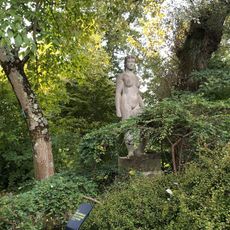
La Baigneuse au miroir
42 m
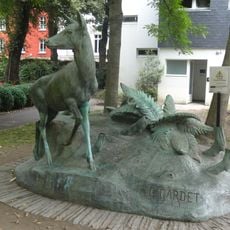
Cerf, Biche et Faon
133 m
Monument aux anciens élèves du lycée Clemenceau
183 m
Anne of Brittany
444 m
Chapelle du Christ-Roi de Nantes
257 m
Monument à Jules Verne
141 m
Arthur III
500 m
Stèle Haveloose
217 m
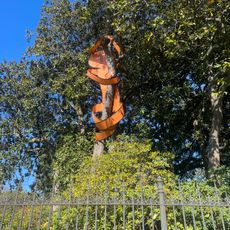
Vers l'infini
232 m
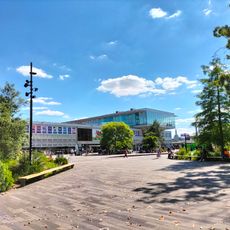
Esplanade Pierre-Semard
197 m
Chapelle du lycée Clemenceau de Nantes
195 mReviews
Visited this place? Tap the stars to rate it and share your experience / photos with the community! Try now! You can cancel it anytime.
Discover hidden gems everywhere you go!
From secret cafés to breathtaking viewpoints, skip the crowded tourist spots and find places that match your style. Our app makes it easy with voice search, smart filtering, route optimization, and insider tips from travelers worldwide. Download now for the complete mobile experience.

A unique approach to discovering new places❞
— Le Figaro
All the places worth exploring❞
— France Info
A tailor-made excursion in just a few clicks❞
— 20 Minutes