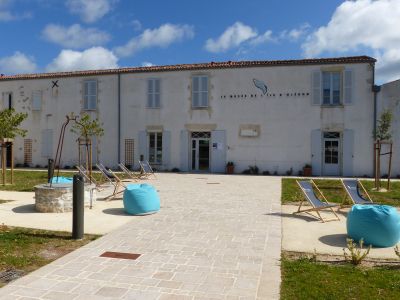
Musée de l’Île d’Oléron, Local history museum in Saint-Pierre-d'Oléron, France.
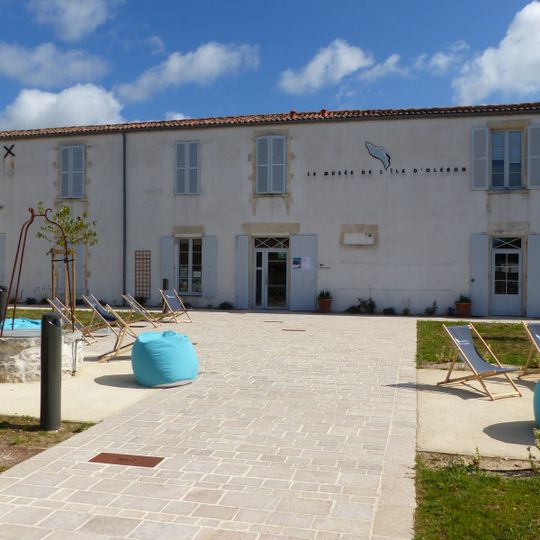
The Musée de l'Île d'Oléron is a history and ethnology museum at Place Gambetta in Saint-Pierre-d'Oléron. Its permanent exhibition fills three ground-floor rooms, opening with the island's first occupation in the Neolithic, attested by shell beads, and continuing through themed sections on traditional life, wine growing, resin tapping, salt making, fishing, tourism and fine arts. Two paintings by Louis Ernest Lessieux, made in the 1930s for the restaurant of the Hôtel de l'Horizon, hang in the last room.
The museum opened in 1963 as the Musée Aliénor d'Aquitaine, founded on the initiative of priest Pierre-Marie Kieffer in a house on Rue Pierre Loti, with early holdings mostly donated by islanders. The Friends of the Museum association formed in 1967, the same year the house came under the culture ministry's supervision. It gained Musée de France status in 2003 and moved to new rooms at Place Gambetta in 2006, taking its present name.
The museum displays traditional island activities such as wine growing, salt making, resin harvesting, oyster farming, and fishing through its exhibitions. You can see how these crafts shaped daily life and work on Oléron for centuries.
The museum is located in the center of Saint-Pierre-d'Oléron and is easy to reach on foot. A visit typically takes an hour or two depending on your pace and interest in the collections.
The museum opened in 1963 in a former wine storehouse on Rue Pierre Loti, near the grave of writer Pierre Loti, whose real name was Julien Viaud. Its first collection, gathered by parish priest Pierre-Marie Kieffer, held some 2,500 objects in a 200 m² building. It moved to Place Gambetta in 2006.
The community of curious travelers
AroundUs brings together thousands of curated places, local tips, and hidden gems, enriched daily by 92,787 contributors worldwide.