Musée des Beaux-Arts de Chartres, Art museum in Episcopal palace of Chartres, France
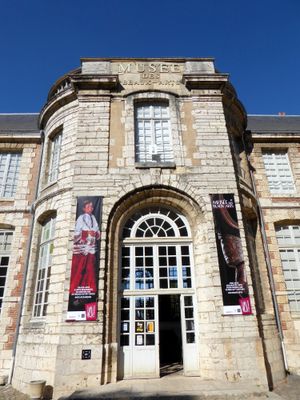
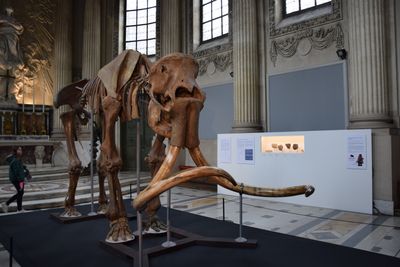
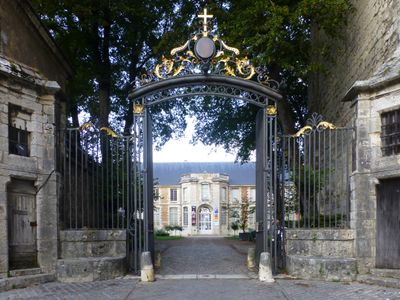
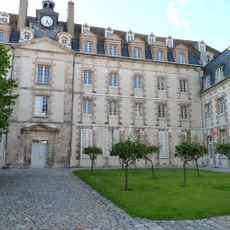
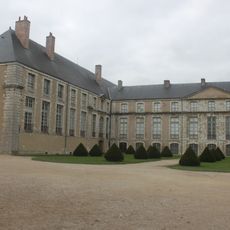
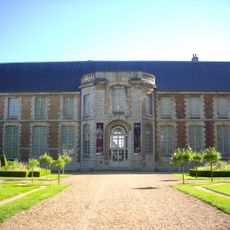
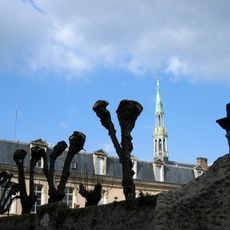
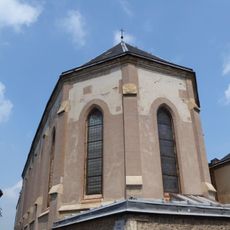
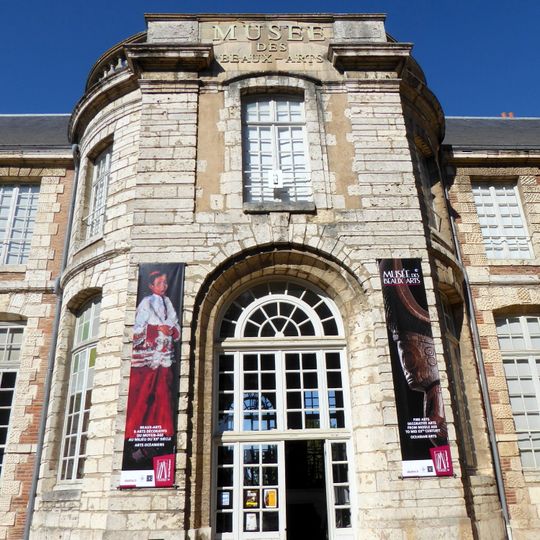
The Musée des Beaux-Arts de Chartres occupies the former episcopal palace, a building complex listed as a monument historique in 1906 with parts from the 13th, 17th and 18th centuries, next to Chartres Cathedral. Its pale stone facade has a rounded central section with an inscribed frieze reading "MUSEE DES BEAUX-ARTS" above a tall arched doorway with a fanlight and white-framed glass panels. Inside, the collection includes an articulated elephant skeleton with long curved tusks mounted on a dark wooden base.
The museum was founded on 15 May 1833 and opened to the public on 18 May 1834 in a room of the town hall. In 1939 the collections moved into the former episcopal palace, a listed building of the 13th, 17th and 18th centuries, inaugurated on 9 June by Georges Huisman, director general of fine arts. The city bought the building for a symbolic euro and reopened the museum on 1 July 2017.
The museum's name comes from the fine-arts collection founded in 1833, and the building is the former bishop's palace beside the cathedral. A room is devoted to Maurice Marinot, another to Jean Guérin, a friend of Jean Cocteau who worked mainly in America. Two rooms show 20 works by Vlaminck, including Still Life with a Basket of Fruit and The Wheat Mill (1950).
Access is available Tuesday through Sunday, with varying hours depending on the season. Both guided tours and individual visits are welcome, though advance reservation is helpful for group visits.
The museum's natural history collections, moved out in 1967, returned in 2015 when the natural sciences museum closed, leaving only about 1% of the works on display. The large elephant skeleton in the galleries comes from this reunited collection.
The community of curious travelers
AroundUs brings together thousands of curated places, local tips, and hidden gems, enriched daily by 92,857 contributors worldwide.