Musée des Beaux-Arts et d'Archéologie de Vienne, Fine arts and archaeology museum in Vienne, France
The museum occupies the upper floor of a former grain warehouse built in 1823, displaying objects from the Neolithic period through the 20th century. Its rooms hold paintings, sculptures, archaeological finds, and pottery spanning multiple eras of European history.
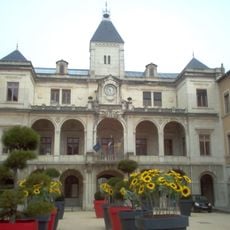
The building began as a grain hall erected in 1823 under mayor De Teyssier de Miremont on the Place de Miremont, after the archbishop's palace was demolished. In 1895 an extra floor was added by architect Ernest Bizot, supported by mayor Camille Jouffray, and the museum opened there on 1 September, sharing the building with a library. Vienne's first museum had been created in 1809 at Saint-Pierre from Pierre Schneyder's bequest.
The Ancient Period galleries display gilded bronze reliefs and silver treasures that reflect Vienne's importance as a Roman trading hub. These objects show how wealthy and connected the city was during that era.
The museum sits on Place de Miremont in Vienne's old centre, in the former grain hall whose upper floor was added by architect Ernest Bizot. The building is shared with a library, so check which entrance leads to the collections. The galleries occupy the added storey, reached by stairs; the rooms are modest in size.
The faience collection begins with 16th-century floor tiles from the chapel of the Château de la Bastie d'Urfé. It is strongest in French production — Moustiers, Lyon, Marseille, Rouen, Strasbourg, Delft — with two groups standing out: pharmacy jars and bedside holy water fonts.
The community of curious travelers
AroundUs brings together thousands of curated places, local tips, and hidden gems, enriched daily by 93,977 contributors worldwide.