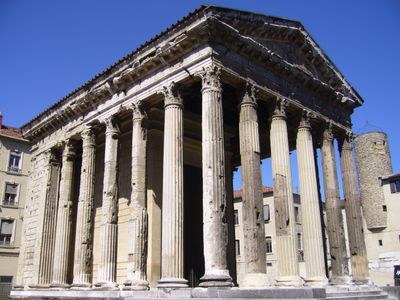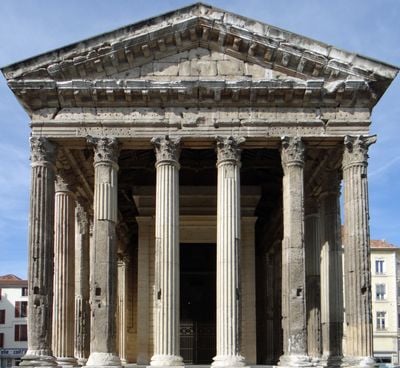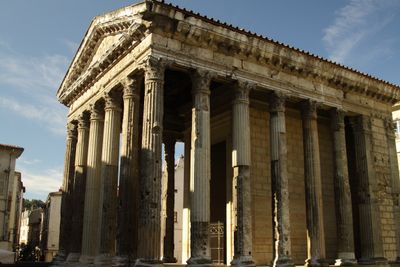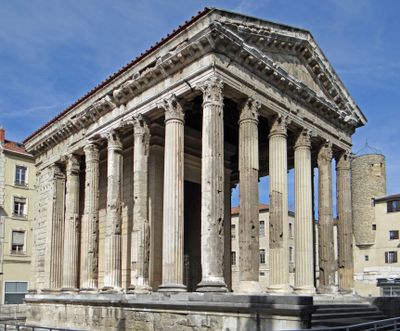
Temple of Augustus and Livia, Roman temple in Vienne, France
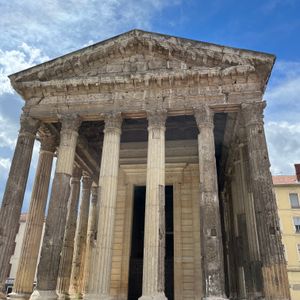
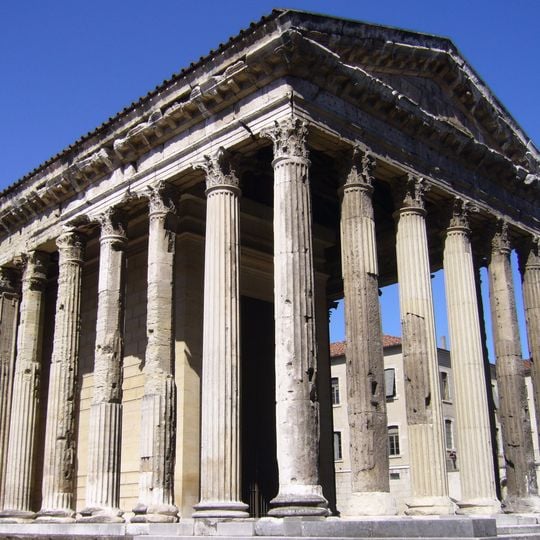
The Temple of Augustus and Livia is a Corinthian temple on a 2.75 m podium, 27 m long, 14.25 m wide and 17.36 m high, with 9.70 m of colonnade. Six fluted columns stand across the front and along the sides, while the rear is closed by a wall flanked by engaged pilasters. The pediment carries a dentil molding; the capitals are carved, and the pale ashlar shows dark weathering.
The temple was built between 27 and 10 BC for the imperial cult, honouring Augustus and his wife Livia. About two-thirds of it was rebuilt a few decades later, before Livia's deification in 42 AD, when her name was added to the architrave. In December 355 the Caesar Julian visited and a garland of foliage fell from the roof onto his procession, taken as a good omen.
Over the centuries, the structure served as a Christian church, courthouse, and museum, reflecting how communities adapted this space to their changing needs. Each transformation left its mark on how people experienced and used the place.
The structure is enclosed by a low fence and visible from central Vienne without any entrance fees required. Visitors can examine the architectural features and column details from outside while walking through the nearby historic areas of the city.
The column capitals display two different styles, reflecting multiple construction phases during Roman times. These architectural differences reveal how builders adapted materials and techniques across different periods of work.
The community of curious travelers
AroundUs brings together thousands of curated places, local tips, and hidden gems, enriched daily by 93,283 contributors worldwide.