MuMa Museum of modern art André Malraux, Art museum in Le Havre, France
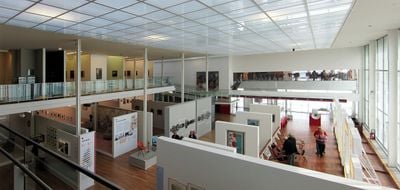
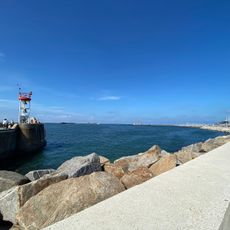
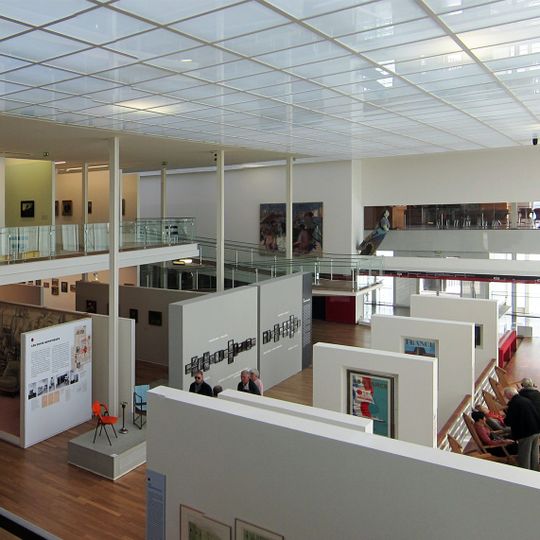
MuMa Museum of Modern Art André Malraux is a modern art museum in Le Havre with a distinctive five-sided glass structure positioned at the harbor entrance. The transparent facade allows natural light to flood through the exhibition spaces and illuminate the artworks within.
The Musée des Beaux-Arts du Havre, founded in 1845 under painter Adolphe-Hippolyte Couveley, was destroyed in the World War II bombardments; its 1,500 evacuated paintings survived. From 1952 Reynold Arnould and Georges Salles planned a new building, erected from 1958 by Guy Lagneau, Raymond Audigier, Michel Weill and Jean Dimitrijevic with Jean Prouvé. André Malraux inaugurated it on 24 June 1961.
The museum's name honours André Malraux, who inaugurated it in 1961 as France's first Musée-Maison de la culture. Its Impressionist holdings grew through gifts: the Marande donation of 1936 brought 89 Fauve and Impressionist works, and in 2004 Hélène Senn-Foulds gave over 205 paintings, including Renoir's Portrait de Nini Lopez and Courbet's Paysage à Champrosay.
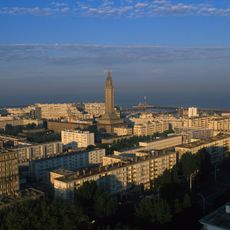
The museum stands at the harbor entrance, beside the reconstruction district of Auguste Perret. The building is glazed on five sides, so the galleries are lit by daylight filtered through Jean Prouvé's aluminium louver above the roof; the west facade adds printed glass screens and pivoted louvers. Look for the 7 × 6 m service door Prouvé designed on the west side.
Le Signal, the monumental concrete sculpture by Henri-Georges Adam, stands outside the museum at the harbour entrance rather than inside it. Its wide, angular form with a large oval opening frames a piece of the surrounding landscape. It was commissioned for the building's facade and points toward the sea.
The community of curious travelers
AroundUs brings together thousands of curated places, local tips, and hidden gems, enriched daily by 92,851 contributors worldwide.