Muséum d'histoire naturelle du Havre, Natural history museum in Le Havre, France.
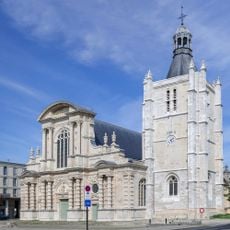
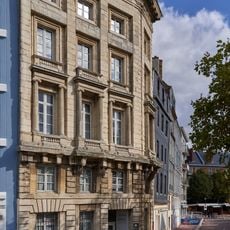
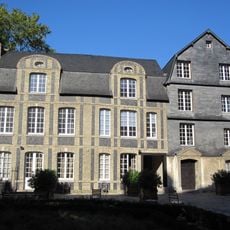
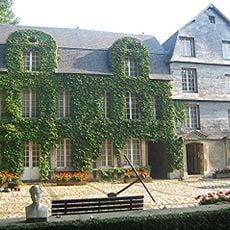
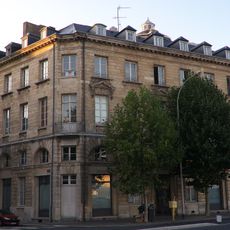
The Muséum d'histoire naturelle du Havre is a natural history museum housed in a classical stone building with multiple exhibition halls displaying paleontology, zoology, and botany collections. The galleries contain fossils, preserved animal specimens, and plant materials that illustrate the diversity of the natural world.
Charles Alexandre Lesueur founded the museum in 1837–1838 with his own collections, and it opened to the public in 1855. In 1881 the collections moved into the former Palais de Justice, a building erected in 1758–1760 and attributed to an engineer named Dubois. The south wing was destroyed in the 1944 bombardments and never rebuilt; the museum reopened in 1973 after restoration work.
The museum's name comes from the former Palais de Justice it occupies, and its graphic arts collection holds 8,000 drawings and manuscripts by Charles Alexandre Lesueur, who painted on Nicolas Baudin's 1800–1804 Australian expedition and later settled in Philadelphia and New Harmony, Indiana. His watercolours and pencil sketches show landscapes, portraits, minerals and fossils.
The museum opens Tuesday to Sunday, 10am to 6pm, with a midday closure from 12pm to 2pm on Tuesdays and Fridays; it is closed Monday and Thursday morning. Entry is free for everyone on the first Saturday of the month and for under-26s on other days. The monumental staircase sits in the central body between the two side wings.
The pediment above the entrance carries a coat of arms with a crown and seashell motif, framed by cornucopias on either side. The roof is topped by a square lantern with an obelisk bearing a fleur-de-lis, a remnant of the building's role as the city's courthouse.
The community of curious travelers
AroundUs brings together thousands of curated places, local tips, and hidden gems, enriched daily by 93,489 contributors worldwide.