Hôtel Dubocage de Bléville, Private mansion in Le Havre, France.
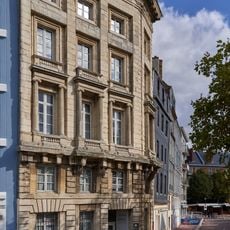
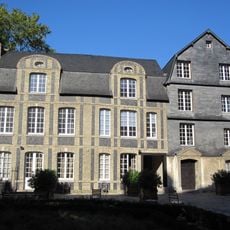
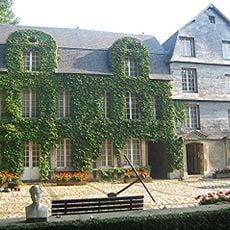
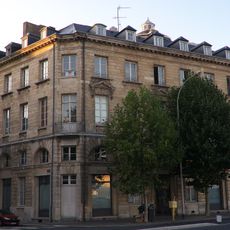
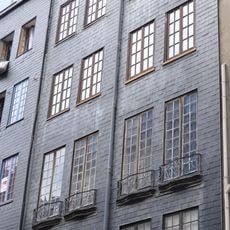
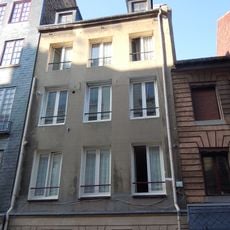
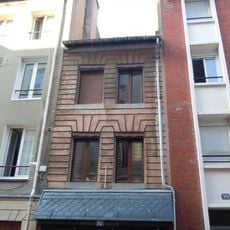
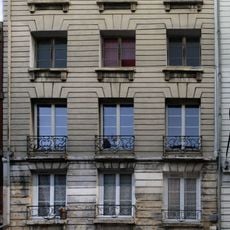
Hôtel Dubocage de Bléville is a three-story private mansion in Le Havre featuring an L-shaped layout with approximately 20 windows. The structure combines slate, black flint, brick, and Caen stone in its construction.
Ship owner and royal corsair Michel Joseph Dubocage acquired small houses in Le Havre's Saint-François district in 1706, then bought adjoining land with buildings in 1716 and built a new house attached to the first. The two joined houses form today's museum. His son Michel Joseph Dubocage de Bléville, a trader and naturalist, inherited the house and created a cabinet of curiosities. The city bought the building in 1919, and it was listed as a monument historique on 4 October 1946.
The building takes its name from Michel Joseph Dubocage (1676–1727) and his son Michel Joseph Dubocage de Bléville (1707–1756). The son, a trader and naturalist, assembled a cabinet of curiosities in the house. The museum's permanent collection, shown alongside temporary exhibitions, holds portraits, landscapes, engravings, Chinese porcelain and glassware.
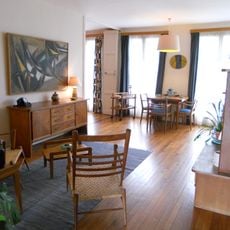
The museum occupies two joined houses at 1-3 rue Jérôme-Bellamarto in the Saint-François district, entered from the courtyard side where the French garden lies. Interiors were renovated in 2009 and now serve as exhibition rooms, so access follows the museum's temporary exhibition openings rather than fixed house tours. The staircase in the right-hand part is itself listed as a historical monument.
The exterior displays a rare combination of regional flint, brick, and timber framing that preserves Norman building techniques. This craftsmanship is rarely seen in contemporary architecture, making it a window into the region's traditional construction heritage.
The community of curious travelers
AroundUs brings together thousands of curated places, local tips, and hidden gems, enriched daily by 94,530 contributors worldwide.