Musée d'art et d'histoire de Lisieux, Art and history museum in Lisieux, France
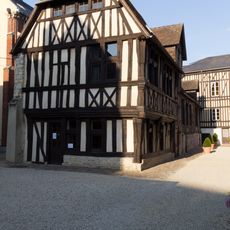
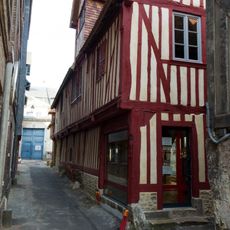
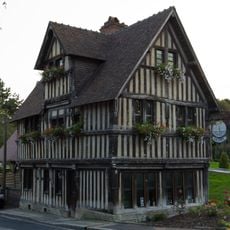
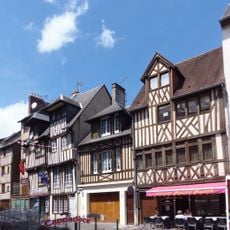
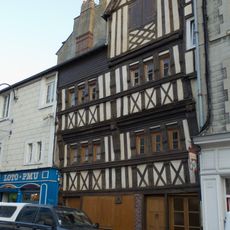
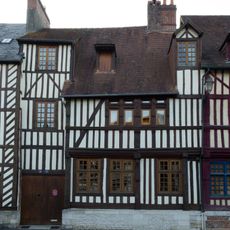
The musée d'art et d'histoire de Lisieux occupies one of the last 17th-century half-timbered houses in the city, with dark red beams framing cream panels, blue-framed windows and a steep tiled roof with three dormer windows. Its ten permanent rooms cover 350 m² and display more than three hundred objects, paintings and photographs; the staircase linking them serves as a timeline.
The museum occupies one of the last surviving 17th-century timber-framed houses in Lisieux, a town once called the capital of carved wood. In 2011 it became part of the Pôle Muséal of the Lisieux Normandie agglomeration, alongside the Château-Musée de Saint-Germain-de-Livet and the Musée du Vieux Manoir in Orbec. Its ten permanent rooms hold more than three hundred objects, paintings and photographs.
Lisieux was once called the "capital of carved wood", and this 17th-century half-timbered house is one of the last surviving examples of that craft in the Pays d'Auge. Inside, the staircase linking the ten exhibition rooms serves as a timeline of the town's history. The museum holds the most complete public collection of Pré d'Auge ceramics in France.
The permanent route runs through ten rooms covering 350 m², with a 95 m² temporary exhibition room; the staircase linking the floors is laid out as a timeline of the city. The building is one of the last 17th-century timber-framed houses in Lisieux, so floors and doorways are those of an old dwelling.
The collection includes paintings by Eugène Boudin and Gustave Courbet displayed alongside works by lesser-known regional artists from Normandy. This mix reveals how the area produced both nationally recognized painters and its own distinct artistic voices.
The community of curious travelers
AroundUs brings together thousands of curated places, local tips, and hidden gems, enriched daily by 93,037 contributors worldwide.