Lisieux Cathedral, Gothic cathedral in Lisieux, France
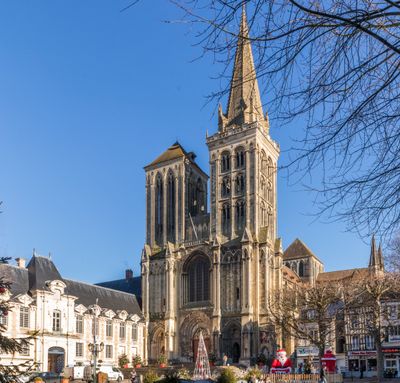
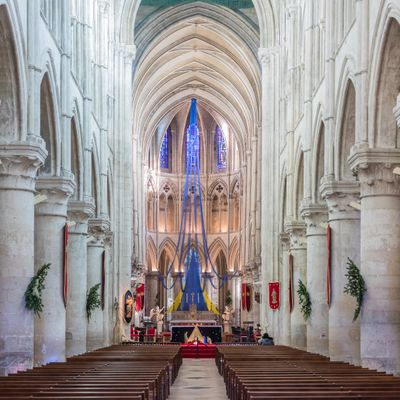
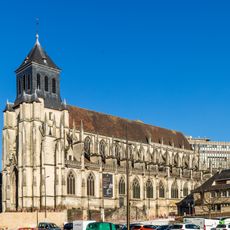
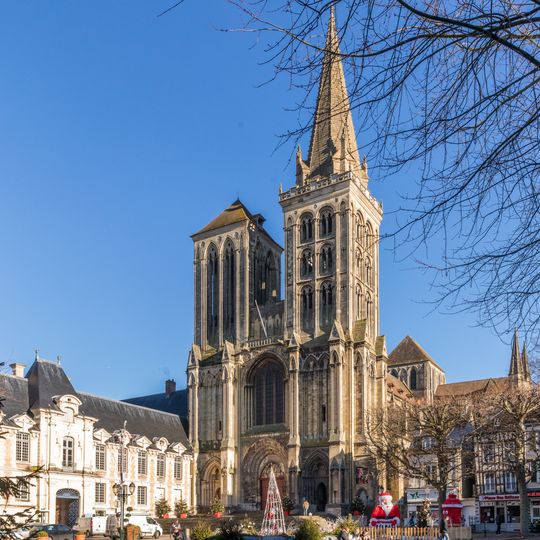
Lisieux Cathedral is a Norman Gothic building whose west front has three portals and two towers: the left with a low pyramidal roof, the right with a slender 17th-century spire. The nave, built from 1160, has heavy columns and false tribunes; the 13th-century choir has a triforium and double columns. The axial chapel, 17.20 m deep, has nine large windows.
Bishop Arnulf initiated construction in 1160, replacing an earlier building destroyed in 1136. The structure became Normandy's first Gothic cathedral and has stood as a landmark in the city ever since.
The cathedral is dedicated to Saint Peter and has been a parish church since the French Revolution, when the Diocese of Lisieux was suppressed under the Concordat of 1801 and merged into Bayeux. Pierre Cauchon, bishop here from 1432 to 1442 and linked to the trial of Joan of Arc, built the axial chapel where he is buried; it is 17.20 metres deep and lit by nine large windows.
The west front opens onto the nave, whose aisles lead past the twelve rectangular side chapels added from the 14th century. The axial chapel built by Pierre Cauchon, 17.20 m deep with nine tall windows, closes the east end. The south tower, rebuilt in 1553, carries the 17th-century spire seen from the square.
A persistent claim holds that Henry Plantagenet and Eleanor of Aquitaine married here in 1152; they wed at Poitiers Cathedral instead. The cathedral also keeps an organ built by Aristide Cavaillé-Coll, installed in the 19th century.
The community of curious travelers
AroundUs brings together thousands of curated places, local tips, and hidden gems, enriched daily by 93,402 contributors worldwide.