Mandallaz mountain, Mountain summit in Haute-Savoie, France.
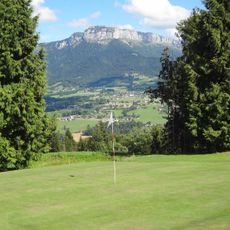
Mandallaz is a mountain summit in Haute-Savoie that rises to 929 meters and overlooks the landscape around Annecy. Its broad ridge extends across several kilometers and can be accessed from multiple trailheads positioned around its base.
The mountain was occupied in prehistory: four bodies and a fifth individual's molar were found in the Lesvaux cave during 1979 excavations, dating to the late Neolithic (around 2300 BC). On the Tête de la Mandallaz, archaeologist Pierre Broise identified remains of walls, probably a watchpost or oppidum, built before the Roman conquest from 125 BC. The mountain belongs to the Salève Jura chain, and its fault mirror at the Tête caused earthquakes in 1996.
The name Mandallaz comes from the old French muer and the Savoyard muanda, a small alpine chalet, with the diminutive suffix -allaz. Locals also call it montagne de la Balme, after La Balme-de-Sillingy; a 1912 note from the Académie florimontane judged the name Mandallaz wrongly applied to that mountain.
This mountain can be reached via several hiking trails that depart from marked parking areas around its base. The routes are accessible year-round and suit different experience levels depending on which access point and route you choose.
The Tête de la Mandallaz, the southern summit at 900 m, holds the remains of walls probably from a watch post or oppidum, identified by archaeologist Pierre Broise and built before the Roman conquest from 125 BC. The mountain's fault plane, a smooth rock face visible from Petite-Balme, caused earthquakes in 1996.
The community of curious travelers
AroundUs brings together thousands of curated places, local tips, and hidden gems, enriched daily by 93,847 contributors worldwide.