Nez de Jobourg, Coastal cape in La Hague, France
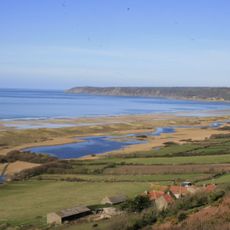
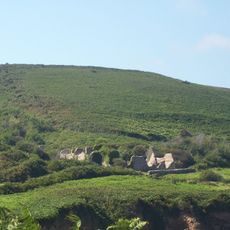
Nez de Jobourg is a rocky headland of Icartian gneiss at the southern end of the Cap de la Hague, in the commune of Jobourg. Its dark gray and brown cliff faces, with jagged edges and layered textures, drop toward a pebble beach of dark stones, where a band of white foam marks the shoreline. The rock dates from the Precambrian, about two billion years ago, making it the oldest geological area of the Cotentin.
The name comes from the Old Norse word 'nes', meaning cape, which reflects the Viking influence on Normandy's coast during the medieval period. The geological history extends even further back, over two billion years, marking when these rock formations first formed.
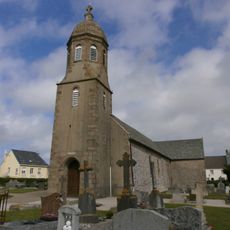
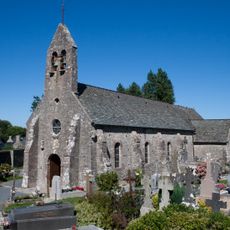
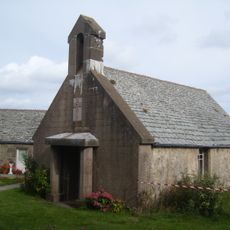
The name "nez" comes from the Old Norse nes, meaning cape; old documents spell it nais, and in La Hague it is pronounced "née", unlike the nasal "nô". Three caves — du Lion, de la Petite église and de la Grande église — were, by legend, smugglers' hiding places and passages toward the village and its church.
The cape has viewpoints along the cliffs with varying routes, some easier to access than others depending on your fitness level. Visitors should prepare for changing weather and strong winds, which are common at this exposed headland.
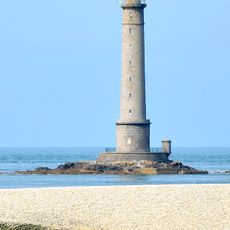
The cape is sometimes confused with the Nez de Voidries, the neighbouring headland where the panorama access actually lies; from there the view runs from the Pointe de Goury and its lighthouse to the Cap de Flamanville. The Nez de Jobourg itself is a separate promontory on the commune of Jobourg.
The community of curious travelers
AroundUs brings together thousands of curated places, local tips, and hidden gems, enriched daily by 94,114 contributors worldwide.