Montlaurès, Archaeological monument in Narbonne, France.
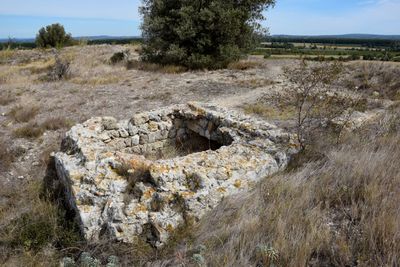
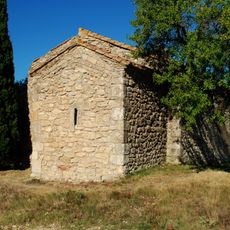
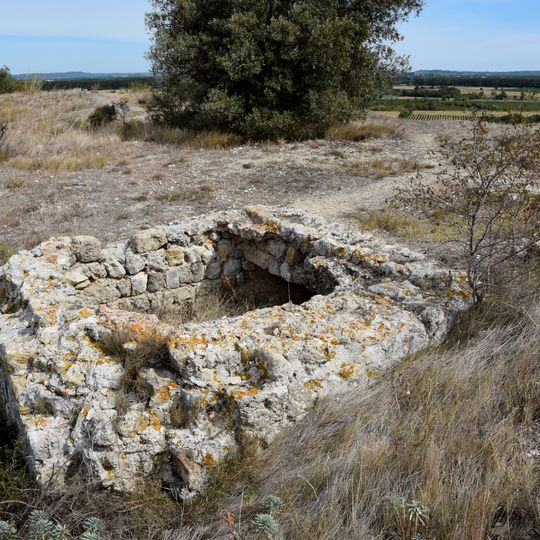
Montlaurès is an oppidum of dry-stone walls on a hill a few kilometres north-west of Narbonne, near the Aude. The low ruined enclosure is built of irregular pale grey and white stones in rough courses, with a dark rectangular gap on the right where a section has collapsed. Yellow and orange lichen patches the exposed stonework, and dry grass grows from the crevices.
The settlement emerged in the 5th century BCE and developed into a major trading center before Rome eventually absorbed the region. These phases of occupation demonstrate how control over the location shifted over time.
The site served as a significant meeting point for different communities over centuries, as evidenced by pottery and coins showing intensive exchange with distant cultures.
Access to the site is best on foot using marked pathways leading up the hillside. When visiting, wear comfortable shoes and bring sun protection depending on the season.
Montlaurès was excavated from 1899, when H. Rouzaud and E. Pottier opened trenches there; later campaigns by G. Claustres, P. Héléna and Joseph Giry, Y. Solier and C.-A. de Chazelles followed. The finds, including pottery and coins of the Iberian-Languedocian culture, are what tell us about the people who lived on the hill.
The community of curious travelers
AroundUs brings together thousands of curated places, local tips, and hidden gems, enriched daily by 93,847 contributors worldwide.