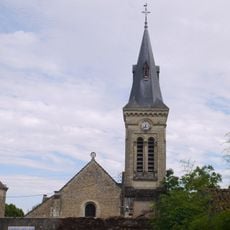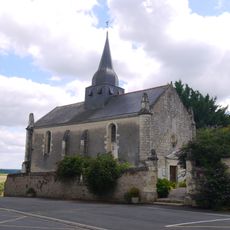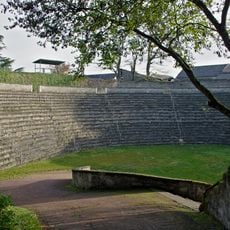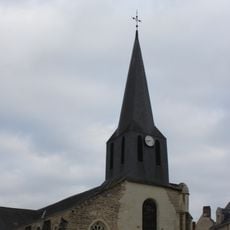
Motte castrale de Doué-la-Fontaine, Medieval fortification ruins in Doué-en-Anjou, France.
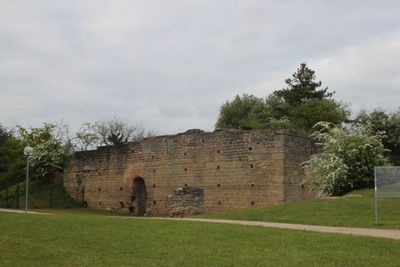
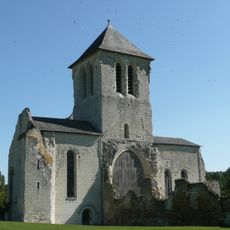
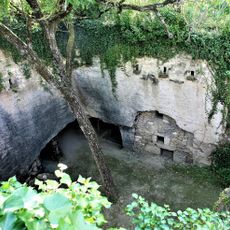
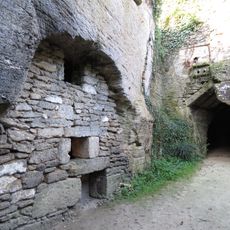
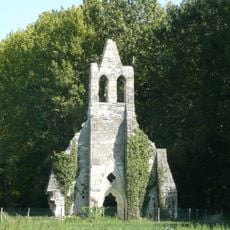
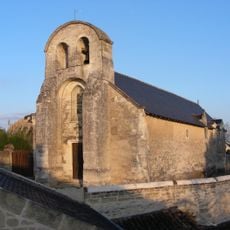
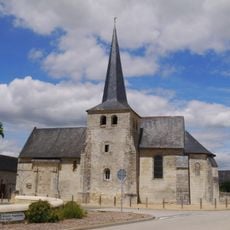
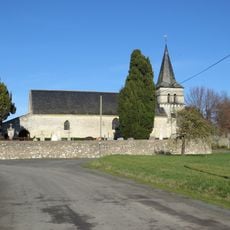
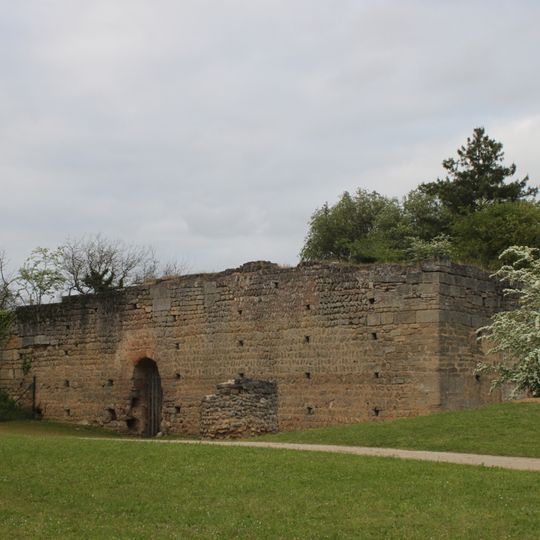
The Motte castrale de Doué-la-Fontaine is a medieval ruin with remains of a stone keep positioned on an elevated earthen mound. The foundations show multiple construction phases spanning from the early medieval period through later centuries.
A Carolingian aula of 23 by 17 metres with walls 1.7 to 1.8 metres thick was built here around 900 for a Count of Anjou, and King Robert I of France owned it before his death in 923. After a fire around 930–950, Theobald I, Count of Blois, raised an upper floor with an external entrance and turned the ground floor into a blind cellar, making it one of the earliest known stone castles. Around 1000 the building was buried in a 5-metre motte topped by a keep, which Fulk Nerra burned in 1026.
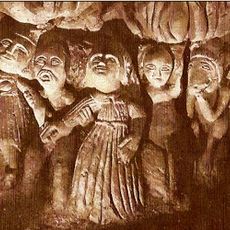
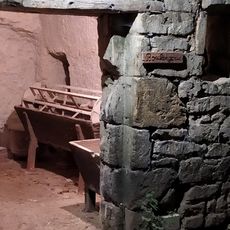
The name Motte de la Chapelle comes from the mound that buried the hall around the year 1000. Excavations by Michel de Boüard from 1967 uncovered a kitchen whose plastered walls carry 10th-century graffiti of figures, animals and religious scenes, including a Virgin and Child and a Crucifixion.
The site is accessible to visitors and allows exploration of the exposed foundations and earthen mound. It is helpful to wear sturdy footwear since the terrain is uneven and can become slippery after rain.
The 10th-century graffiti was written by an unknown man named Aimeri, known only for dedicating it to King Louis the Pious. Excavations from 1967 to 1969 also found plaster in the former kitchen bearing figures, animals and religious scenes, including a Virgin and Child and a Crucifixion.
The community of curious travelers
AroundUs brings together thousands of curated places, local tips, and hidden gems, enriched daily by 94,121 contributors worldwide.