Ouvrage Soetrich, Defensive fortification in Hettange-Grande, France.
Ouvrage Soetrich is a gros ouvrage of the Maginot Line at Hettange-Grande, with two entry blocks and six combat blocks linked by galleries about 30 metres underground. The main gallery runs 625 metres, and a 60 cm narrow-gauge railway connected the entries to the combat blocks. Its armament included 135 mm and 75 mm gun turrets, machine gun turrets, and cloches.
Constructed between 1930 and 1935, the fortification was built as part of the Maginot Line to defend against potential German invasion. Following World War II, it later served as a NATO command center during the Cold War era.
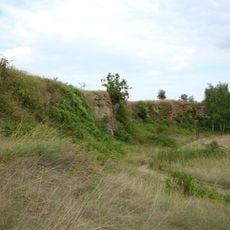
The name Soetrich comes from the nearby village, and the ouvrage carries the designation A 11 within the Fortified Sector of Thionville. Its underground casernement at Hettange-Grande supplied peacetime barracks for the garrison, while the ouvrage itself housed 583 men and 20 officers of the 169th Fortress Infantry Regiment and 151st Position Artillery Regiment. Visitors today find the two entries buried under mounds of earth, closed by the army to stop unauthorised visits.
The fortification is located in a wooded area as part of a network of interconnected defensive structures in the region. Visitors should be prepared for uneven terrain and damp conditions when exploring the underground sections.
The 75 mm gun turrets in Blocks 5 and 6 were removed in 1953, when the ouvrage was reconditioned after the war. From 1960 its magazines and underground barracks were converted into a NATO secure command centre at a cost of 54 million francs, and the combat blocks were largely abandoned. Both entries are now buried under earth to stop unauthorised visits.
The community of curious travelers
AroundUs brings together thousands of curated places, local tips, and hidden gems, enriched daily by 94,599 contributors worldwide.