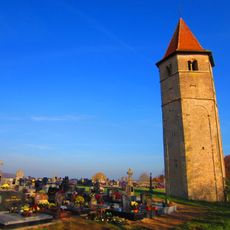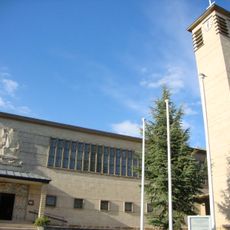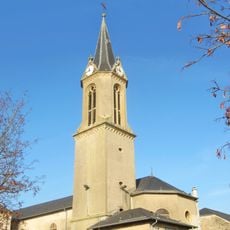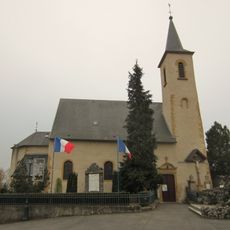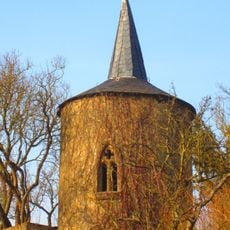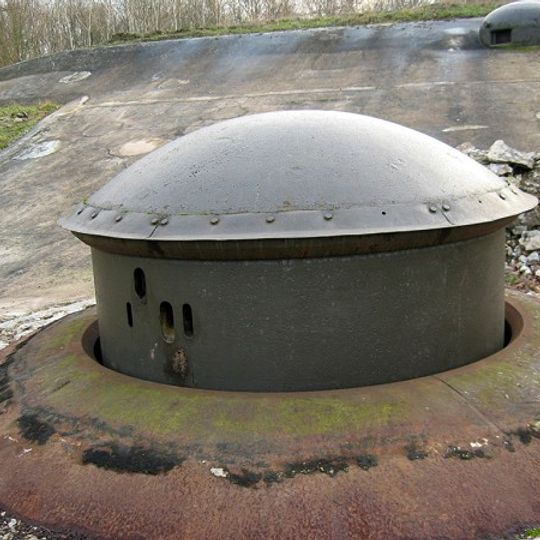
Ouvrage Bois-Karre, Military fortification in Boust, France.
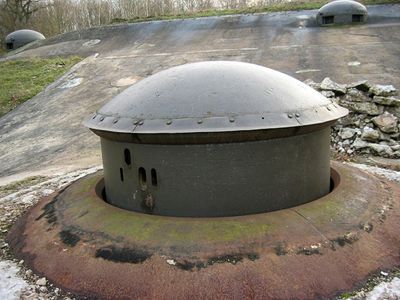
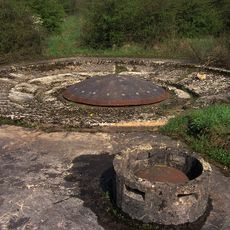
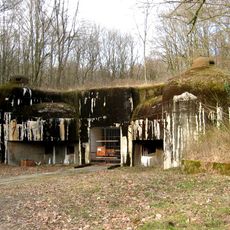
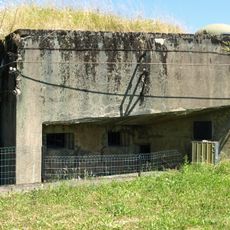
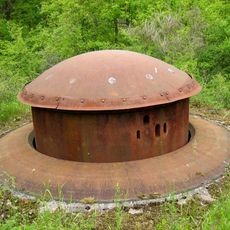
Ouvrage Bois-Karre is a single two-level concrete combat block in the Cattenom Forest, with no underground galleries or separate entries. Its west firing chamber holds a machine-gun embrasure and a combined machine-gun/47 mm anti-tank embrasure; the east chamber has two such combined embrasures and one machine-gun embrasure. A machine-gun turret and GFM cloches sit on the surface.
Surveyed by CORF in 1930, Bois-Karre was built from 1931 by contractor Degaine-Dubois and became operational in 1935 at a cost of 10 million francs. It was planned as an anchor for a fortified retreat line from the Cattenom salient, to be anchored at the other end by Block 2 of Ouvrage Galgenberg; that line was never built. The garrison comprised 91 men and two officers of the 168th Fortress Infantry Regiment under Sub-Lieutenant Boulay.
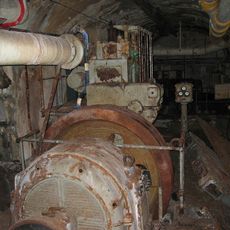
The ouvrage is maintained by the association "Ligne Maginot de Cattenom et environs", which restored it and opens it to visitors. Inside, copies of murals have been reproduced, and the two Renault engines and their 50 kVA 220 V generators are kept in working order; the machine gun turret turns electrically. Engine no. 1 received a 50 hp block taken from the petit ouvrage de Hobling.
The ouvrage is in the Cattenom Forest, south of Boust, between the Soetrich and Kobenbusch works. It is restored and opened by the association Ligne Maginot de Cattenom et environs. The machine-gun turret still turns electrically, and the two 50 kVA 220 V generators run.
Unlike larger fortification systems of that era, Bois-Karre was designed as a completely independent structure with no connection to underground galleries or neighboring positions. This isolated approach made it self-reliant for all defense operations.
The community of curious travelers
AroundUs brings together thousands of curated places, local tips, and hidden gems, enriched daily by 94,237 contributors worldwide.