Muséum d'histoire naturelle de Bordeaux, Natural history museum in Bordeaux, France
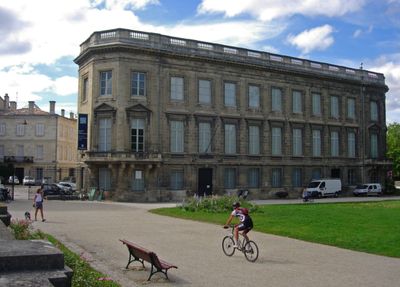
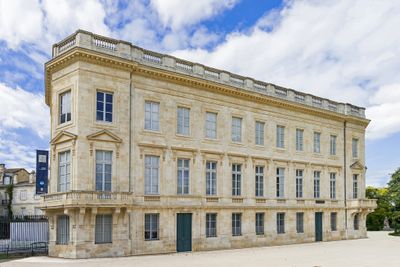
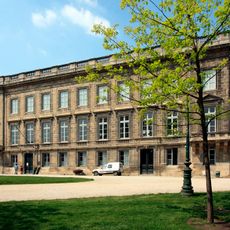
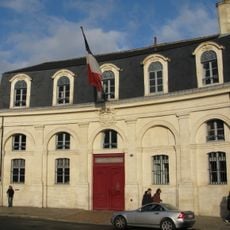
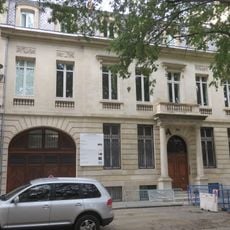
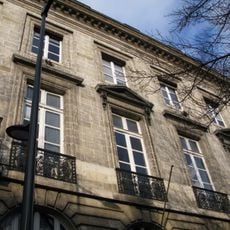
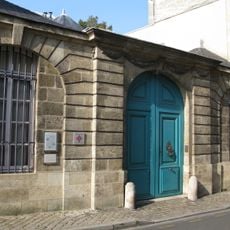
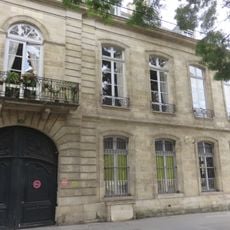
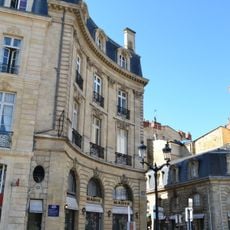
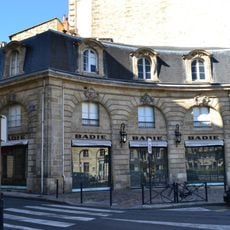
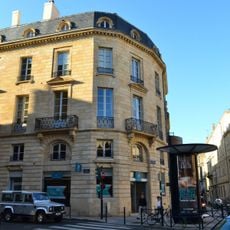
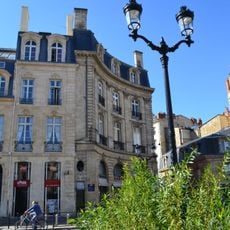
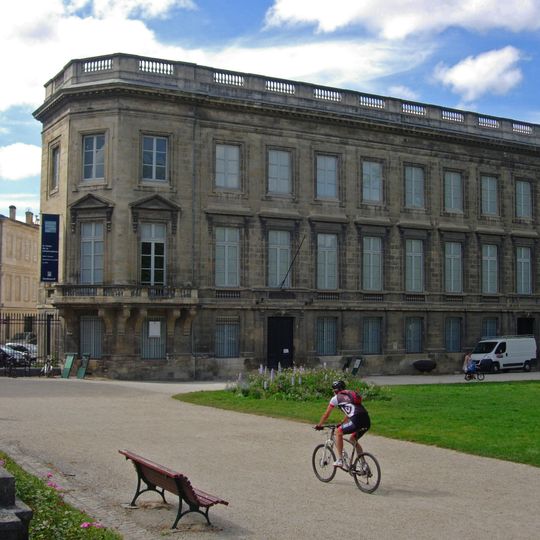
The Muséum d'histoire naturelle de Bordeaux occupies the Hôtel de Lisleferme, an 18th-century townhouse in the Jardin public. Its pale grey-brown stone facade has a rusticated base, a projecting central section, two upper storeys divided by pilasters, and a balustraded roofline. A chamfered corner carries a blue banner reading "MUSEUM D'HISTOIRE NATURELLE" and "BORDEAUX". The museum now spans three buildings, with 550 m² of basement space for temporary exhibitions.
The collection began in 1791 with that of François-de-Paule Latapie, professor of natural history at the Gironde central school, and was completed in 1804 by the bequest of shipowner Bernard Journu-Auber, making it one of the first public collections created after the Revolution. A plaque in the museum recalls the Journu house's involvement in the slave trade. A natural history cabinet was created in 1811 in the former hôtel de l'Académie, and in 1862 the collections moved to the hôtel de Lisleferme in the public garden, listed as a monument historique in 1935.
The museum's name changed to Muséum de Bordeaux - sciences et nature after its 2019 reopening. A plaque inside recalls the role of the Journu family, whose merchant wealth helped fund the collections, in the slave trade. The permanent exhibition shows about a quarter of the holdings; the rest sits in a 1,000 m² conservation centre on the city's outskirts.
The museum occupies three sites: the Hôtel de Lisleferme main building by the Jardin public, an administrative pavilion in the former botanical garden greenhouses, and a 1,000 m² conservation centre on the city outskirts. Tram stops Jardin public and Fondaudège Muséum, plus bus lines 2, 5, 15 and 23, serve the main entrance. Temporary exhibitions fill 550 m² of the basement.
The building itself is the 18th-century Hôtel de Lisleferme, listed as a monument historique since 8 October 1935. A plaque inside recalls that the Journu family, whose 1804 donation enriched the collections, was involved in the slave trade. The permanent exhibition shows only about a quarter of the collections; the rest sits in a 1,000 m² conservation centre on the city outskirts.
The community of curious travelers
AroundUs brings together thousands of curated places, local tips, and hidden gems, enriched daily by 94,054 contributors worldwide.