Parc de Choisy, Urban park in 13th arrondissement, France
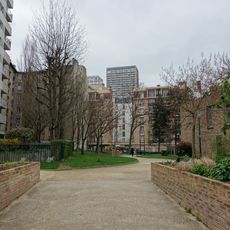
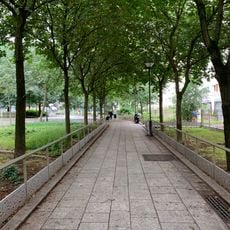
Parc de Choisy is a rectangular public garden laid out in 1937 by Édouard Crevel as a modern version of an 18th-century French formal garden. A Latin cross of tree-lined paths meets at a central basin with fountains, and the brick George Eastman Dental Institute stands at one end like a château, its façade aligned with the main alley. Broad lawns, flowerbeds and denser groves with winding paths and a small stream fill the edges.
The park opened in 1937, designed by architect Édouard Crevel on the site of a former gas factory. This transformation of an industrial location into a public green space marked an important change for the neighborhood.
The park holds memorial stones dedicated to deported Jewish children and victims of the Cambodian genocide. These monuments serve as quiet reminders of two distinct historical tragedies that visitors encounter while walking through.
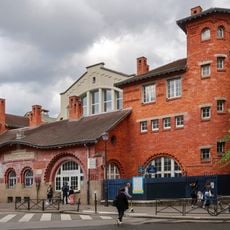
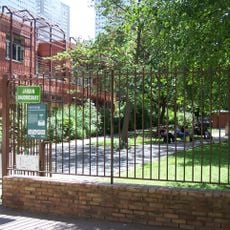
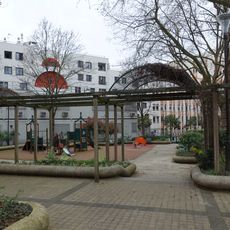
The park has regulated opening hours and is reached by the Tolbiac metro station; entrances open onto avenue de Choisy, rue George-Eastman, rue Charles-Moureu and rue du Docteur-Magnan, the last facing the Claude-Monet school complex. Two perpendicular paths cross at the central basin, with play areas, a Guignol theatre and a snack bar on site.
The round table near the avenue de Choisy entrance is porphyry, a gift from Finland after the 1937 Paris Exhibition. The sources also record a monumental metal sculpture by Richard Serra, Clara-Clara, reportedly in the park around 1985-1990, though witnesses place it there into the mid-1990s.
The community of curious travelers
AroundUs brings together thousands of curated places, local tips, and hidden gems, enriched daily by 92,894 contributors worldwide.