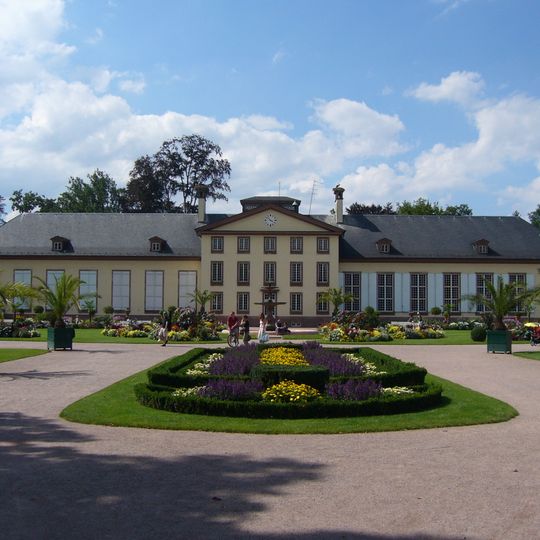
Parc de l'Orangerie, Public park in European district, Strasbourg, France
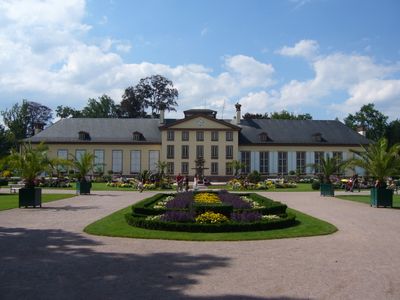
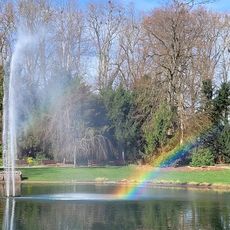
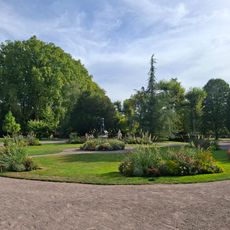
Parc de l'Orangerie is a landscaped garden covering about 26 hectares with tree-lined paths, a lake, and scattered fountains and sculptures. The grounds feature multiple quiet zones and recreational areas distributed throughout.
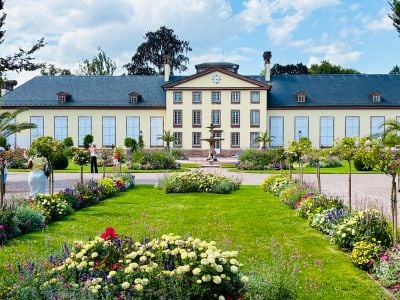
During the French Revolution, Strasbourg inherited 140 orange trees confiscated from Bouxwiller Castle. In 1804 Pierre-Valentin Boudhors built the Pavillon Joséphine to shelter them, named after Napoleon's wife. The park was greatly enlarged for the 1895 industrial and craft exhibition, when the artificial lake and its waterfall were dug and the grounds joined the Neustadt. The pavilion, listed in 1929, burned in 1968 and was rebuilt identically.
The park's name comes from the 140 orange trees confiscated from Bouxwiller Castle during the Revolution; only three remain, kept in greenhouses opened to the public on certain dates. The mini-farm closed in 2022 and is being replaced in 2026 by the Arche de l'Orangerie, devoted to animal welfare, while the former mini-zoo site is to host an outpost of the LPO care centre.
The park is accessible via the Droits de l'Homme tram station on line E, with parking available on Avenue de l'Europe. Comfortable walking shoes are recommended to explore the extensive pathways throughout the grounds.
The park's mini-farm closed in 2022 and is to become the Arche de l'Orangerie, devoted to animal welfare, in 2026; the former mini-zoo site is to host an outpost of the LPO care centre. The Buerehiesel, a half-timbered house built around 1600 and moved here from Molsheim for the 1895 exhibition, is now a Michelin-starred restaurant.
The community of curious travelers
AroundUs brings together thousands of curated places, local tips, and hidden gems, enriched daily by 92,849 contributors worldwide.