See the monuments around you in AROpen chests in the app
Around Us is built for your phone — point your camera at the streets and discover the monuments and places around you in augmented reality.Around Us is built for your phone — chests unlock when you walk, explore and capture nearby places.
Strasbourg offers numerous photographic opportunities beyond its main attractions. The city presents a collection of historic timber-framed houses, medieval bridges, hidden courtyards and notable architectural monuments from various periods. From the hieroglyph-adorned Maison Égyptienne to the neoclassical University Palace, from ancient defensive structures to Art Nouveau villas, these sites reveal authentic aspects of Strasbourg's heritage.
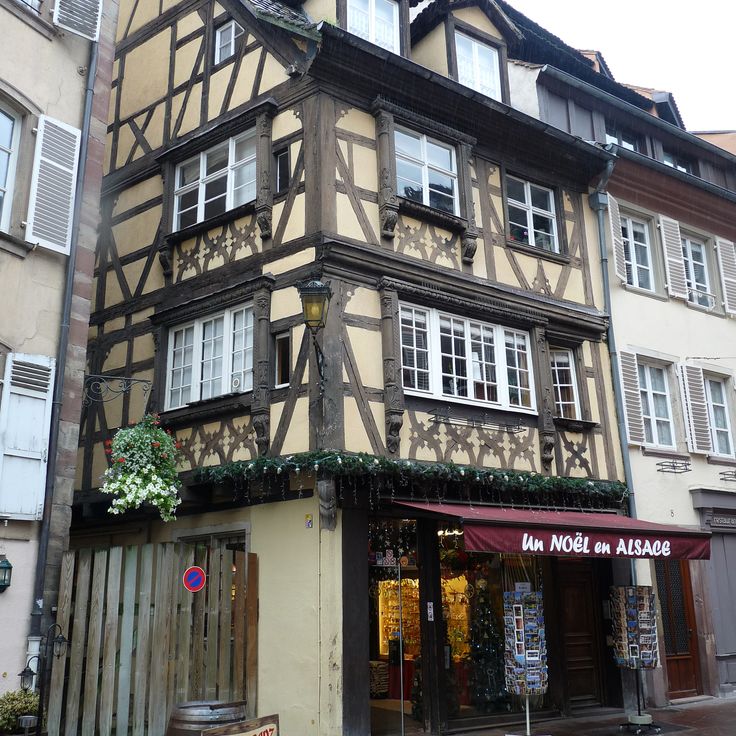
In the tanners' quarter, the Maison des Tanneurs documents the medieval craft tradition, while the Cour du Corbeau, with its multi-story wooden galleries, represents one of the city's oldest preserved inns. Rue du Jeu-des-Enfants leads through a quiet collection of historic residences, and Place de la République demonstrates the late 19th-century Prussian urban planning. The Barrage Vauban, a 17th-century defensive installation, provides wide views over the Ill River and the Ponts Couverts from its rooftop terrace.
Away from the tourist crowds, additional photogenic locations include the vaulted cellars of the Cave des Hospices Civils, where wine has been stored for centuries, the Art Nouveau architecture along Allée de la Robertsau, and the neoclassical facade of the Lycée des Pontonniers. Place Saint-Étienne and Place Saint-Thomas show everyday city life in historic settings. These locations enable photographs that go beyond typical postcard views and provide a nuanced perspective on Strasbourg's architectural diversity.
Strasbourg offers numerous photographic opportunities beyond its main attractions. The city presents a collection of historic timber-framed houses, medieval bridges, hidden courtyards and notable architectural monuments from various periods. From the hieroglyph-adorned Maison Égyptienne to the neoclassical University Palace, from ancient defensive structures to Art Nouveau villas, these sites reveal authentic aspects of Strasbourg's heritage.
In the tanners' quarter, the Maison des Tanneurs documents the medieval craft tradition, while the Cour du Corbeau, with its multi-story wooden galleries, represents one of the city's oldest preserved inns. Rue du Jeu-des-Enfants leads through a quiet collection of historic residences, and Place de la République demonstrates the late 19th-century Prussian urban planning. The Barrage Vauban, a 17th-century defensive installation, provides wide views over the Ill River and the Ponts Couverts from its rooftop terrace.
Away from the tourist crowds, additional photogenic locations include the vaulted cellars of the Cave des Hospices Civils, where wine has been stored for centuries, the Art Nouveau architecture along Allée de la Robertsau, and the neoclassical facade of the Lycée des Pontonniers. Place Saint-Étienne and Place Saint-Thomas show everyday city life in historic settings. These locations enable photographs that go beyond typical postcard views and provide a nuanced perspective on Strasbourg's architectural diversity.
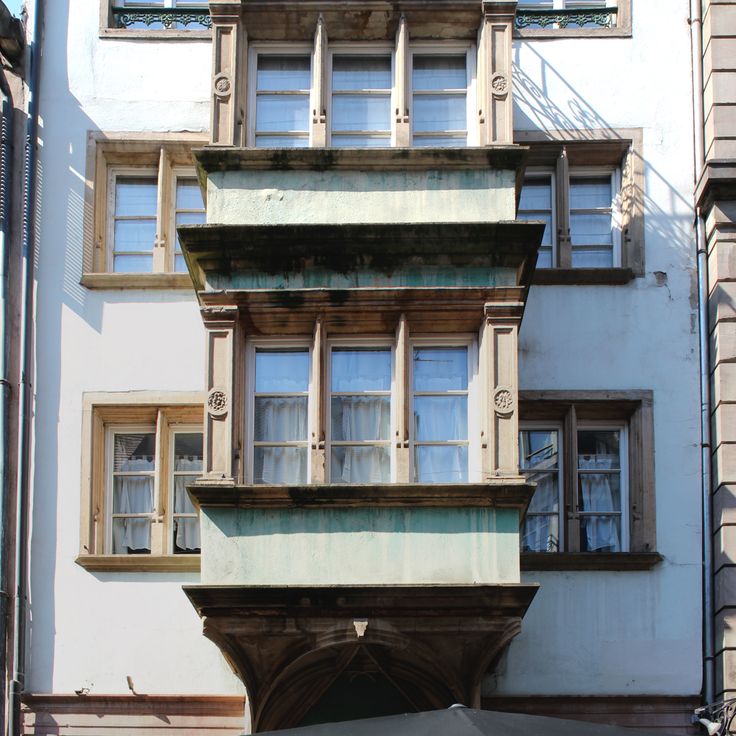
This medieval residence near the fortified bridges dates from the 14th century and displays stone walls and architectural elements from that period. The Maison des Ponts Couverts belongs to the historic buildings of Strasbourg that lie beyond the main tourist routes. The facade preserves characteristic features of medieval construction, including exposed masonry and window openings that document the building style of that era. Its location by the fortified bridges district makes this house an authentic witness to urban architecture from the Middle Ages.
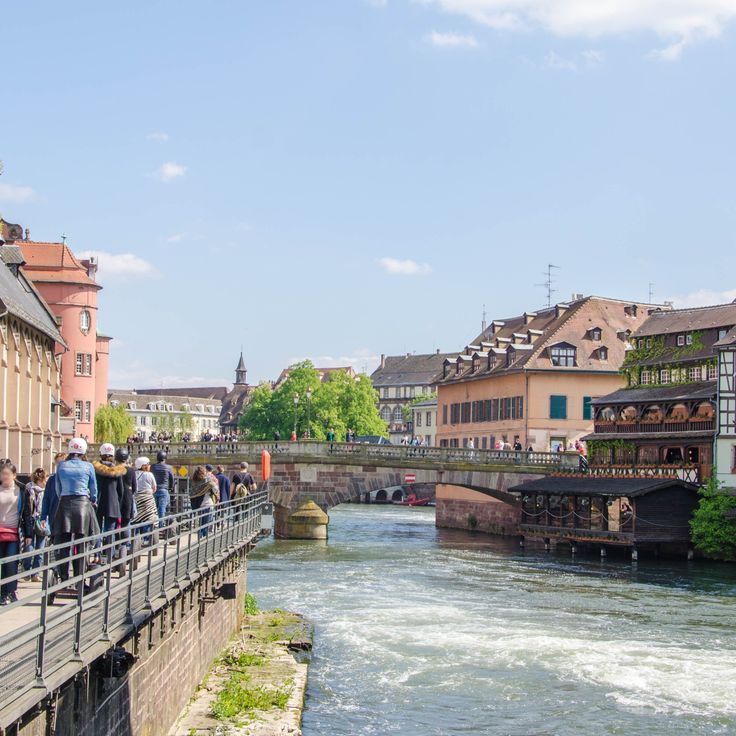
This 17th-century stone bridge spans the Ill, connecting Grande Île to residential neighborhoods. The structure integrates into the historic urban fabric and provides angles on surrounding half-timbered houses and waterways. The bridge serves as a crossing between the historic center and adjacent districts, enabling captures of traditional architecture along the riverbanks.
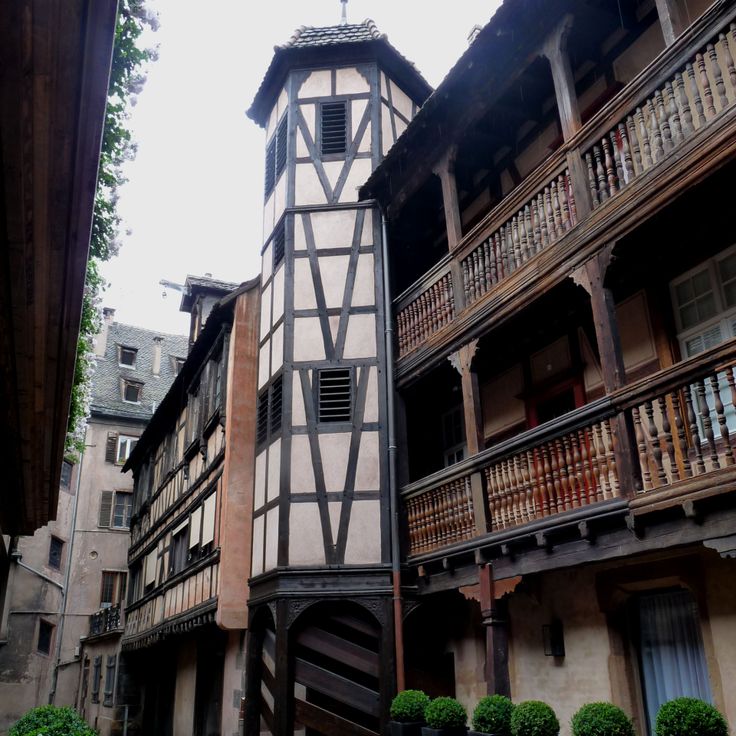
This 16th-century courtyard displays traditional Alsatian architecture with timber-frame buildings, stone arches and staircases. The structures date from Renaissance times and originally served as an inn for travelers and merchants. The courtyard takes its name from a historic tavern that operated here for centuries. The architecture combines Gothic and Renaissance elements with exposed timber beams, ornate window frames and medieval stonework. Today the complex functions as a hotel while preserving the original architectural features.
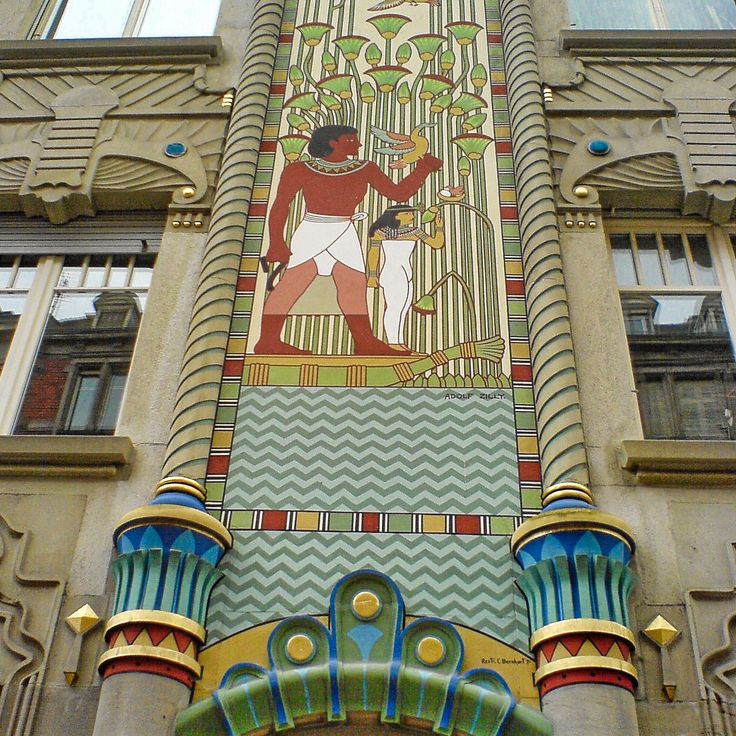
This 1905 building incorporates Egyptian architectural elements into Strasbourg's urban fabric. The facade displays columns with lotus capitals, hieroglyphs and sphinx decorations created during Europe's Egyptomania period. Located in the German Quarter, the residential building stands as evidence of early 20th-century architectural experimentation, when orientalizing motifs entered bourgeois architecture. The structure provides photographers with ornamental details rarely found in the city's typical Alsatian streetscapes.
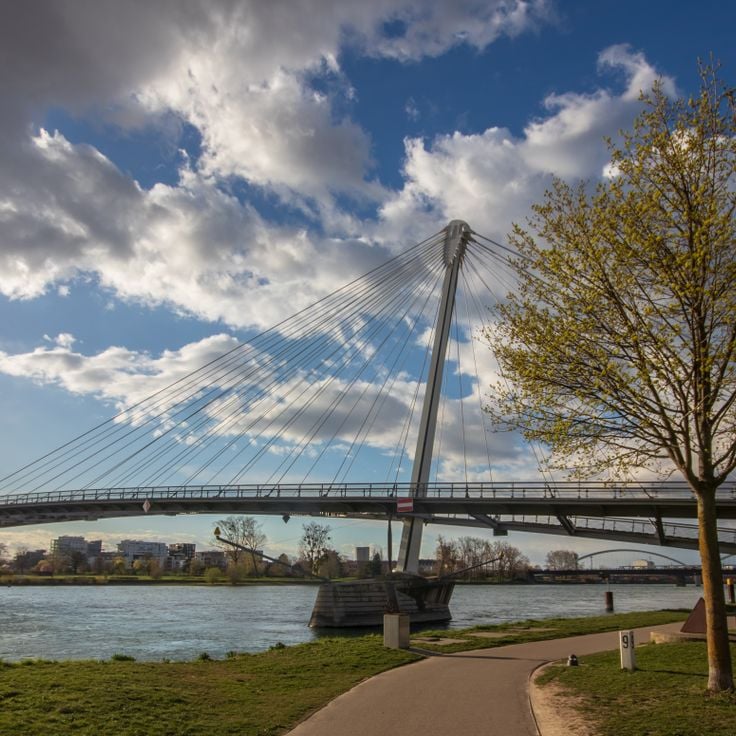
This steel and glass footbridge crosses the Rhine River between France and Germany, linking Strasbourg with Kehl. Inaugurated in 1994, the structure spans 387 meters (1,270 feet) and features a central observation platform that offers views of the river and both shores. The Passerelle Mimram serves as both a functional connection for pedestrians and cyclists and as an architectural element along the Rhine waterfront, demonstrating modern engineering in the context of Strasbourg's cross-border infrastructure.
The Rue du Jeu-des-Enfants is a pedestrian street featuring wall murals and painted ground patterns. Local artists add new drawings throughout the year, creating a continuously changing streetscape. This alley in the historic center offers rotating visual elements that reflect the city's contemporary art scene and provide photographers with regularly updated subjects.
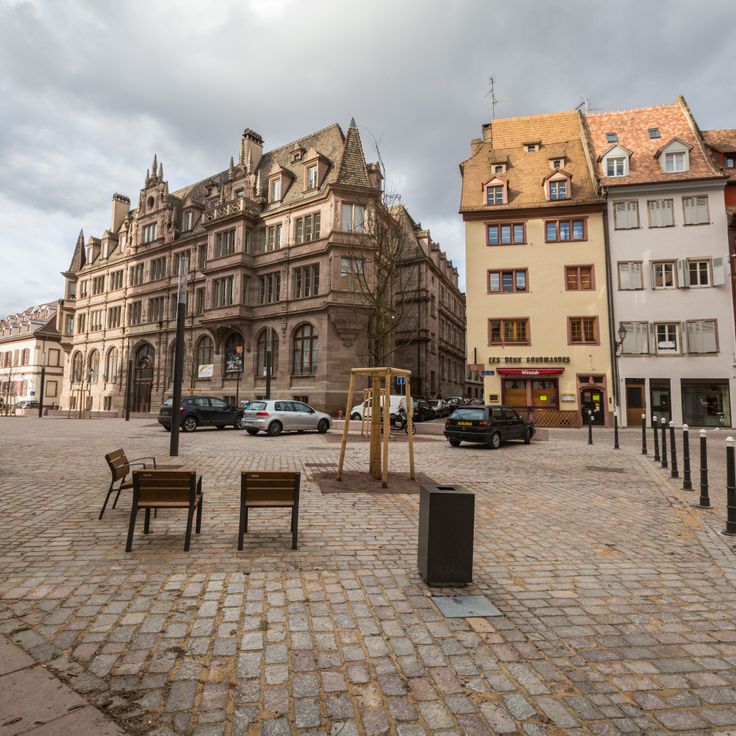
This 19th-century square features German Renaissance Revival buildings and a central fountain. The National Library and Prefecture line the square, which was designed during the German annexation after 1871 as a symbol of Prussian authority. The symmetrical arrangement of public buildings around the square follows the urban planning principles of that era. The monument at the center honors those who died in World War I and creates a photographic focal point with the surrounding facades.
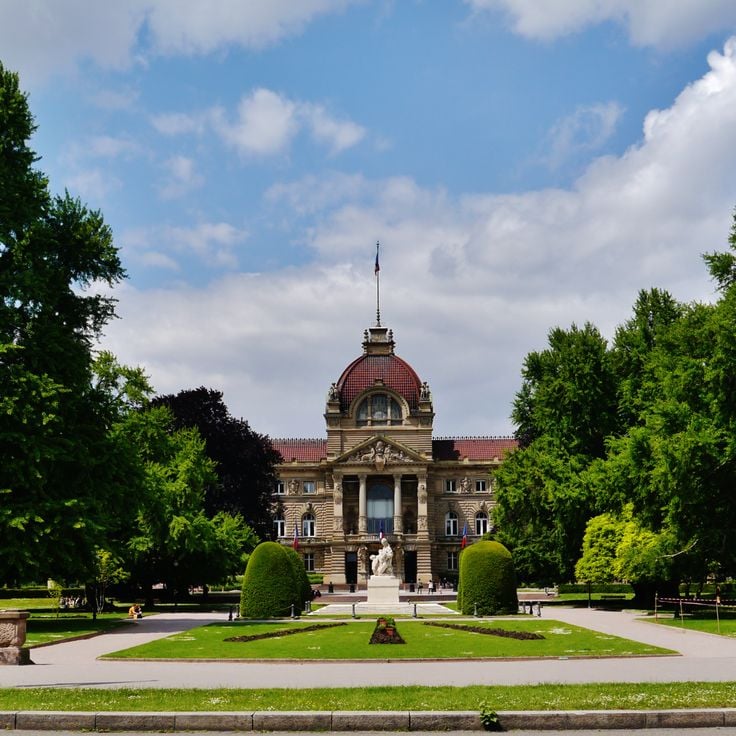
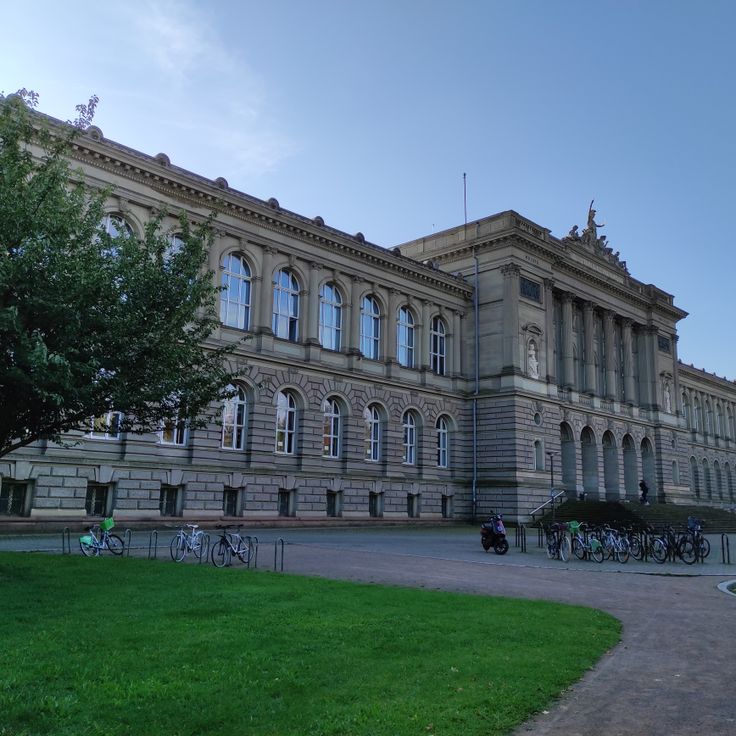
The University Palace was built in 1884 during the German administration of Alsace and continues to serve as an academic building for the University of Strasbourg. The representative facade displays sculptures of notable scholars and scientists that embody the educational ideals of the 19th century. The building houses lecture halls and an astronomical dome. The Wilhelmine architecture, with its characteristic elements, provides photographers with subjects that document the historical position of Strasbourg as a Franco-German border city.
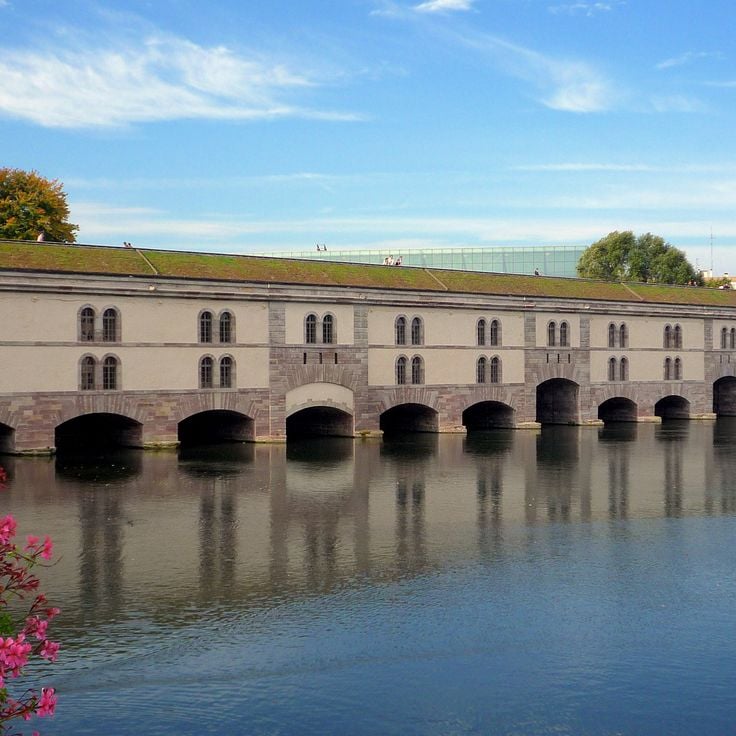
This defensive structure built in 1686 was designed by Vauban as part of the city fortifications and features observation platforms that provide panoramic views over the Petite France tannery district, the Ponts Couverts and the cathedral spire. The terrace of the Barrage Vauban stands approximately 65 feet (20 meters) above the Ill River water level and allows photographers to capture the traditional half-timbered houses, medieval towers and historic city layout from an elevated position.
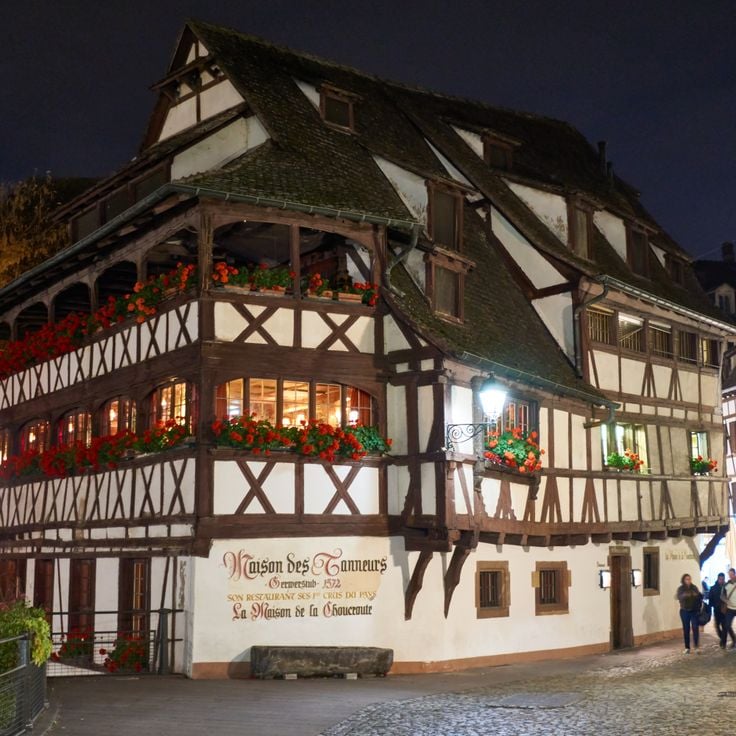
This half-timbered building from 1572 with its large windows stands along the water's edge and documents the history of leather processing in Strasbourg. The tannery quarter developed during medieval times in this section of the city, where craftsmen used the water flow for their work. The architecture displays typical elements of 16th-century Alsatian workshop houses. The waterside facade and characteristic structure provide photographic subjects that extend beyond the city's standard tourist sites.
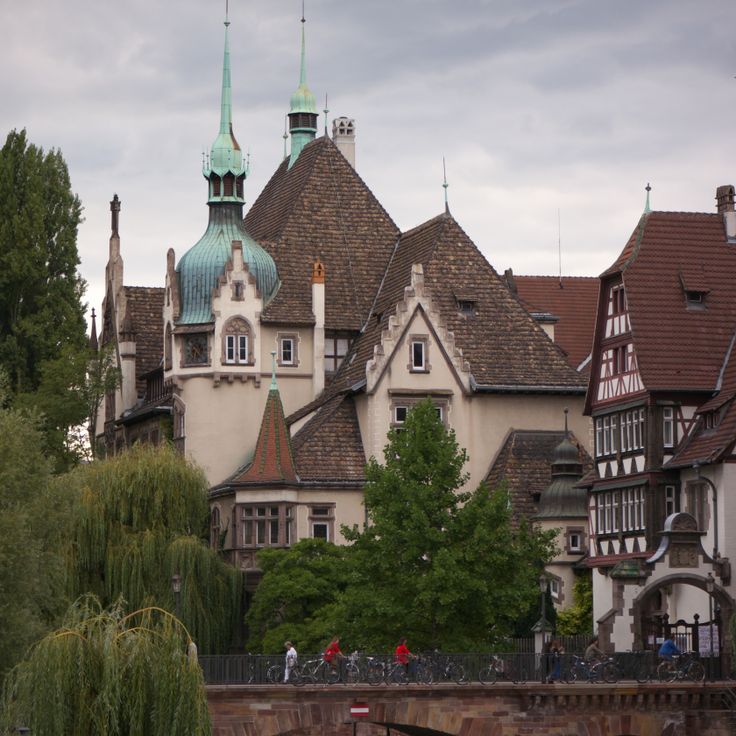
The Musée du Patrimoine Régional connects three houses dating from the 16th and 17th centuries along Quai Saint-Nicolas, presenting furniture, costumes and everyday objects from rural Alsace. The collection documents domestic life and craft traditions of the region across several centuries. The historic buildings themselves offer insights into Renaissance and Baroque urban architecture, while the exhibition rooms show how rural life evolved from medieval times through the modern era. The museum sits on Quai Saint-Nicolas, a riverside street overlooking the Ill, where the half-timbered houses have preserved their original structure.
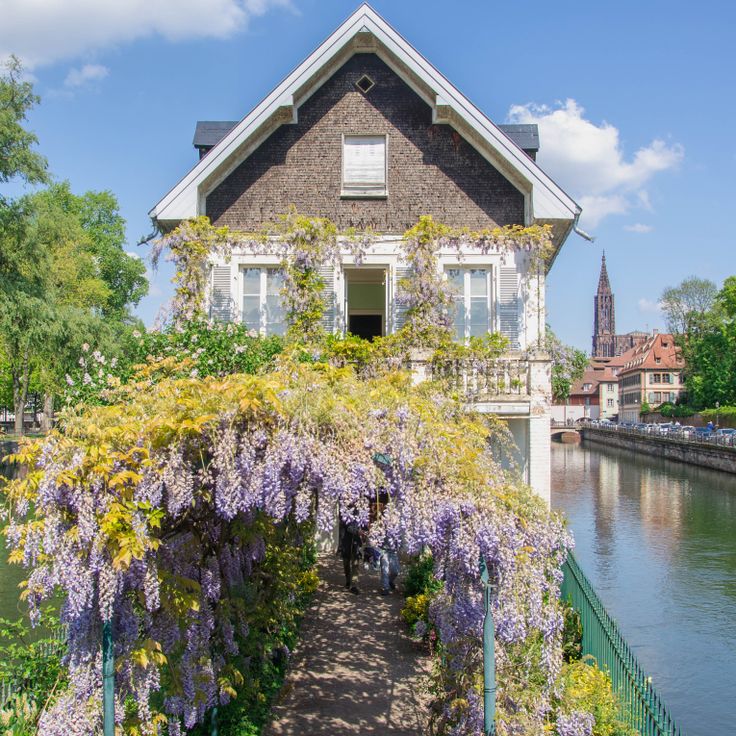
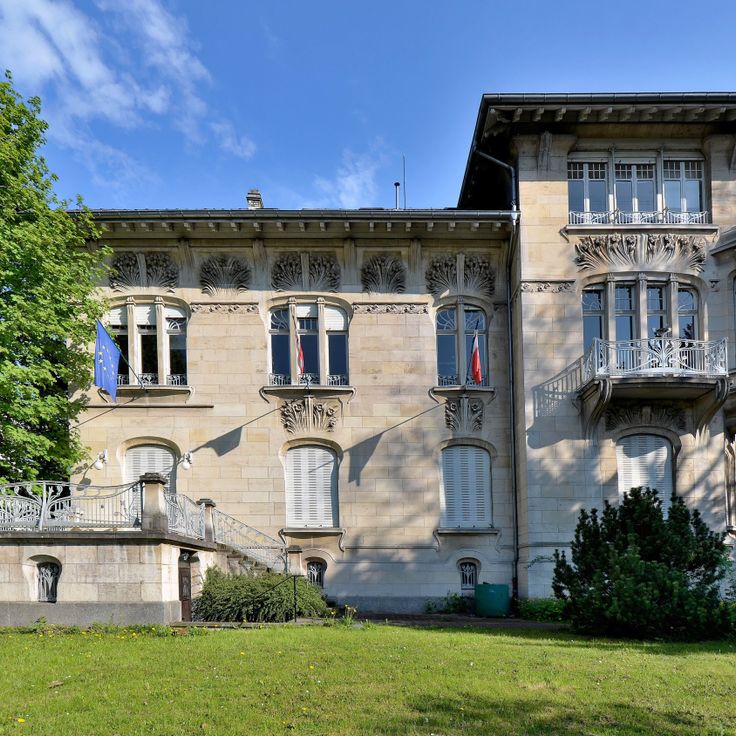
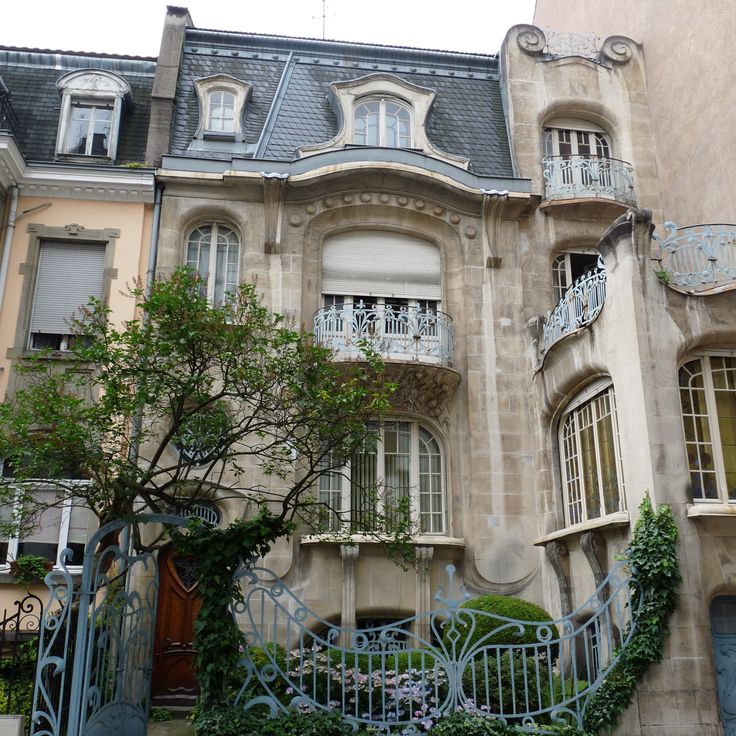
This residence on Allée de la Robertsau was built in 1897 and displays characteristic features of the German Jugendstil movement with stained glass windows and ceramic tiles. The building represents one of Strasbourg's alternative photography locations, documenting the city's architectural diversity beyond its main attractions. The decorative elements of the facade illustrate the influence of Art Nouveau in Alsatian architecture at the turn of the century.
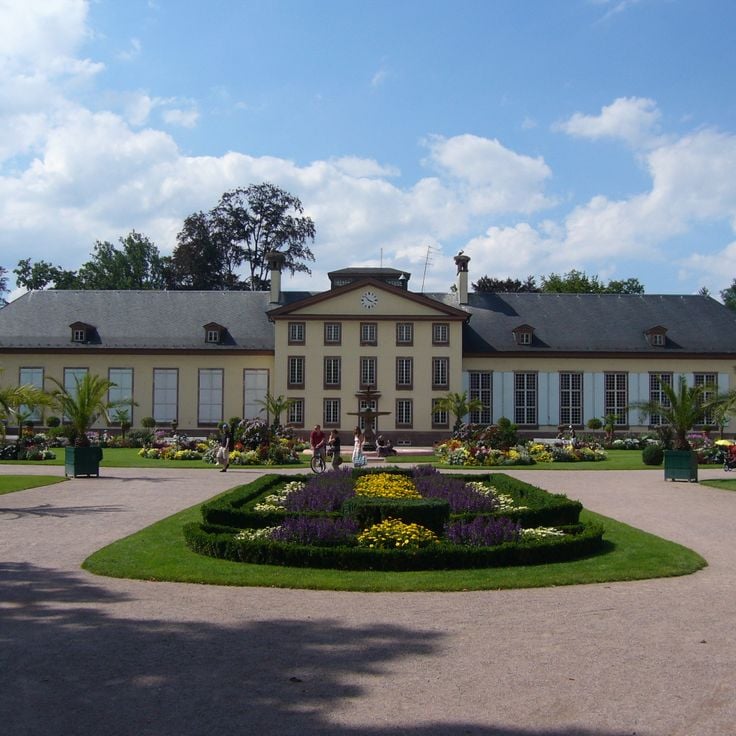
The Parc de l'Orangerie covers 65 acres (26 hectares), making it Strasbourg's largest public green space. Established in 1804 under the direction of Le Nôtre, the park now contains botanical collections, a small zoo with local species, paths along ponds and canals, and a stork nesting area. The grounds also include a 19th-century pavilion originally built for Empress Joséphine. The geometric alleys and water features provide varied perspectives for photographers, particularly during morning hours when light filters through the tree-lined avenues.
The Lycée des Pontonniers occupies a nineteenth-century stone building near the banks of the Ill River. The facade features large windows and ornamental details characteristic of school architecture from that era. The riverside location provides a contrast between institutional architecture and the natural setting. The building represents one of Strasbourg's historic educational institutions and reflects the urban planning priorities of the nineteenth century. The stonework and symmetrical window arrangement document the architectural standards of the period.
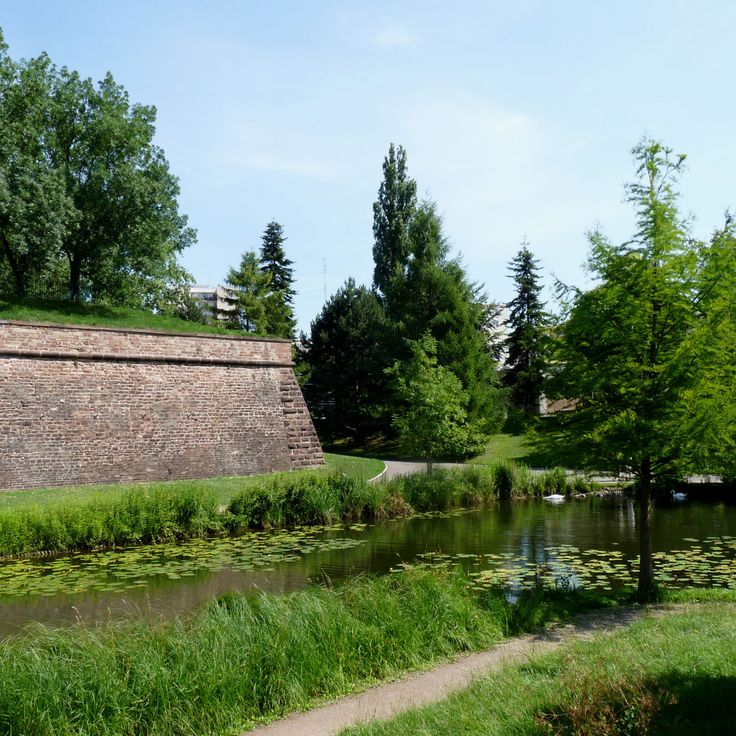
Parc de la Citadelle occupies former military grounds, combining fortification walls with public green space. The park extends around a central water basin, bordered by paved walkways and mature trees. The historic ramparts, dating from the 17th century, frame this urban park that serves both as architectural heritage and recreational area. Photographers find contrasts between military architecture and parkland here, with sight lines across the water and through rows of trees. The grounds reveal Strasbourg's past as a fortified city while now functioning as a local recreation area for residents and visitors.
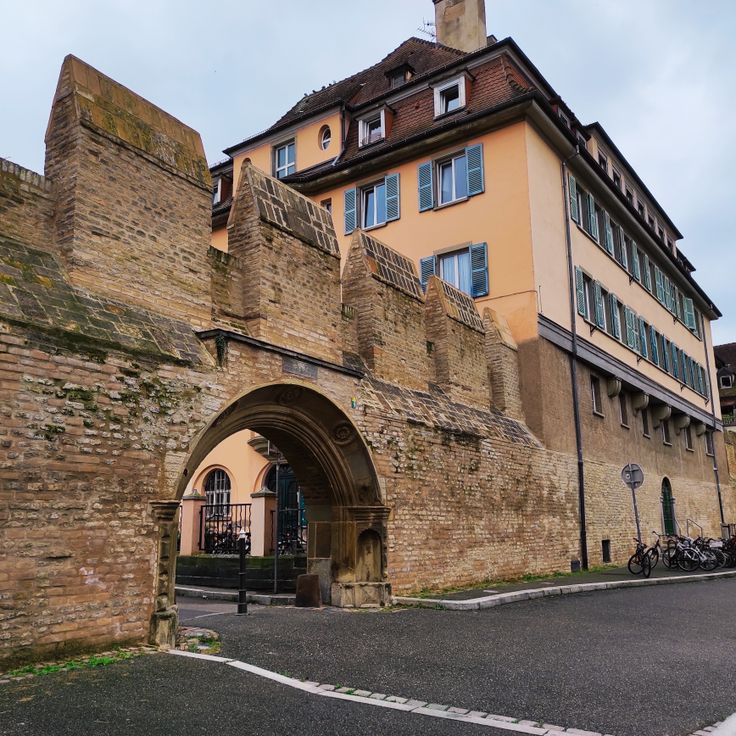
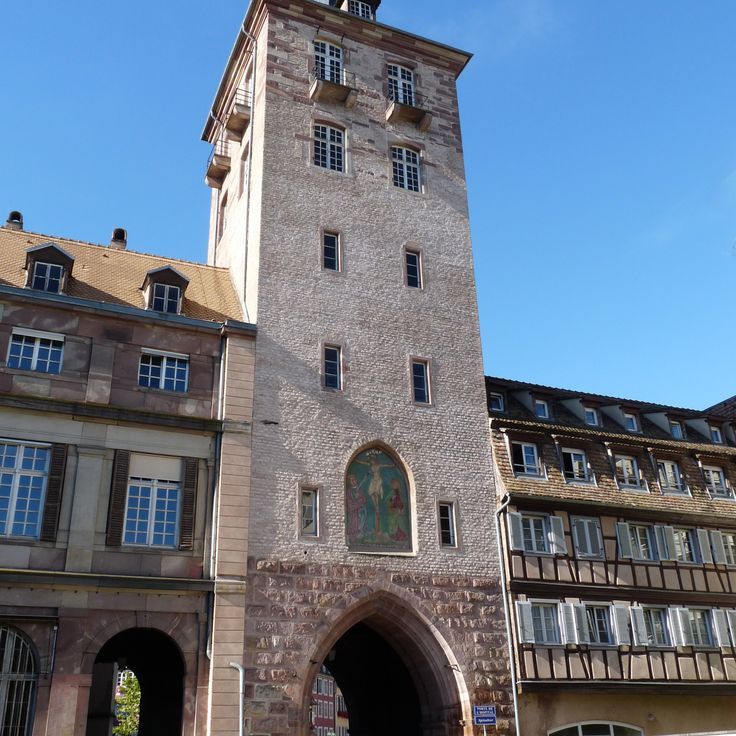
This 14th-century medieval gate features stone towers, defensive walls and architectural elements characteristic of fortified structures from that period. The Porte de l'Hôpital formed part of Strasbourg's original fortification system and demonstrates the military architecture of the Middle Ages. The gate preserves construction details that provide insights into the defensive strategies of medieval cities. As part of the historic city walls, it documents the evolution of urban protection systems in Alsace and adds to the alternative photography locations that reveal authentic aspects of Strasbourg's heritage.
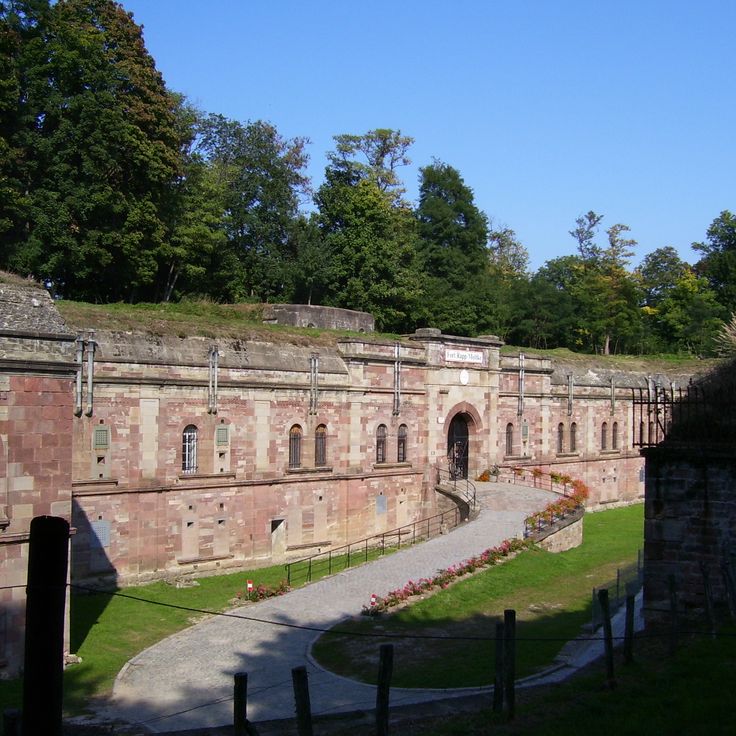
Fort Rapp was built in 1872 as part of the military fortification system erected after the German annexation of Alsace. The complex includes underground passages, barracks buildings and artillery positions that illustrate the defensive concepts of that era. Guided tours explain the military architecture and the strategic role this fortress played within the ring of fortifications around Strasbourg. The casemates and reinforced walls provide insight into the construction techniques of the late 19th century.
The Hôtel Brion is a modernist structure from the 1950s designed by Italian architect Gio Ponti. The facade features geometric patterns and extensive glass walls that direct natural light into the interior spaces. Ponti's design integrates functional spatial arrangements with visual accents that reflect his design philosophy of the period. The building stands as an example of mid-century modern architecture in Strasbourg, offering photographers clean lines, light and shadow contrasts, and characteristic details of postwar architectural innovation.
Rue des Dentelles documents Strasbourg's historic textile quarter with medieval-era workshops. This lane displays traditional Alsatian half-timbered houses featuring exposed wooden beams and narrow facades. Former lacemaking workshops and textile shops line the cobblestone passage. Architecture from the 16th and 17th centuries presents artisan building traditions with projecting upper floors and decorated gables. For photographers, the street offers authentic perspectives on the medieval urban fabric with its irregular building lines and period details.
Rue des Tonneliers in Strasbourg's historic center preserves traces of its original function as a 16th-century artisan street. This cobblestone lane features well-maintained timber-framed houses with exposed beams, stone archways, and architectural details that recall the former cooper workshops. The narrow street connects different parts of the old town and offers photographers characteristic views of Alsatian urban architecture. Buildings along the route display typical features of regional construction with overhanging upper floors and traditional window frames. This less-trafficked passage provides insight into commercial life in medieval Strasbourg.
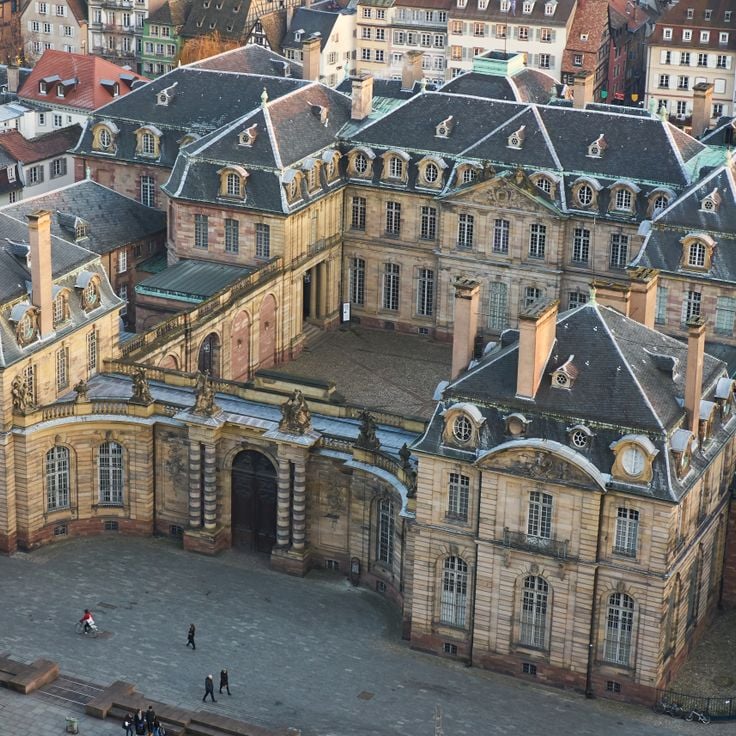
The inner courtyard of the Palais Rohan features 18th-century stonework, classical columns and ornate windows. A stone staircase leads to the upper floors. The architecture combines French and German influences of the period and offers photographers details of baroque craftsmanship, symmetrical facades and historical elements that document the ceremonial character of the former episcopal palace.
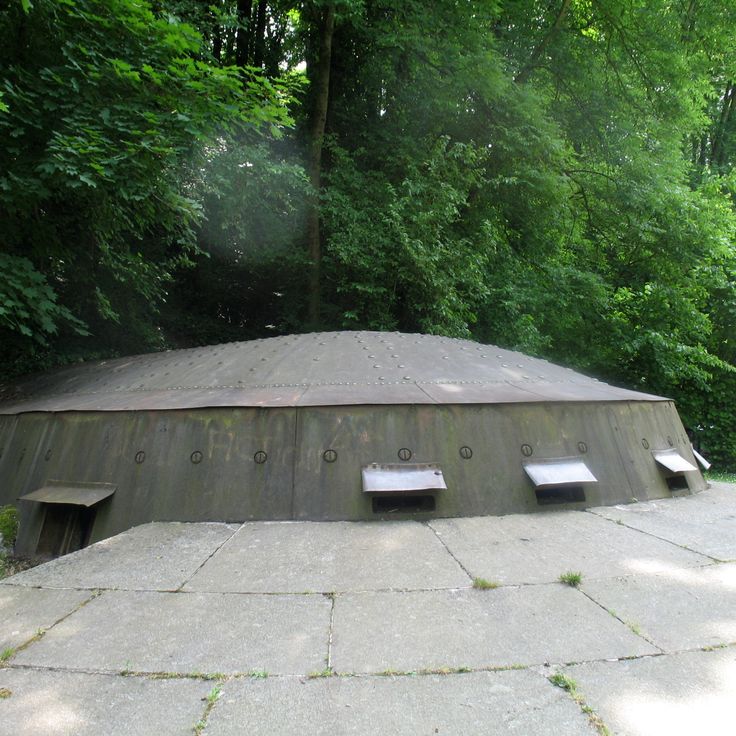
This concrete fortification from 1875 stands near the train station and served military defense purposes. The structure includes underground passages and thick walls that offer unusual perspectives for photography. The bunker displays late 19th-century military architecture with preserved defensive elements. The facility presents a contrast to Strasbourg's civilian architecture and documents the city's military history during the German annexation period after 1871.
Place Saint-Thomas sits in the historic center of Strasbourg and is dominated by the Protestant church of the same name. The church was built between 1196 and 1521 and displays Gothic architecture with twin towers and stone sculptures. The square forms a quiet area surrounded by Alsatian half-timbered houses and cafes, suitable for capturing the Gothic façade and surrounding historic buildings. The church houses the tomb of Maurice de Saxe, a significant work of French Baroque sculpture, providing additional detail for architectural photography.
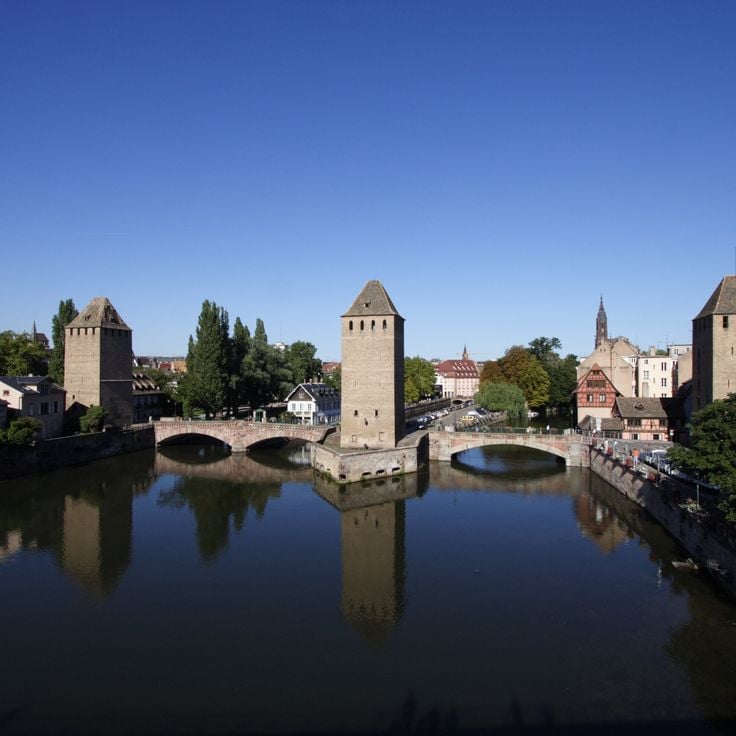
This viewing point overlooks the medieval towers, stone bridges and half-timbered houses along the canals. The Ponts Couverts, whose wooden roofs were removed in the 18th century, form a striking sight with the four remaining defensive towers from the 13th century in the Petite France district. From here the connection between military architecture and waterways that once served to defend the city becomes apparent. The perspective captures both the historical structures and everyday life along the Ill, where residential and commercial buildings from different centuries stand side by side.
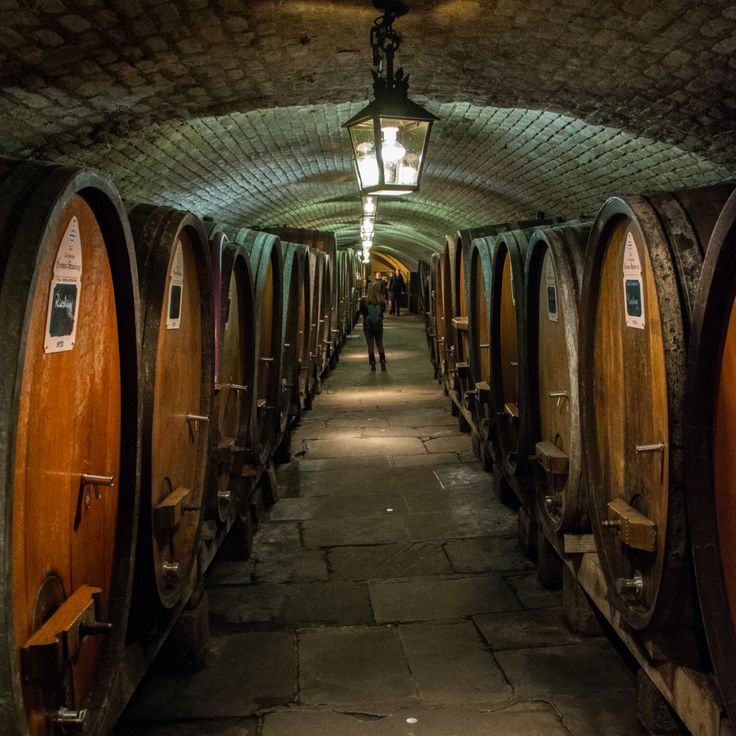
This underground wine cellar from the 14th century sits beneath the hospital and stores wine barrels in a vaulted space. The historic facility displays traditional winemaking equipment and tools used over centuries for wine production. The cellar documents the region's long winemaking tradition and the importance of the wine trade to civic institutions. The vaulted structure preserves the original medieval architecture and provides insights into historical storage methods.
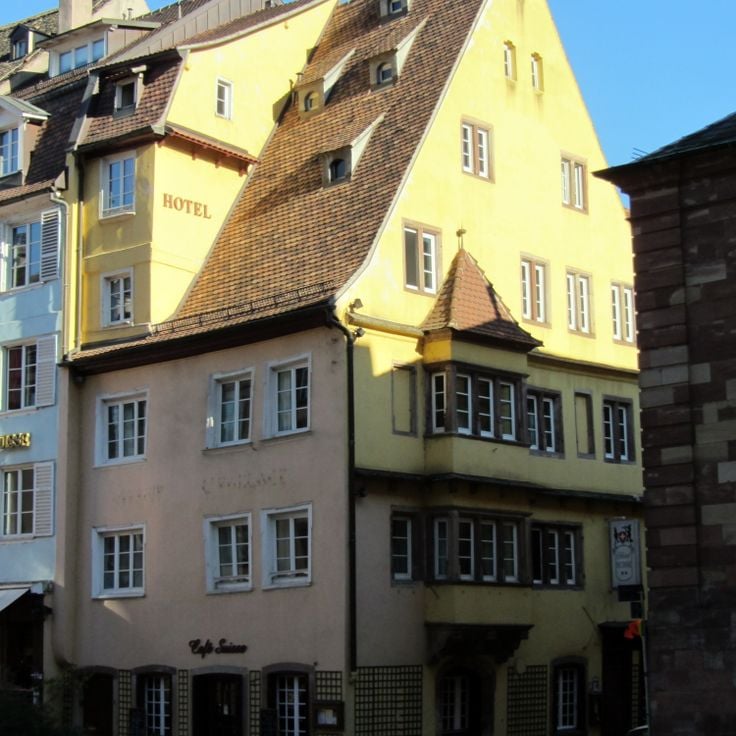
This medieval street connects Place Saint-Étienne with the surrounding neighborhood and displays typical half-timbered houses with flower boxes on the windows. Rue de la Râpe runs through a narrow passage where the traditional Alsatian architecture of the historic center remains intact. The house facades date from different centuries and document the architectural evolution of Strasbourg between the Middle Ages and the early modern period.
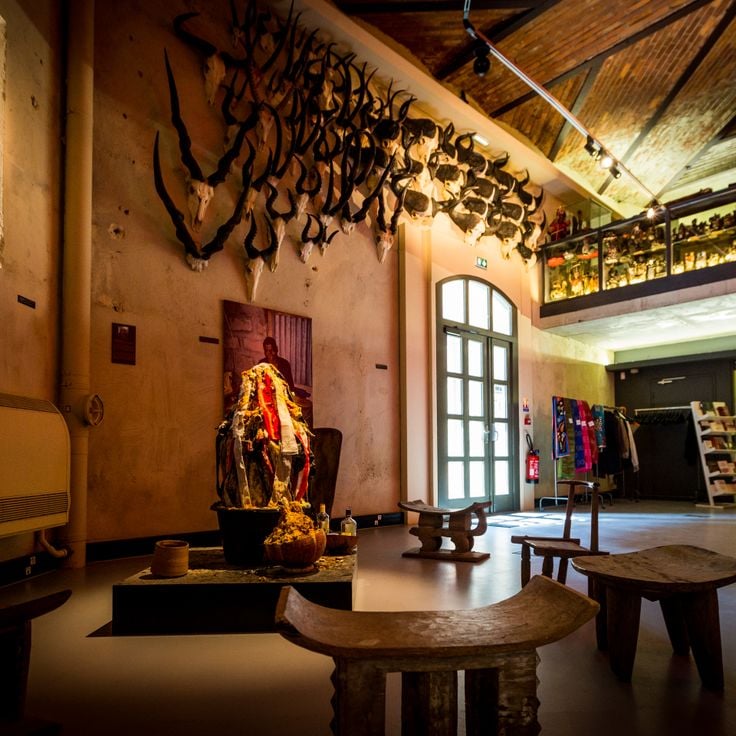
This museum occupies a 19th-century water tower in the Neudorf district and displays over 1,000 religious objects and ceremonial artifacts from Benin, Togo and Ghana. The collection includes sculptures, masks, textiles and ritual items that document various aspects of the Vodun tradition. The unusual exhibition space in the historic industrial building creates an interesting contrast with the displayed objects and provides a distinctive setting for photographing the African ceremonial pieces.
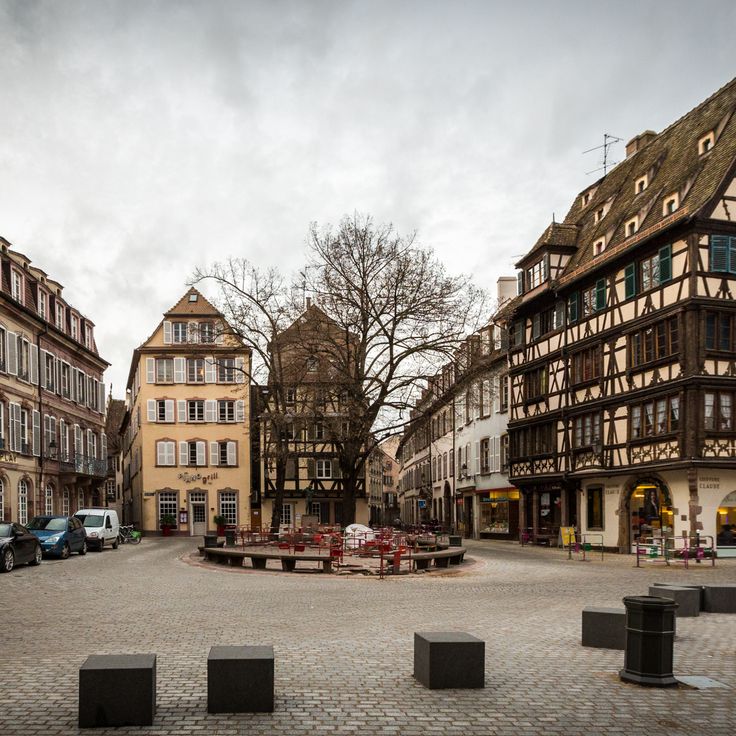
Place Saint-Étienne combines medieval structures with a Gothic church and residential buildings from different periods. Trees shade the restaurant terraces while the architecture reveals Strasbourg's historical layers. The square offers photographers opportunities to capture historic facades, ecclesiastical details and neighborhood life away from the main tourist routes.
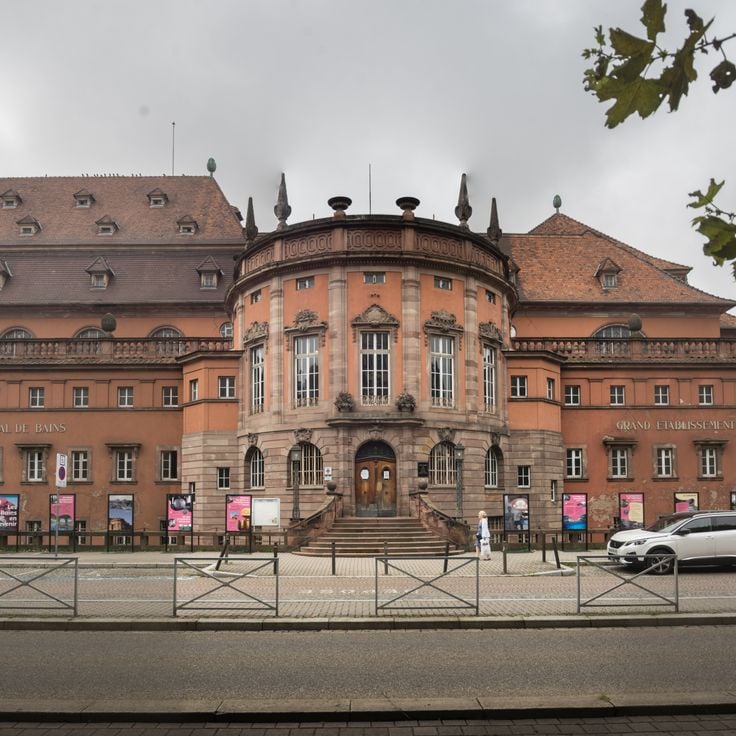
These 1908 municipal baths display Art Nouveau architecture with decorated facades and preserve their original thermal pools and traditional bathing facilities still in operation today. The building documents early 20th century urban bathing culture with original ceramic work, glass windows and functional spaces designed for both hygiene and social gathering. The facility combines practical infrastructure with decorative elements of the period and offers photographers geometric lines, historical details and natural light through skylights.
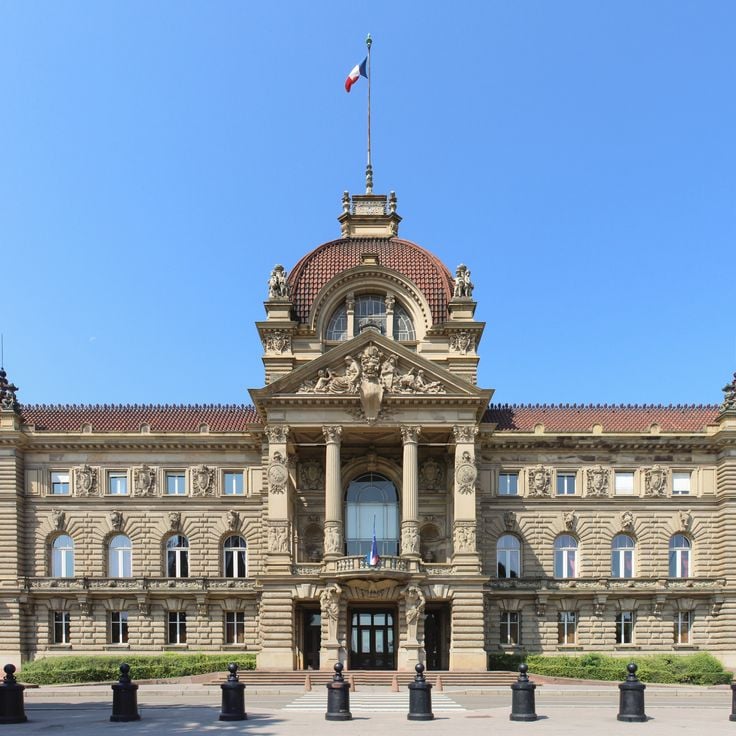
This former imperial palace was built between 1883 and 1888 following plans by architect Hermann Eggert in German Neorenaissance style. The building served as a residence for Kaiser Wilhelm II during his visits to the then Reichsland of Alsace-Lorraine. The symmetrical facade displays detailed stonework, while the central dome rises over 165 feet (50 meters). Today the palace houses the Central Commission for the Navigation of the Rhine, an international organization regulating Rhine shipping. The architecture combines Prussian state representation with regional stylistic elements, presenting a photographically compelling example of Wilhelmine construction in Strasbourg.
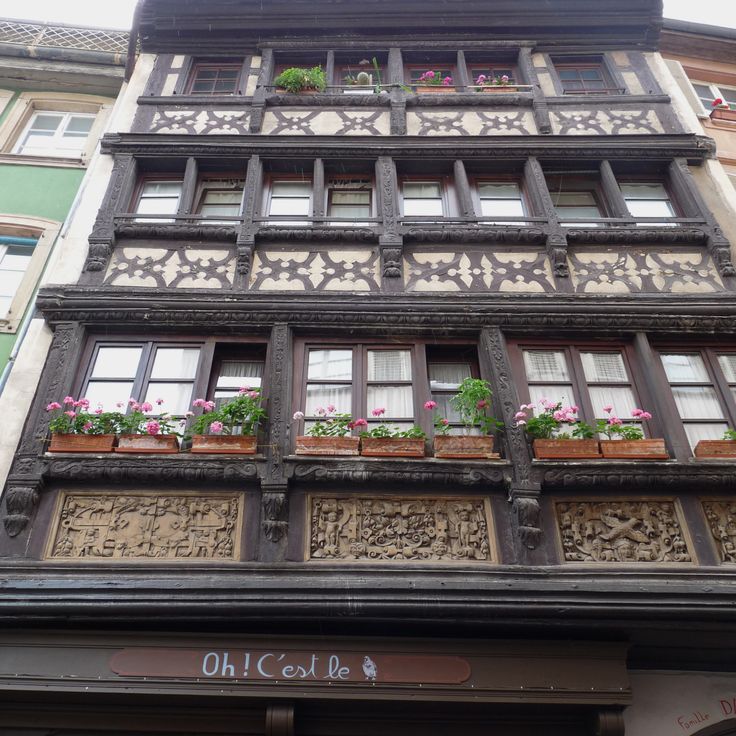
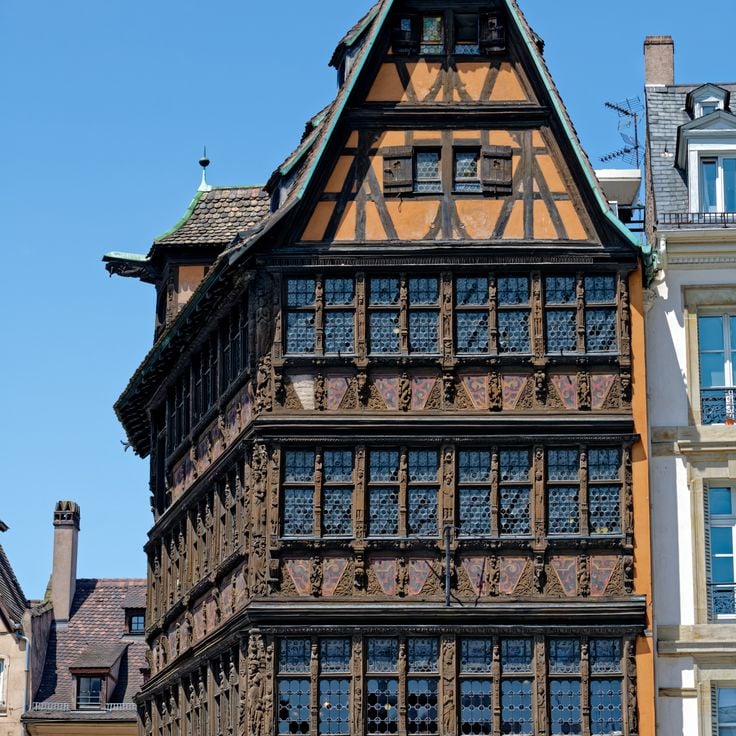
This merchant house from 1427 stands beside Strasbourg Cathedral and ranks among the most significant Renaissance timber frame buildings in Alsace. The richly carved wooden facade displays over 75 figurative representations from biblical scenes, classical motifs and 16th century daily life. The three upper floors were added between 1589 and 1591 by a weapons dealer who enhanced the existing Gothic structure with Renaissance ornamentation. The carvings depict personalities such as emperors and kings, the five senses and the ages of man. The ground floor in sandstone dates from the original late medieval construction phase. Today the building houses a restaurant that makes the historic interiors accessible, featuring painted wooden ceilings and murals from the early 20th century.
This stone gate was built during the interwar period as part of the municipal wall. The structure features defensive towers and documents historical fortification methods from this era. The portal demonstrates the architectural approaches to urban security in the early twentieth century. The towers once enabled strategic monitoring of access points, while the walls formed part of the urban defensive perimeter. As a photographic subject, the gate offers insights into military architecture between the two World Wars and illustrates the urban planning priorities of that time.
This medieval residence near the fortified bridges dates from the 14th century and displays stone walls and architectural elements from that period. The Maison des Ponts Couverts belongs to the historic buildings of Strasbourg that lie beyond the main tourist routes. The facade preserves characteristic features of medieval construction, including exposed masonry and window openings that document the building style of that era. Its location by the fortified bridges district makes this house an authentic witness to urban architecture from the Middle Ages.
This 17th-century stone bridge spans the Ill, connecting Grande Île to residential neighborhoods. The structure integrates into the historic urban fabric and provides angles on surrounding half-timbered houses and waterways. The bridge serves as a crossing between the historic center and adjacent districts, enabling captures of traditional architecture along the riverbanks.
This 16th-century courtyard displays traditional Alsatian architecture with timber-frame buildings, stone arches and staircases. The structures date from Renaissance times and originally served as an inn for travelers and merchants. The courtyard takes its name from a historic tavern that operated here for centuries. The architecture combines Gothic and Renaissance elements with exposed timber beams, ornate window frames and medieval stonework. Today the complex functions as a hotel while preserving the original architectural features.
This 1905 building incorporates Egyptian architectural elements into Strasbourg's urban fabric. The facade displays columns with lotus capitals, hieroglyphs and sphinx decorations created during Europe's Egyptomania period. Located in the German Quarter, the residential building stands as evidence of early 20th-century architectural experimentation, when orientalizing motifs entered bourgeois architecture. The structure provides photographers with ornamental details rarely found in the city's typical Alsatian streetscapes.
This steel and glass footbridge crosses the Rhine River between France and Germany, linking Strasbourg with Kehl. Inaugurated in 1994, the structure spans 387 meters (1,270 feet) and features a central observation platform that offers views of the river and both shores. The Passerelle Mimram serves as both a functional connection for pedestrians and cyclists and as an architectural element along the Rhine waterfront, demonstrating modern engineering in the context of Strasbourg's cross-border infrastructure.
The Rue du Jeu-des-Enfants is a pedestrian street featuring wall murals and painted ground patterns. Local artists add new drawings throughout the year, creating a continuously changing streetscape. This alley in the historic center offers rotating visual elements that reflect the city's contemporary art scene and provide photographers with regularly updated subjects.
This 19th-century square features German Renaissance Revival buildings and a central fountain. The National Library and Prefecture line the square, which was designed during the German annexation after 1871 as a symbol of Prussian authority. The symmetrical arrangement of public buildings around the square follows the urban planning principles of that era. The monument at the center honors those who died in World War I and creates a photographic focal point with the surrounding facades.
The University Palace was built in 1884 during the German administration of Alsace and continues to serve as an academic building for the University of Strasbourg. The representative facade displays sculptures of notable scholars and scientists that embody the educational ideals of the 19th century. The building houses lecture halls and an astronomical dome. The Wilhelmine architecture, with its characteristic elements, provides photographers with subjects that document the historical position of Strasbourg as a Franco-German border city.
This defensive structure built in 1686 was designed by Vauban as part of the city fortifications and features observation platforms that provide panoramic views over the Petite France tannery district, the Ponts Couverts and the cathedral spire. The terrace of the Barrage Vauban stands approximately 65 feet (20 meters) above the Ill River water level and allows photographers to capture the traditional half-timbered houses, medieval towers and historic city layout from an elevated position.
This half-timbered building from 1572 with its large windows stands along the water's edge and documents the history of leather processing in Strasbourg. The tannery quarter developed during medieval times in this section of the city, where craftsmen used the water flow for their work. The architecture displays typical elements of 16th-century Alsatian workshop houses. The waterside facade and characteristic structure provide photographic subjects that extend beyond the city's standard tourist sites.
The Musée du Patrimoine Régional connects three houses dating from the 16th and 17th centuries along Quai Saint-Nicolas, presenting furniture, costumes and everyday objects from rural Alsace. The collection documents domestic life and craft traditions of the region across several centuries. The historic buildings themselves offer insights into Renaissance and Baroque urban architecture, while the exhibition rooms show how rural life evolved from medieval times through the modern era. The museum sits on Quai Saint-Nicolas, a riverside street overlooking the Ill, where the half-timbered houses have preserved their original structure.
This residence on Allée de la Robertsau was built in 1897 and displays characteristic features of the German Jugendstil movement with stained glass windows and ceramic tiles. The building represents one of Strasbourg's alternative photography locations, documenting the city's architectural diversity beyond its main attractions. The decorative elements of the facade illustrate the influence of Art Nouveau in Alsatian architecture at the turn of the century.
The Parc de l'Orangerie covers 65 acres (26 hectares), making it Strasbourg's largest public green space. Established in 1804 under the direction of Le Nôtre, the park now contains botanical collections, a small zoo with local species, paths along ponds and canals, and a stork nesting area. The grounds also include a 19th-century pavilion originally built for Empress Joséphine. The geometric alleys and water features provide varied perspectives for photographers, particularly during morning hours when light filters through the tree-lined avenues.
The Lycée des Pontonniers occupies a nineteenth-century stone building near the banks of the Ill River. The facade features large windows and ornamental details characteristic of school architecture from that era. The riverside location provides a contrast between institutional architecture and the natural setting. The building represents one of Strasbourg's historic educational institutions and reflects the urban planning priorities of the nineteenth century. The stonework and symmetrical window arrangement document the architectural standards of the period.
Parc de la Citadelle occupies former military grounds, combining fortification walls with public green space. The park extends around a central water basin, bordered by paved walkways and mature trees. The historic ramparts, dating from the 17th century, frame this urban park that serves both as architectural heritage and recreational area. Photographers find contrasts between military architecture and parkland here, with sight lines across the water and through rows of trees. The grounds reveal Strasbourg's past as a fortified city while now functioning as a local recreation area for residents and visitors.
This 14th-century medieval gate features stone towers, defensive walls and architectural elements characteristic of fortified structures from that period. The Porte de l'Hôpital formed part of Strasbourg's original fortification system and demonstrates the military architecture of the Middle Ages. The gate preserves construction details that provide insights into the defensive strategies of medieval cities. As part of the historic city walls, it documents the evolution of urban protection systems in Alsace and adds to the alternative photography locations that reveal authentic aspects of Strasbourg's heritage.
Fort Rapp was built in 1872 as part of the military fortification system erected after the German annexation of Alsace. The complex includes underground passages, barracks buildings and artillery positions that illustrate the defensive concepts of that era. Guided tours explain the military architecture and the strategic role this fortress played within the ring of fortifications around Strasbourg. The casemates and reinforced walls provide insight into the construction techniques of the late 19th century.
The Hôtel Brion is a modernist structure from the 1950s designed by Italian architect Gio Ponti. The facade features geometric patterns and extensive glass walls that direct natural light into the interior spaces. Ponti's design integrates functional spatial arrangements with visual accents that reflect his design philosophy of the period. The building stands as an example of mid-century modern architecture in Strasbourg, offering photographers clean lines, light and shadow contrasts, and characteristic details of postwar architectural innovation.
Rue des Dentelles documents Strasbourg's historic textile quarter with medieval-era workshops. This lane displays traditional Alsatian half-timbered houses featuring exposed wooden beams and narrow facades. Former lacemaking workshops and textile shops line the cobblestone passage. Architecture from the 16th and 17th centuries presents artisan building traditions with projecting upper floors and decorated gables. For photographers, the street offers authentic perspectives on the medieval urban fabric with its irregular building lines and period details.
Rue des Tonneliers in Strasbourg's historic center preserves traces of its original function as a 16th-century artisan street. This cobblestone lane features well-maintained timber-framed houses with exposed beams, stone archways, and architectural details that recall the former cooper workshops. The narrow street connects different parts of the old town and offers photographers characteristic views of Alsatian urban architecture. Buildings along the route display typical features of regional construction with overhanging upper floors and traditional window frames. This less-trafficked passage provides insight into commercial life in medieval Strasbourg.
The inner courtyard of the Palais Rohan features 18th-century stonework, classical columns and ornate windows. A stone staircase leads to the upper floors. The architecture combines French and German influences of the period and offers photographers details of baroque craftsmanship, symmetrical facades and historical elements that document the ceremonial character of the former episcopal palace.
This concrete fortification from 1875 stands near the train station and served military defense purposes. The structure includes underground passages and thick walls that offer unusual perspectives for photography. The bunker displays late 19th-century military architecture with preserved defensive elements. The facility presents a contrast to Strasbourg's civilian architecture and documents the city's military history during the German annexation period after 1871.
Place Saint-Thomas sits in the historic center of Strasbourg and is dominated by the Protestant church of the same name. The church was built between 1196 and 1521 and displays Gothic architecture with twin towers and stone sculptures. The square forms a quiet area surrounded by Alsatian half-timbered houses and cafes, suitable for capturing the Gothic façade and surrounding historic buildings. The church houses the tomb of Maurice de Saxe, a significant work of French Baroque sculpture, providing additional detail for architectural photography.
This viewing point overlooks the medieval towers, stone bridges and half-timbered houses along the canals. The Ponts Couverts, whose wooden roofs were removed in the 18th century, form a striking sight with the four remaining defensive towers from the 13th century in the Petite France district. From here the connection between military architecture and waterways that once served to defend the city becomes apparent. The perspective captures both the historical structures and everyday life along the Ill, where residential and commercial buildings from different centuries stand side by side.
This underground wine cellar from the 14th century sits beneath the hospital and stores wine barrels in a vaulted space. The historic facility displays traditional winemaking equipment and tools used over centuries for wine production. The cellar documents the region's long winemaking tradition and the importance of the wine trade to civic institutions. The vaulted structure preserves the original medieval architecture and provides insights into historical storage methods.
This medieval street connects Place Saint-Étienne with the surrounding neighborhood and displays typical half-timbered houses with flower boxes on the windows. Rue de la Râpe runs through a narrow passage where the traditional Alsatian architecture of the historic center remains intact. The house facades date from different centuries and document the architectural evolution of Strasbourg between the Middle Ages and the early modern period.
This museum occupies a 19th-century water tower in the Neudorf district and displays over 1,000 religious objects and ceremonial artifacts from Benin, Togo and Ghana. The collection includes sculptures, masks, textiles and ritual items that document various aspects of the Vodun tradition. The unusual exhibition space in the historic industrial building creates an interesting contrast with the displayed objects and provides a distinctive setting for photographing the African ceremonial pieces.
Place Saint-Étienne combines medieval structures with a Gothic church and residential buildings from different periods. Trees shade the restaurant terraces while the architecture reveals Strasbourg's historical layers. The square offers photographers opportunities to capture historic facades, ecclesiastical details and neighborhood life away from the main tourist routes.
These 1908 municipal baths display Art Nouveau architecture with decorated facades and preserve their original thermal pools and traditional bathing facilities still in operation today. The building documents early 20th century urban bathing culture with original ceramic work, glass windows and functional spaces designed for both hygiene and social gathering. The facility combines practical infrastructure with decorative elements of the period and offers photographers geometric lines, historical details and natural light through skylights.
This former imperial palace was built between 1883 and 1888 following plans by architect Hermann Eggert in German Neorenaissance style. The building served as a residence for Kaiser Wilhelm II during his visits to the then Reichsland of Alsace-Lorraine. The symmetrical facade displays detailed stonework, while the central dome rises over 165 feet (50 meters). Today the palace houses the Central Commission for the Navigation of the Rhine, an international organization regulating Rhine shipping. The architecture combines Prussian state representation with regional stylistic elements, presenting a photographically compelling example of Wilhelmine construction in Strasbourg.
This merchant house from 1427 stands beside Strasbourg Cathedral and ranks among the most significant Renaissance timber frame buildings in Alsace. The richly carved wooden facade displays over 75 figurative representations from biblical scenes, classical motifs and 16th century daily life. The three upper floors were added between 1589 and 1591 by a weapons dealer who enhanced the existing Gothic structure with Renaissance ornamentation. The carvings depict personalities such as emperors and kings, the five senses and the ages of man. The ground floor in sandstone dates from the original late medieval construction phase. Today the building houses a restaurant that makes the historic interiors accessible, featuring painted wooden ceilings and murals from the early 20th century.
This stone gate was built during the interwar period as part of the municipal wall. The structure features defensive towers and documents historical fortification methods from this era. The portal demonstrates the architectural approaches to urban security in the early twentieth century. The towers once enabled strategic monitoring of access points, while the walls formed part of the urban defensive perimeter. As a photographic subject, the gate offers insights into military architecture between the two World Wars and illustrates the urban planning priorities of that time.
This medieval residence near the fortified bridges dates from the 14th century and displays stone walls and architectural elements from that period. The Maison des Ponts Couverts belongs to the historic buildings of Strasbourg that lie beyond the main tourist routes. The facade preserves characteristic features of medieval construction, including exposed masonry and window openings that document the building style of that era. Its location by the fortified bridges district makes this house an authentic witness to urban architecture from the Middle Ages.
This 17th-century stone bridge spans the Ill, connecting Grande Île to residential neighborhoods. The structure integrates into the historic urban fabric and provides angles on surrounding half-timbered houses and waterways. The bridge serves as a crossing between the historic center and adjacent districts, enabling captures of traditional architecture along the riverbanks.
This 16th-century courtyard displays traditional Alsatian architecture with timber-frame buildings, stone arches and staircases. The structures date from Renaissance times and originally served as an inn for travelers and merchants. The courtyard takes its name from a historic tavern that operated here for centuries. The architecture combines Gothic and Renaissance elements with exposed timber beams, ornate window frames and medieval stonework. Today the complex functions as a hotel while preserving the original architectural features.
This 1905 building incorporates Egyptian architectural elements into Strasbourg's urban fabric. The facade displays columns with lotus capitals, hieroglyphs and sphinx decorations created during Europe's Egyptomania period. Located in the German Quarter, the residential building stands as evidence of early 20th-century architectural experimentation, when orientalizing motifs entered bourgeois architecture. The structure provides photographers with ornamental details rarely found in the city's typical Alsatian streetscapes.
This steel and glass footbridge crosses the Rhine River between France and Germany, linking Strasbourg with Kehl. Inaugurated in 1994, the structure spans 387 meters (1,270 feet) and features a central observation platform that offers views of the river and both shores. The Passerelle Mimram serves as both a functional connection for pedestrians and cyclists and as an architectural element along the Rhine waterfront, demonstrating modern engineering in the context of Strasbourg's cross-border infrastructure.
The Rue du Jeu-des-Enfants is a pedestrian street featuring wall murals and painted ground patterns. Local artists add new drawings throughout the year, creating a continuously changing streetscape. This alley in the historic center offers rotating visual elements that reflect the city's contemporary art scene and provide photographers with regularly updated subjects.
This 19th-century square features German Renaissance Revival buildings and a central fountain. The National Library and Prefecture line the square, which was designed during the German annexation after 1871 as a symbol of Prussian authority. The symmetrical arrangement of public buildings around the square follows the urban planning principles of that era. The monument at the center honors those who died in World War I and creates a photographic focal point with the surrounding facades.
The University Palace was built in 1884 during the German administration of Alsace and continues to serve as an academic building for the University of Strasbourg. The representative facade displays sculptures of notable scholars and scientists that embody the educational ideals of the 19th century. The building houses lecture halls and an astronomical dome. The Wilhelmine architecture, with its characteristic elements, provides photographers with subjects that document the historical position of Strasbourg as a Franco-German border city.
This defensive structure built in 1686 was designed by Vauban as part of the city fortifications and features observation platforms that provide panoramic views over the Petite France tannery district, the Ponts Couverts and the cathedral spire. The terrace of the Barrage Vauban stands approximately 65 feet (20 meters) above the Ill River water level and allows photographers to capture the traditional half-timbered houses, medieval towers and historic city layout from an elevated position.
This half-timbered building from 1572 with its large windows stands along the water's edge and documents the history of leather processing in Strasbourg. The tannery quarter developed during medieval times in this section of the city, where craftsmen used the water flow for their work. The architecture displays typical elements of 16th-century Alsatian workshop houses. The waterside facade and characteristic structure provide photographic subjects that extend beyond the city's standard tourist sites.
The Musée du Patrimoine Régional connects three houses dating from the 16th and 17th centuries along Quai Saint-Nicolas, presenting furniture, costumes and everyday objects from rural Alsace. The collection documents domestic life and craft traditions of the region across several centuries. The historic buildings themselves offer insights into Renaissance and Baroque urban architecture, while the exhibition rooms show how rural life evolved from medieval times through the modern era. The museum sits on Quai Saint-Nicolas, a riverside street overlooking the Ill, where the half-timbered houses have preserved their original structure.
This residence on Allée de la Robertsau was built in 1897 and displays characteristic features of the German Jugendstil movement with stained glass windows and ceramic tiles. The building represents one of Strasbourg's alternative photography locations, documenting the city's architectural diversity beyond its main attractions. The decorative elements of the facade illustrate the influence of Art Nouveau in Alsatian architecture at the turn of the century.
The Parc de l'Orangerie covers 65 acres (26 hectares), making it Strasbourg's largest public green space. Established in 1804 under the direction of Le Nôtre, the park now contains botanical collections, a small zoo with local species, paths along ponds and canals, and a stork nesting area. The grounds also include a 19th-century pavilion originally built for Empress Joséphine. The geometric alleys and water features provide varied perspectives for photographers, particularly during morning hours when light filters through the tree-lined avenues.
The Lycée des Pontonniers occupies a nineteenth-century stone building near the banks of the Ill River. The facade features large windows and ornamental details characteristic of school architecture from that era. The riverside location provides a contrast between institutional architecture and the natural setting. The building represents one of Strasbourg's historic educational institutions and reflects the urban planning priorities of the nineteenth century. The stonework and symmetrical window arrangement document the architectural standards of the period.
Parc de la Citadelle occupies former military grounds, combining fortification walls with public green space. The park extends around a central water basin, bordered by paved walkways and mature trees. The historic ramparts, dating from the 17th century, frame this urban park that serves both as architectural heritage and recreational area. Photographers find contrasts between military architecture and parkland here, with sight lines across the water and through rows of trees. The grounds reveal Strasbourg's past as a fortified city while now functioning as a local recreation area for residents and visitors.
This 14th-century medieval gate features stone towers, defensive walls and architectural elements characteristic of fortified structures from that period. The Porte de l'Hôpital formed part of Strasbourg's original fortification system and demonstrates the military architecture of the Middle Ages. The gate preserves construction details that provide insights into the defensive strategies of medieval cities. As part of the historic city walls, it documents the evolution of urban protection systems in Alsace and adds to the alternative photography locations that reveal authentic aspects of Strasbourg's heritage.
Fort Rapp was built in 1872 as part of the military fortification system erected after the German annexation of Alsace. The complex includes underground passages, barracks buildings and artillery positions that illustrate the defensive concepts of that era. Guided tours explain the military architecture and the strategic role this fortress played within the ring of fortifications around Strasbourg. The casemates and reinforced walls provide insight into the construction techniques of the late 19th century.
The Hôtel Brion is a modernist structure from the 1950s designed by Italian architect Gio Ponti. The facade features geometric patterns and extensive glass walls that direct natural light into the interior spaces. Ponti's design integrates functional spatial arrangements with visual accents that reflect his design philosophy of the period. The building stands as an example of mid-century modern architecture in Strasbourg, offering photographers clean lines, light and shadow contrasts, and characteristic details of postwar architectural innovation.
Rue des Dentelles documents Strasbourg's historic textile quarter with medieval-era workshops. This lane displays traditional Alsatian half-timbered houses featuring exposed wooden beams and narrow facades. Former lacemaking workshops and textile shops line the cobblestone passage. Architecture from the 16th and 17th centuries presents artisan building traditions with projecting upper floors and decorated gables. For photographers, the street offers authentic perspectives on the medieval urban fabric with its irregular building lines and period details.
Rue des Tonneliers in Strasbourg's historic center preserves traces of its original function as a 16th-century artisan street. This cobblestone lane features well-maintained timber-framed houses with exposed beams, stone archways, and architectural details that recall the former cooper workshops. The narrow street connects different parts of the old town and offers photographers characteristic views of Alsatian urban architecture. Buildings along the route display typical features of regional construction with overhanging upper floors and traditional window frames. This less-trafficked passage provides insight into commercial life in medieval Strasbourg.
The inner courtyard of the Palais Rohan features 18th-century stonework, classical columns and ornate windows. A stone staircase leads to the upper floors. The architecture combines French and German influences of the period and offers photographers details of baroque craftsmanship, symmetrical facades and historical elements that document the ceremonial character of the former episcopal palace.
This concrete fortification from 1875 stands near the train station and served military defense purposes. The structure includes underground passages and thick walls that offer unusual perspectives for photography. The bunker displays late 19th-century military architecture with preserved defensive elements. The facility presents a contrast to Strasbourg's civilian architecture and documents the city's military history during the German annexation period after 1871.
Place Saint-Thomas sits in the historic center of Strasbourg and is dominated by the Protestant church of the same name. The church was built between 1196 and 1521 and displays Gothic architecture with twin towers and stone sculptures. The square forms a quiet area surrounded by Alsatian half-timbered houses and cafes, suitable for capturing the Gothic façade and surrounding historic buildings. The church houses the tomb of Maurice de Saxe, a significant work of French Baroque sculpture, providing additional detail for architectural photography.
This viewing point overlooks the medieval towers, stone bridges and half-timbered houses along the canals. The Ponts Couverts, whose wooden roofs were removed in the 18th century, form a striking sight with the four remaining defensive towers from the 13th century in the Petite France district. From here the connection between military architecture and waterways that once served to defend the city becomes apparent. The perspective captures both the historical structures and everyday life along the Ill, where residential and commercial buildings from different centuries stand side by side.
This underground wine cellar from the 14th century sits beneath the hospital and stores wine barrels in a vaulted space. The historic facility displays traditional winemaking equipment and tools used over centuries for wine production. The cellar documents the region's long winemaking tradition and the importance of the wine trade to civic institutions. The vaulted structure preserves the original medieval architecture and provides insights into historical storage methods.
This medieval street connects Place Saint-Étienne with the surrounding neighborhood and displays typical half-timbered houses with flower boxes on the windows. Rue de la Râpe runs through a narrow passage where the traditional Alsatian architecture of the historic center remains intact. The house facades date from different centuries and document the architectural evolution of Strasbourg between the Middle Ages and the early modern period.
This museum occupies a 19th-century water tower in the Neudorf district and displays over 1,000 religious objects and ceremonial artifacts from Benin, Togo and Ghana. The collection includes sculptures, masks, textiles and ritual items that document various aspects of the Vodun tradition. The unusual exhibition space in the historic industrial building creates an interesting contrast with the displayed objects and provides a distinctive setting for photographing the African ceremonial pieces.
Place Saint-Étienne combines medieval structures with a Gothic church and residential buildings from different periods. Trees shade the restaurant terraces while the architecture reveals Strasbourg's historical layers. The square offers photographers opportunities to capture historic facades, ecclesiastical details and neighborhood life away from the main tourist routes.
These 1908 municipal baths display Art Nouveau architecture with decorated facades and preserve their original thermal pools and traditional bathing facilities still in operation today. The building documents early 20th century urban bathing culture with original ceramic work, glass windows and functional spaces designed for both hygiene and social gathering. The facility combines practical infrastructure with decorative elements of the period and offers photographers geometric lines, historical details and natural light through skylights.
This former imperial palace was built between 1883 and 1888 following plans by architect Hermann Eggert in German Neorenaissance style. The building served as a residence for Kaiser Wilhelm II during his visits to the then Reichsland of Alsace-Lorraine. The symmetrical facade displays detailed stonework, while the central dome rises over 165 feet (50 meters). Today the palace houses the Central Commission for the Navigation of the Rhine, an international organization regulating Rhine shipping. The architecture combines Prussian state representation with regional stylistic elements, presenting a photographically compelling example of Wilhelmine construction in Strasbourg.
This merchant house from 1427 stands beside Strasbourg Cathedral and ranks among the most significant Renaissance timber frame buildings in Alsace. The richly carved wooden facade displays over 75 figurative representations from biblical scenes, classical motifs and 16th century daily life. The three upper floors were added between 1589 and 1591 by a weapons dealer who enhanced the existing Gothic structure with Renaissance ornamentation. The carvings depict personalities such as emperors and kings, the five senses and the ages of man. The ground floor in sandstone dates from the original late medieval construction phase. Today the building houses a restaurant that makes the historic interiors accessible, featuring painted wooden ceilings and murals from the early 20th century.
This stone gate was built during the interwar period as part of the municipal wall. The structure features defensive towers and documents historical fortification methods from this era. The portal demonstrates the architectural approaches to urban security in the early twentieth century. The towers once enabled strategic monitoring of access points, while the walls formed part of the urban defensive perimeter. As a photographic subject, the gate offers insights into military architecture between the two World Wars and illustrates the urban planning priorities of that time.