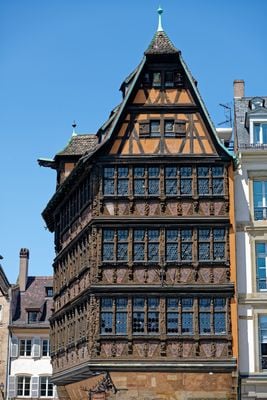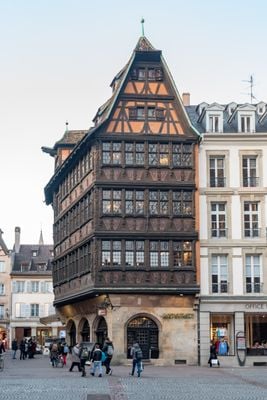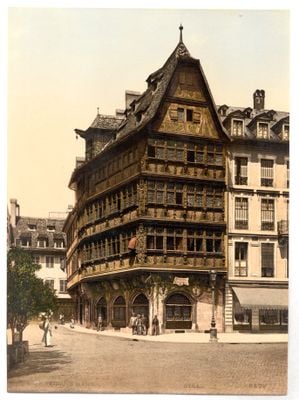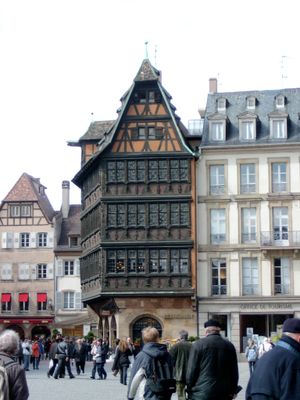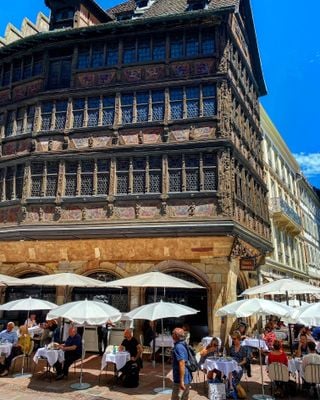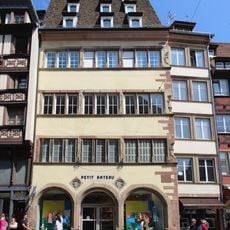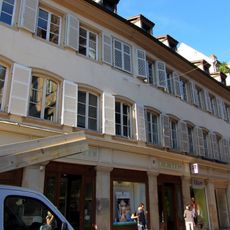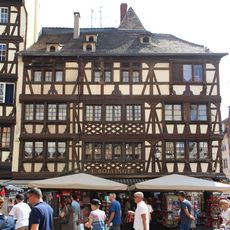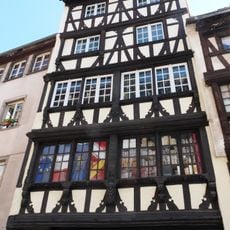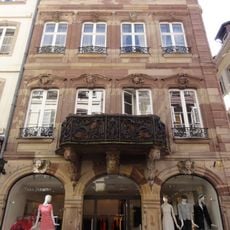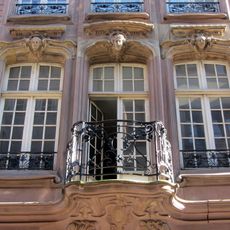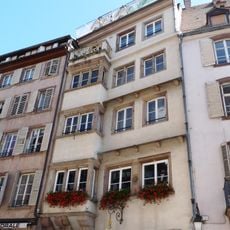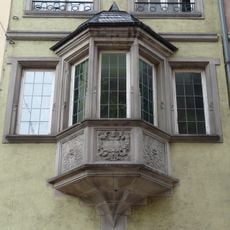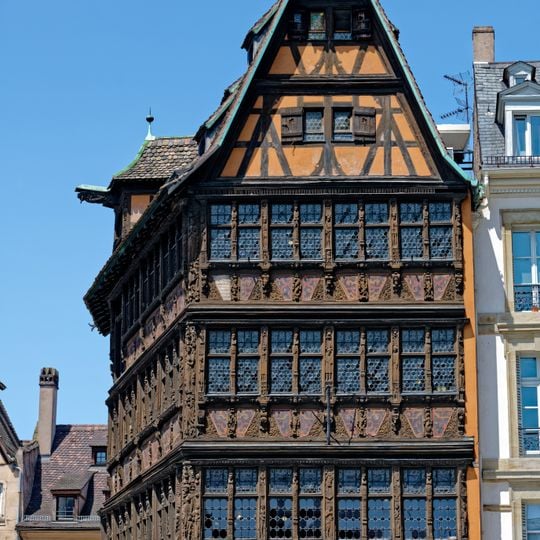
Kammerzell House, Renaissance residential building at Place de la Cathédrale, Strasbourg, France.
Kammerzell House is a five-story residential building at Place de la Cathédrale in Strasbourg that features ornate timber framing, detailed stone carvings, and leaded glass windows. The structure combines late Gothic and Renaissance elements, with projecting bay windows and decorated half-timbered walls that define the appearance of the square.
The building was originally completed in 1427 and underwent major expansion in 1467 when the upper stories were added to the structure. Another significant transformation occurred in 1589 when merchant Martin Braun modified it further, giving it the distinctive corbelled floors that define it today.
The western facade displays carvings of eighteen nobles and seventeen musicians, while the gable wall shows depictions of the ten ages of life and the five senses. These decorated figures tell stories from the medieval and Renaissance periods that visitors notice as they walk around the building.
A restaurant operates inside the building, offering dining right next to Strasbourg Cathedral and making it convenient to visit after exploring the square. Trams A, B, C, D, and F stop nearby, providing straightforward access to the area, though visitors should expect crowds since it sits on a heavily visited plaza.
Artist Léo Schnug created interior frescoes in 1905 depicting personal themes like anxiety, village scenes, and self-portraits scattered throughout the building. These paintings reveal the artistic vision of one painter from that era and remain visible to those who explore the interiors.
Location: Strasbourg
Architectural style: Renaissance
Address: Place de la Cathédrale
Phone: +33388324214
Website: http://maison-kammerzell.com
GPS coordinates: 48.58195,7.74977
Latest update: December 6, 2025 16:02
In Strasbourg, each step crosses several centuries of history. You walk from medieval alleys lined with half-timbered houses to glass buildings housing European institutions. The cathedral, 142 meters high, has dominated the city since the Middle Ages, while modern structures along the Rhine reflect the city’s European role. The sound of bells blends with tram noise, and the smell of gingerbread drifts through the contemporary administrative districts.
The Grand Est displays a rich architectural and military heritage, from fortified structures like the Fort of Mutzig and the La Ferté ouvrage on the Maginot Line, to princely residences such as Château de Lunéville with its French gardens. The region also preserves religious sites like the Abbey of Sturzelbronn in the Vosges forests and the Jesuit College in Reims, founded in the early 17th century. Urban centers feature notable architectural complexes: the Kammerzell House in Strasbourg exemplifies 15th-century Alsatian half-timbered construction, while the Ducal Square in Charleville-Mézières reflects Renaissance urban planning. The Humanist Library in Sélestat holds over 150 medieval manuscripts and ancient books. Technical sites like the old Chappe telegraph tower in Saverne recall early communication history before the electric era. Historic parks, including that of Château de Pange with geometric gardens and stone bridges, offer pathways through centuries of landscape design.
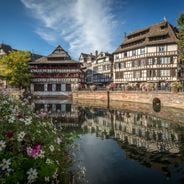
Strasbourg offers numerous photographic opportunities beyond its main attractions. The city presents a collection of historic timber-framed houses, medieval bridges, hidden courtyards and notable architectural monuments from various periods. From the hieroglyph-adorned Maison Égyptienne to the neoclassical University Palace, from ancient defensive structures to Art Nouveau villas, these sites reveal authentic aspects of Strasbourg's heritage. In the tanners' quarter, the Maison des Tanneurs documents the medieval craft tradition, while the Cour du Corbeau, with its multi-story wooden galleries, represents one of the city's oldest preserved inns. Rue du Jeu-des-Enfants leads through a quiet collection of historic residences, and Place de la République demonstrates the late 19th-century Prussian urban planning. The Barrage Vauban, a 17th-century defensive installation, provides wide views over the Ill River and the Ponts Couverts from its rooftop terrace. Away from the tourist crowds, additional photogenic locations include the vaulted cellars of the Cave des Hospices Civils, where wine has been stored for centuries, the Art Nouveau architecture along Allée de la Robertsau, and the neoclassical facade of the Lycée des Pontonniers. Place Saint-Étienne and Place Saint-Thomas show everyday city life in historic settings. These locations enable photographs that go beyond typical postcard views and provide a nuanced perspective on Strasbourg's architectural diversity.
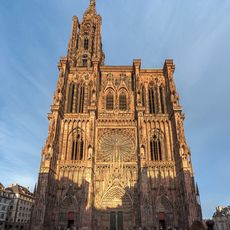
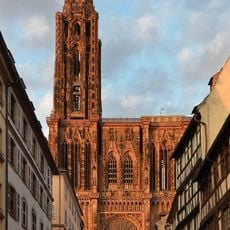
Cathedral of Our Lady of Strasbourg
85 m
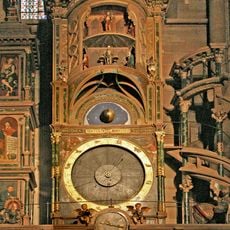
Strasbourg astronomical clock
119 m
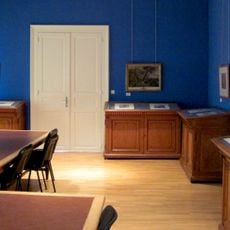
Cabinet des estampes et des dessins
122 m
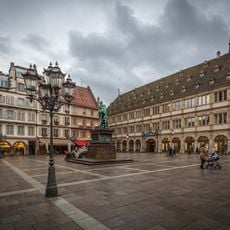
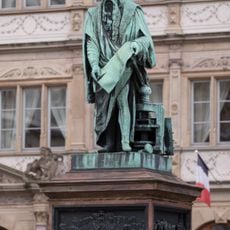
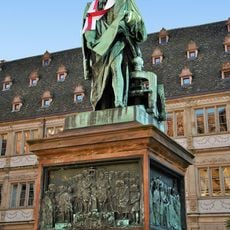
Statue of Johannes Gutenberg
123 m
Maison Goethe
140 m
Büchmesser
48 m
Neubau
153 m
Ancienne pharmacie du Cerf
40 m
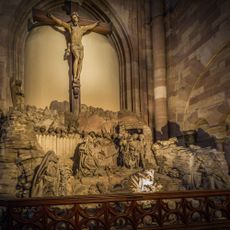
Sculpture of Jesus Christ on the Mount of Olives, Strasbourg Cathedral
104 m
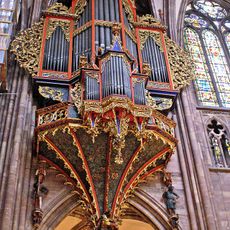
Strasbourg Cathedral organ
85 m
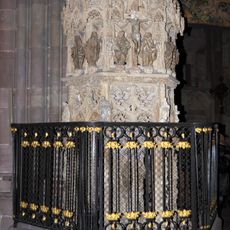
Chaire de la cathédrale de Strasbourg
98 m
Maison au 40, rue du Vieux-Marché-aux-Poissons à Strasbourg
129 m
Maison aux Cigognes
99 m
Maison au 17, rue des Hallebardes à Strasbourg
32 m
Maison au 11, rue du Maroquin à Strasbourg
141 m
Maison au 2, rue Mercière et 54, rue du Vieux-Marché-aux-Poissons à Strasbourg
103 m
Immeuble au 8, rue du Fossé-des-Tailleurs à Strasbourg
50 m
Maison, 2 rue du Poumon, Strasbourg
153 m
Tombeau de Conrad de Bussnang
126 m
Maison au 4, rue Mercière à Strasbourg
89 m
Maison Spach
138 m
Maison au 8, rue des Hallebardes à Strasbourg
50 m
Maison, 7 rue des Hallebardes, Strasbourg
61 m
Maison aux 22, rue des Hallebardes et 15, place de la Cathédrale à Strasbourg
21 m
Maison au 10, rue Mercière à Strasbourg
73 m
Maison au 5, rue des Hallebardes à Strasbourg
64 m
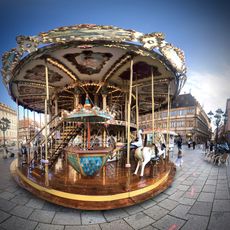
Carousel 1900
119 mReviews
Visited this place? Tap the stars to rate it and share your experience / photos with the community! Try now! You can cancel it anytime.
Discover hidden gems everywhere you go!
From secret cafés to breathtaking viewpoints, skip the crowded tourist spots and find places that match your style. Our app makes it easy with voice search, smart filtering, route optimization, and insider tips from travelers worldwide. Download now for the complete mobile experience.
A unique approach to discovering new places❞
— Le Figaro
All the places worth exploring❞
— France Info
A tailor-made excursion in just a few clicks❞
— 20 Minutes