Poudrerie nationale de Sevran-Livry, Former powder mill in Sevran, France
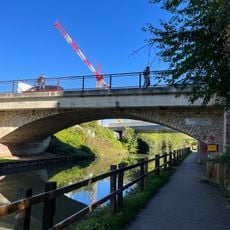
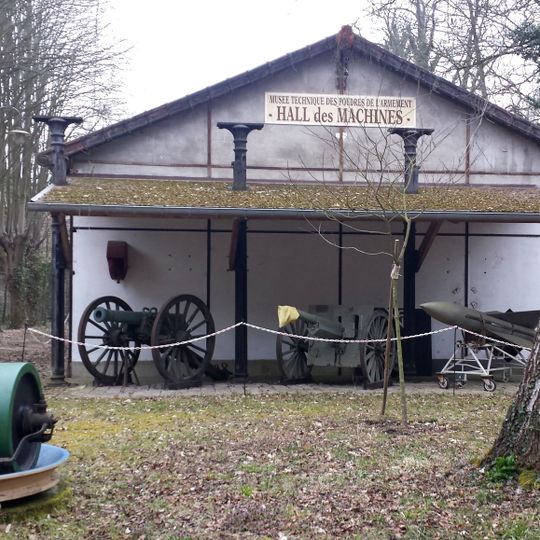
The Poudrerie nationale de Sevran-Livry is a former gunpowder factory whose surviving buildings stand in the Parc forestier de la Poudrerie, along the Ourcq Canal. The central building, now housing the Musée de la Poudrerie, has a pale grey stuccoed facade, a shallow grey tiled roof and a flat-roofed porch on four dark square pillars, signed "MUSEE TECHNIQUE DES POUDRES DE L'ARMEMENT — HALL des MACHINES". Two field guns with large spoked wheels stand under the porch, and a green cylindrical object on a wheeled base sits at the left corner. Workshops were spaced apart and linked by railway tracks, and earthen merlons still dot the park.
Napoleon III signed the decree creating the imperial powder works on 27 December 1865; construction ran from 1868 to 1873, interrupted by the Franco-Prussian War. Gustave Maurouard used steam power and arranged the buildings in a semicircle 110 metres from the engine. A 1910 explosion of nearly two tonnes of powder injured one person and broke windows over 20 kilometres away. The site closed in 1973, a century after it opened.
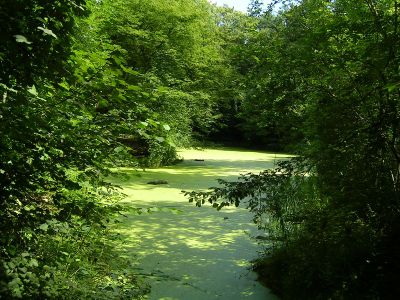
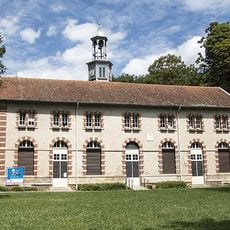
The central building of the former powder works now houses the Musée de la Poudrerie de Sevran-Livry, where the site's name survives in the Parc forestier de la Poudrerie that replaced the factory. Visitors can still see the merlons, artificial earth banks raised between workshops to stop the spread of an accidental explosion, and the four ponds that held some 120,000 cubic metres of rainwater for firefighting.
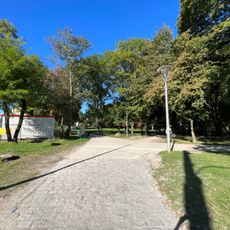
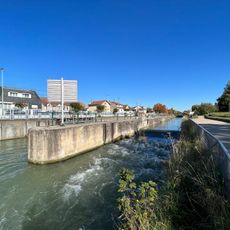
The former powder works is now the Parc forestier de la Poudrerie, a 137-hectare park open to the public since 1973 and crossed by the Ourcq canal. The surviving buildings stand apart from one another, linked by old railway tracks, and earth merlons still separate the former workshops. The museum occupies the central building; the wall of the extrusion press also remains.
The buildings were spaced apart and linked by railway tracks to stop an explosion from spreading. Earth mounds called merlons separated the workshops, and four ponds held nearly 120,000 cubic metres of rainwater as a fire reserve. The central building now houses the museum.
The community of curious travelers
AroundUs brings together thousands of curated places, local tips, and hidden gems, enriched daily by 93,689 contributors worldwide.