Magny shaft, Historic mining well in Magny-Danigon, France
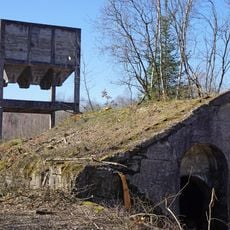
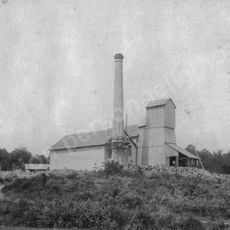
The Puits du Magny is a former coal shaft of the Ronchamp mines at Magny-Danigon, its circular masonry shaft 3.50 m across and 694 m deep. Around it stand the ruins of the extraction building, the changing rooms and the coal storage building, while the former administrative building and boiler room have been converted into housing. The site and its mining estate now form a hamlet called Le Puits du Magny.
Sinking of the main shaft began in 1873 and was completed in 1878 at a depth of 694 metres, then the deepest mine shaft in France. Activity lasted 80 years in all, interrupted by several service periods, the longest spanning more than a decade between the wars. On 1 September 1879 a firedamp explosion killed sixteen miners. The last coal wagon was raised on Saturday 3 May 1958.
The pit gave its name to the hamlet that grew around it, still called "Le Puits du Magny". The former administrative building and the boiler room have been converted into housing, so the site is lived in rather than abandoned. The ruined extraction building, the changing rooms and the coal-storage building remain visible among the dwellings.
Visiting requires care as the site contains partial ruins and uneven areas. It is wise to wear comfortable shoes and allow time to explore the different preserved structures scattered across the grounds.
The 1879 gas explosion at the shaft killed sixteen miners; engineer Henri Poincaré, of the 1875 corps des mines class, led the inquiry and concluded that a miner named Pautot had accidentally pierced his lamp with his pick and left it near a gas pocket.
The community of curious travelers
AroundUs brings together thousands of curated places, local tips, and hidden gems, enriched daily by 94,659 contributors worldwide.