Angeac-Charente bonebed, paleontological site in Angeac-Charente, France
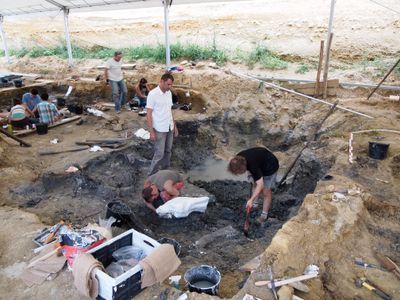
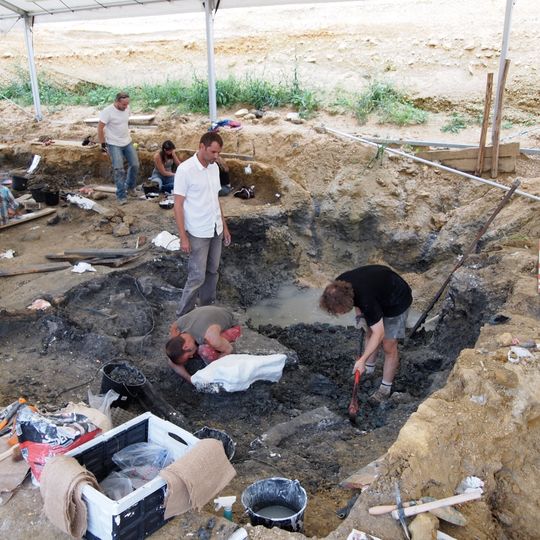
Angeac-Charente is an excavation site in western France where researchers uncover bones of dinosaurs, turtles, crocodiles, fish, flying reptiles, and amphibians. The remains date from the Early Cretaceous period and lie scattered across the dig area where scientists work methodically.
The site was discovered in 2008 during gravel extraction and preserves a 140 million year old ecosystem. Ongoing research has shown that this area once lay underwater and supported a diverse animal population.
The deposit is named after the commune of Angeac-Charente, whose gravel quarries of the Audoin company exposed it. Since 2010, excavations have run each summer under Ronan Allain of the Muséum national d'histoire naturelle and Jean-François Tournepiche of the Angoulême museum. In 2017 the Angoulême museum showed finds in the exhibition "Dinosaures, les géants du vignoble", later travelling to La Rochelle and Laval.
The site is accessible only during the excavation season, typically in summer when guided tours are available. Visitors should check in advance when digging takes place, as this varies from year to year.
The 2008 find was a sauropod vertebra four times larger than a mammoth vertebra. Quarry worker Jean-Pierre Paillot scooped it from a flooded pit with a digger, took it for a fossil elephant, and showed it to the Angoulême museum, where Didier Néraudeau identified it as dinosaur.
The community of curious travelers
AroundUs brings together thousands of curated places, local tips, and hidden gems, enriched daily by 93,603 contributors worldwide.