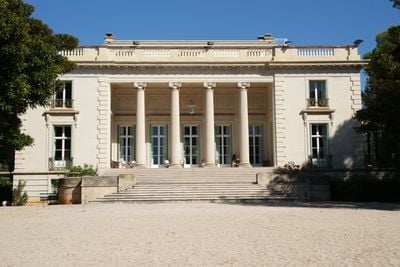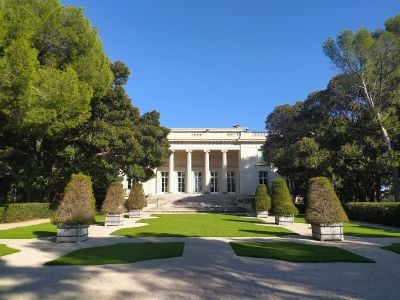
Villa Eilenroc, Neoclassical villa in Cap d'Antibes, Antibes, France.
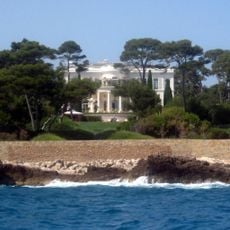
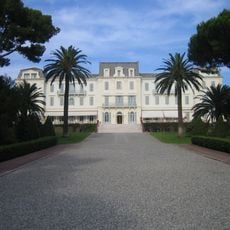
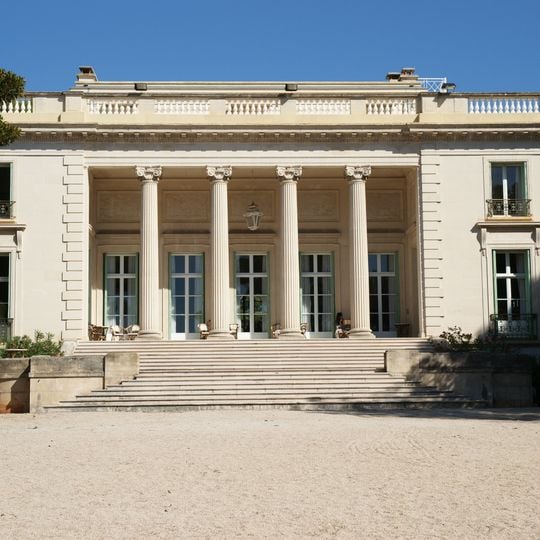
Villa Eilenroc is a neoclassical mansion on a large estate at the tip of Antibes with views toward the coast. The 11-hectare property is landscaped with Mediterranean gardens that frame views of the sea from different angles across the grounds.
Hugh Hope Loudon, a former governor-general of the Dutch East Indies, bought land at the tip of Cap d'Antibes around 1860 and had a residence completed there in 1867, built to plans attributed to Charles Garnier. In 1873 the Scot James Wyllie acquired it and named it Eilenroc; the landscape architect Ringuisen laid out the park in 1883. After Wyllie died in 1908 the estate passed to Sir Coleridge Kennard, then to Henri Sudreau, and in 1927 to the American couple Louis Dudley and Hélène Beaumont. Hélène Beaumont left it to the town of Antibes in 1982.
The name Eilenroc is an anagram of Cornélie, wife of Scottish owner James Wyllie, who bought the estate in 1873. The park he had laid out by the landscaper Ringuisen in 1883 now holds an olive grove, a rose garden and a perfume garden created in 2011. The villa is one of the Riviera houses open to visitors, alongside Villa Kérylos and Villa Ephrussi de Rothschild.
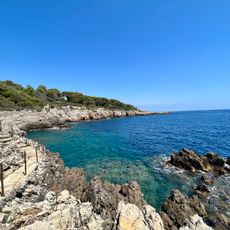
The villa stands at the tip of Cap d'Antibes, reached by the Tire-Poil coastal path that runs between the house and the sea. The eleven-hectare park, with its olive grove, rose garden and 2011 scented garden, is open to the public; the house itself is managed by the Fondation Beaumont created after Hélène Beaumont's 1982 bequest.
The name was chosen by James Wyllie, the Scottish owner who bought the estate in 1873, as an anagram of his wife Cornélie's first name. The villa itself was finished in 1867 for the Dutchman Hugh Hope Loudon, a former governor-general of the Dutch East Indies, on plans attributed to Charles Garnier.
The community of curious travelers
AroundUs brings together thousands of curated places, local tips, and hidden gems, enriched daily by 92,915 contributors worldwide.