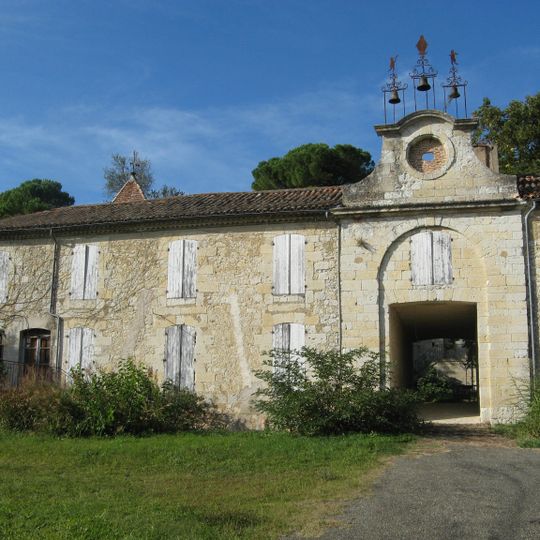
Ancienne tannerie royale de Lectoure, 18th-century royal tannery in Lectoure, France.
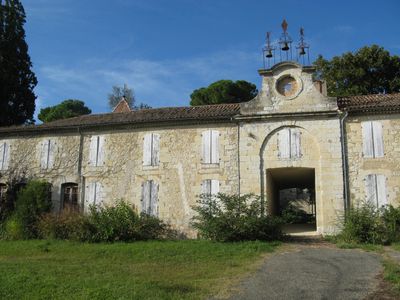
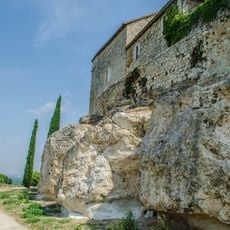
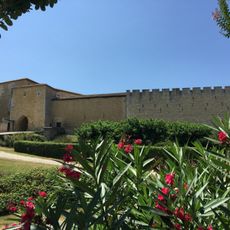
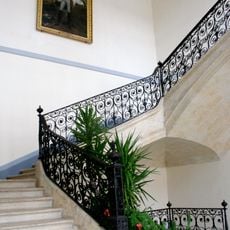
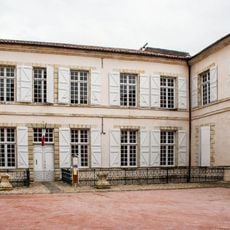
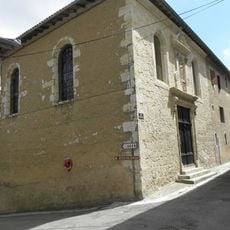
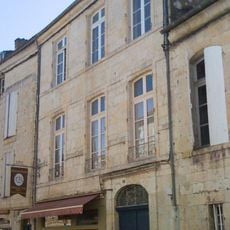
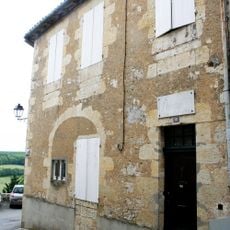
The Ancienne tannerie royale de Lectoure is an 18th-century industrial building on rue Claude-Ydron, below the town ramparts. Its long two-storey facade of weathered stone and render has regular bays of white shutters, and a stone gateway with a wide arch and round window above leads to a passage; a metal bell-cote with three bells stands on the roofline. The layout follows the slope: a double-revolution stair climbs from the town to the upper triangular courtyard, while the carriage entrance lies lower down.
Built in 1752 to plans by architect Pierre Racine for the Duclos brothers, Toulouse merchants, the tannery was blessed at its first stone on 30 January 1752 by Bishop de Narbonne-Pelet and finished the following year. Royal letters patent of 22 April 1754, backed by intendant d'Étigny, made it a "tannerie royale" with tax and militia exemptions. Around a hundred skilled workers, often from outside, ran it until activity ceased in the mid-19th century.
The tannery reflects how central leather production was to Lectoure's economy and daily working life. The numerous stone tanks scattered across the site show the scale of operations that once employed many local workers.
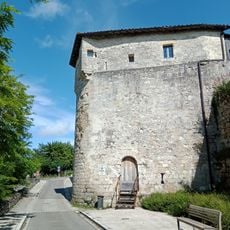
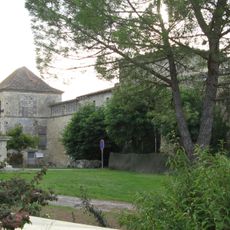
The site is a private property on rue Claude-Ydron, at the foot of the old ramparts; it is not open as a public museum. Approaching from the town to the north, pedestrians reach the triangular second courtyard by a double-revolution staircase, while the carriage entrance arch lies lower down to the south. The ground is steeply sloping, so expect uneven footing.
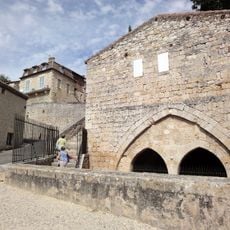
The tannery drew its water from the Saint-Clair spring at the foot of the ramparts, next to the Diane fountain. Long after the works closed, people still came to fetch this water for drinking, while the neighbouring Diane fountain had been declared unfit to drink.
The community of curious travelers
AroundUs brings together thousands of curated places, local tips, and hidden gems, enriched daily by 94,348 contributors worldwide.