Église Sainte-Cécile de Cos, Pre-Romanesque church in Le Tech, France
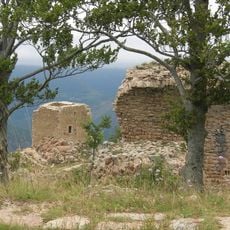
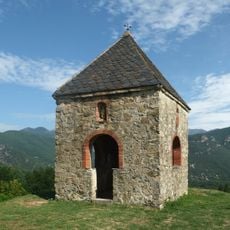
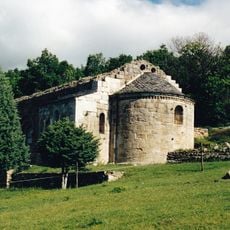
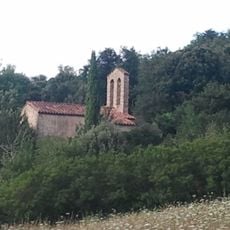
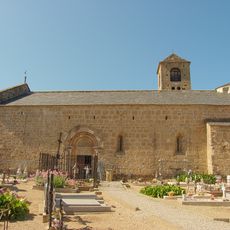
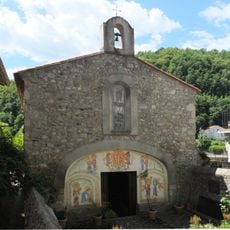
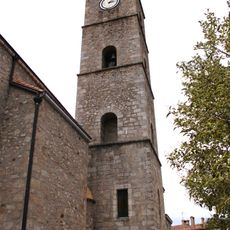
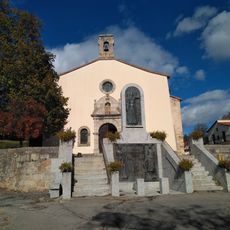
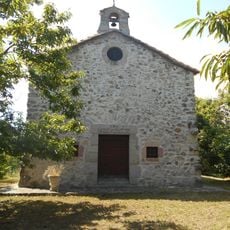
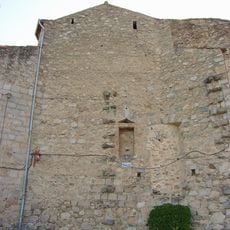
Église Sainte-Cécile de Cos is a disused rural chapel about twelve metres long, built of irregular grey and tan stone on a south-facing slope above the Tech valley. Its plan is a rectangular nave ending in a flat apse, lit by narrow single-splayed windows; a square tower-like mass of the same stone rises beside the lower roofed section. The walls were raised and a concrete vault added in the 1990s.
A Carolingian diploma of 869 lists the cella of Cotsio among the possessions of the abbey of Arles-sur-Tech. The church became a parish under Saint Cecilia on 21 October 1159, lost that status around 1600, and was looted during the Roussillon war. In the 1990s its walls were raised and a concrete vault added.
The name Cos keeps its final s pronounced, as in "cosse"; it appears as Cotsio in 869 and Cotso in 881, and Catalan sources write either Cos or Coç. The chapel served travellers on the route linking Conflent to Vallespir, part of the iron route, as a refuge for pilgrims heading to Santiago and for migrants seeking work in the forges.
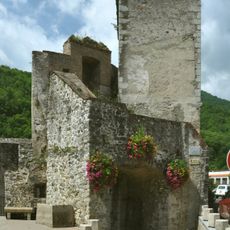
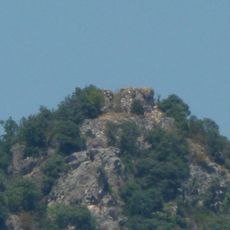
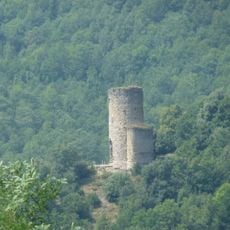
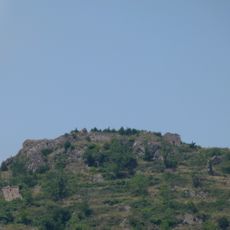
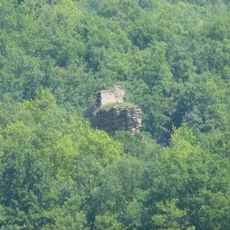
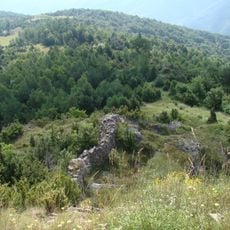
The chapel stands beside the D44 road between Le Tech and Montferrer, between Mas Sainte-Cécile and Mas de Cos, at about 650 m altitude on a south-facing shoulder 150 m above the Tech. It is a roofless ruin with no furnishings, so it is seen from outside; the concrete vault added in the 1990s covers the nave. The tower of Cos stands on the rocky spur above the pla de Cos.
The name Cos is pronounced with a sounded final s, as in "cosse". Ninth-century documents record the forms Cotsio (869), Cotso (881) and Cotxo, and Cocio appears in 1036; scholars link the name to a personal name, Germanic Cottio or Latin Coccius, rather than to Latin cotis ("stones").
The community of curious travelers
AroundUs brings together thousands of curated places, local tips, and hidden gems, enriched daily by 94,220 contributors worldwide.