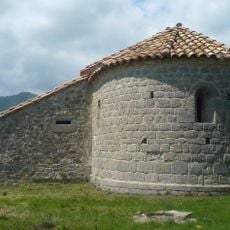
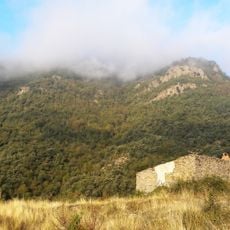
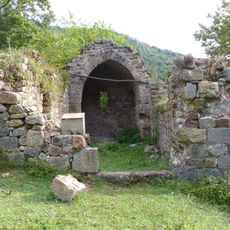
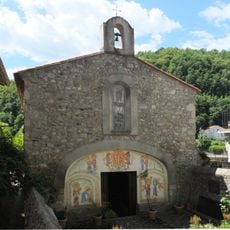
Cabrenç Towers, castle ruins in Serralongue, Pyrénées-Orientales, France
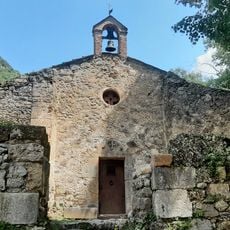
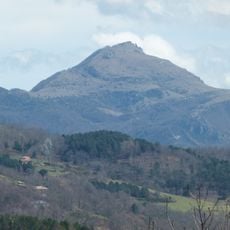
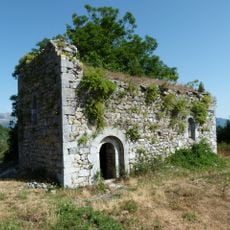
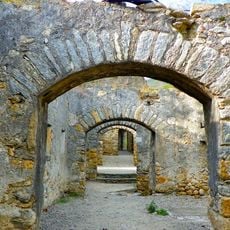
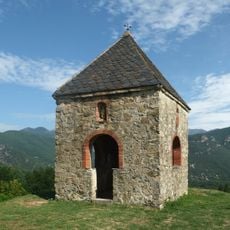
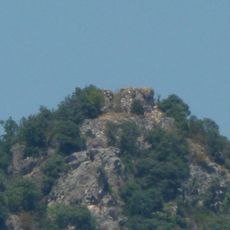
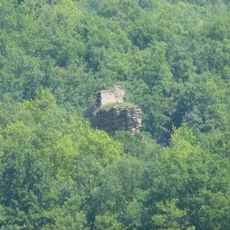
The Cabrenç Towers are castle ruins on a mountain ridge near Serralongue, consisting of three main structures from different periods. The castle site itself sits at nearly 1340 meters elevation and is marked by stone remains, while the signal towers were positioned at lower heights to support defense and message relay across the region.
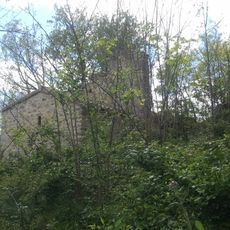
The castle dates from the 9th century, when it became the seat of the barony of Cabrenys; a 13th-century defence tower and a 14th-century hexagonal tower stand on the two northern peaks. The barons lived here until the 14th century, and the counts of Besalú's lieutenants in Vallespir resided here until the 10th century. In the late 17th century Vauban had the castle blown up in reprisal for the Angelets' revolt.
The name Cabrenç appears as Cabrens in 1141 and 1396, Cabrenç in 1385 and Cabrenys in 1673; the philologist Joan Coromines traced it to the Latin personal name Caprentius. The castle gave its name to the barony of Cabrenys, whose possessions reached the Alt Empordà town of Maçanet de Cabrenys. Verdaguer mentions the site in canto V of his poem Canigó.
The site is reached on foot from Lamanère along a waymarked trail of about two hours, climbing to the signal tower at 1,287 m; the middle tower stands at 1,320 m and the castle at 1,338 m. The path is steep and rocky, so wear sturdy shoes. The northern tower has been restored with a walkway, access stair and viewing platform at the top.
One tower was specially built to send smoke and fire signals that could be seen by other castles and outposts throughout the region. During the 2024 Olympic Games, 14 towers in the area were illuminated with modern lights, bringing this ancient site into the present moment.
The community of curious travelers
AroundUs brings together thousands of curated places, local tips, and hidden gems, enriched daily by 93,903 contributors worldwide.