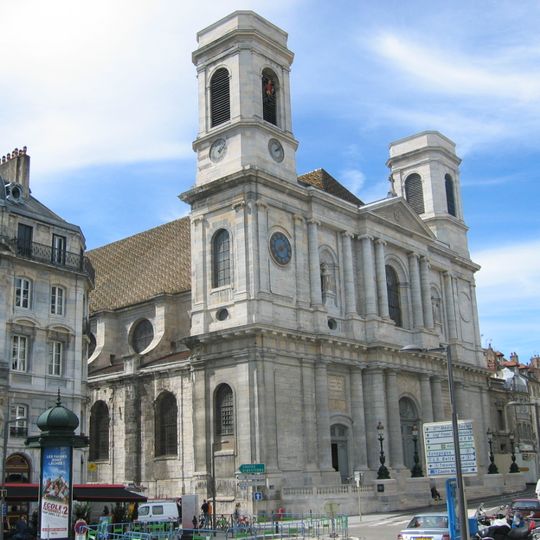
Église de la Madeleine, Neoclassical church in Battant district, Besançon, France
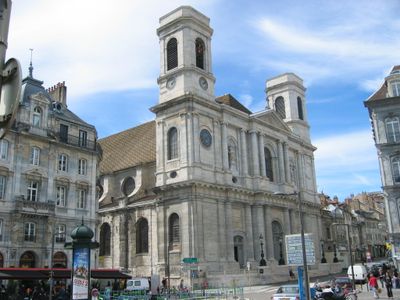
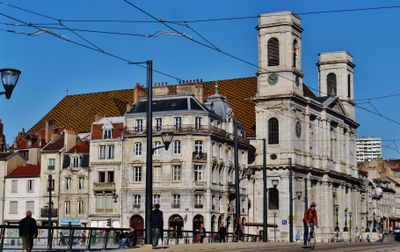
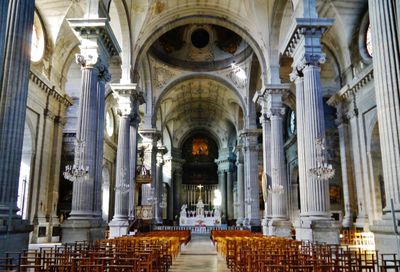
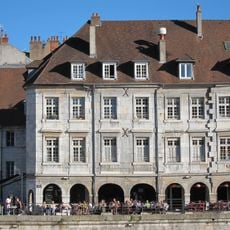
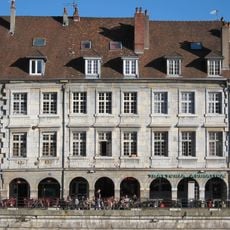
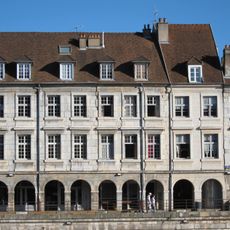
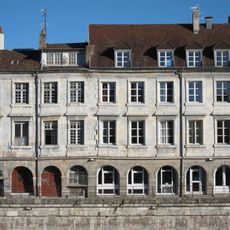
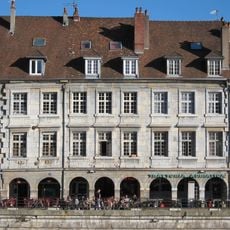
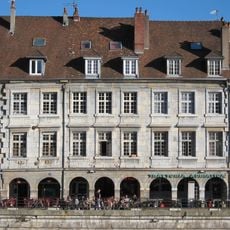
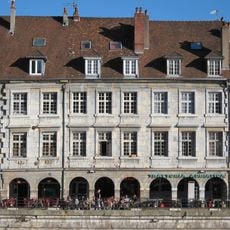
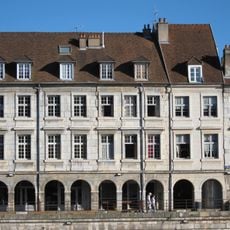
The Église de la Madeleine is an 18th-century hall church in the Battant district, built of light grey ashlar. Its classical facade has paired Doric and Ionic columns and two square towers of unequal height, the left one carrying a clock; the nave rises to a steep brown-tiled roof. Inside, a triple nave is divided by paired Ionic columns, with side aisles under groin vaults opening onto chapels.
A Gothic collegiate church founded in 1063 by Prince-Bishop Hugh I of Salins stood here until it threatened to collapse. On 26 May 1746 Archbishop Antoine-Pierre II de Grammont laid the first stone of the replacement, built to plans by Besançon architect Nicolas Nicole and finished in 1766. Two towers were added in 1828–1830, and the church was classified as a monument historique on 13 March 1930.
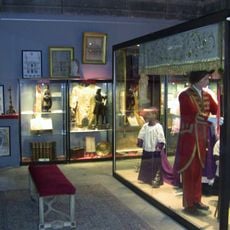
Locals call it simply "la Madeleine", like the Paris church of the same name. The building also holds a three-room museum on the Battant district, its winemaking past and its historical figures, with religious objects and documents from the city's Catholic parishes.
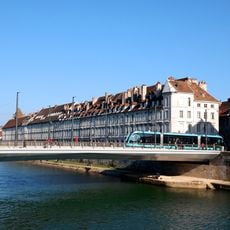
The church stands at the Battant end of the Pont Battant, at the exit from the Boucle, the historic centre. Inside, look for the meridian of Jean-Louis Bisot: a small opening in a stained-glass window casts a sunbeam onto fan-shaped hour lines engraved in the floor slabs, marked with Roman numerals. A three-room museum in the church covers the winemaking past of Battant.
Above the main door, an inscription from the First Book of Kings reads "Cor meum ibi cunctis diebus" (my heart will be there always), paired with an Eye of Providence symbol, since the facade was inspired by Solomon's Temple. Inside, a meridian by Jean-Louis Bisot (1702–1781) projects the sun through a small opening in a stained-glass window onto floor lines marked with Roman numerals.
The community of curious travelers
AroundUs brings together thousands of curated places, local tips, and hidden gems, enriched daily by 93,014 contributors worldwide.