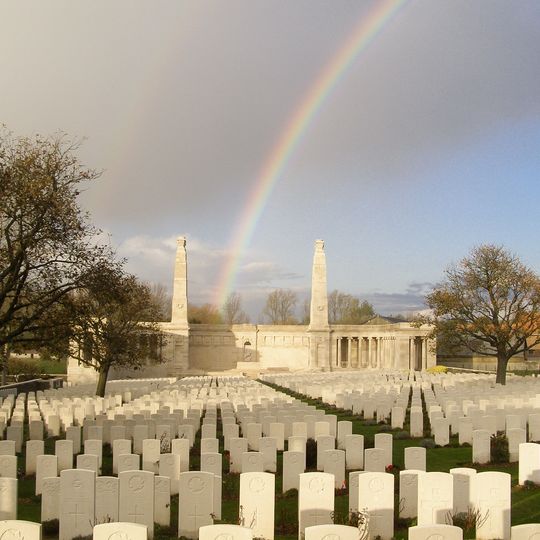
Vis-en-Artois British Cemetery, Haucourt, cemetery located in Pas-de-Calais, in France
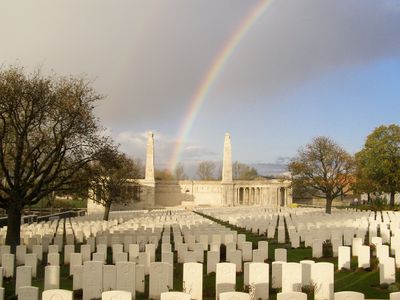
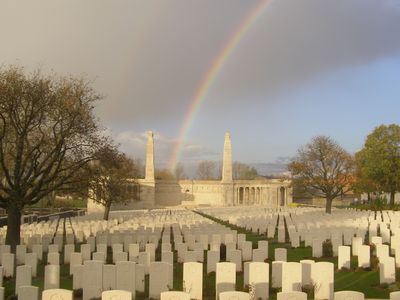
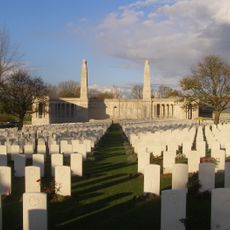
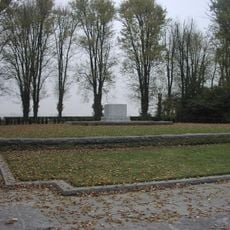
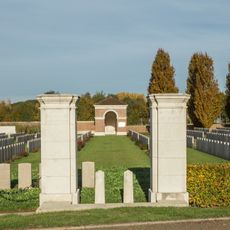
Vis-en-Artois British Cemetery is a war burial site in the village of Haucourt, France, maintained by the Commonwealth War Graves Commission. The grounds contain over 2,300 burials arranged in neat rows with uniform headstones, a central Cross of Sacrifice, and a panel memorial designed by sculptor Ernest Gillick that bears the names of nearly 9,800 soldiers with no known grave.
The cemetery was established in 1918 after Canadian forces liberated the village from German occupation in August of that year. Many of those buried here died during fighting between August 1918 and the war's end, while others were reinterred from smaller burial sites nearby after the conflict ceased.
The cemetery is named after the nearby village and serves as a place where visitors read inscriptions, learn names of the fallen, and leave flowers as tokens of respect. The site has become a focal point for remembrance, where people from different countries gather to honor those who fought in the area.
The cemetery is easily accessible and located near other historic sites in the region, with walking and cycling paths connecting to additional war memorials. Visitors can freely explore the grounds and should approach the site with respect, especially when reading names or visiting during remembrance ceremonies.
The memorial features a relief sculpture by Ernest Gillick depicting Saint George battling a dragon, an uncommon artistic element at a war cemetery. This artwork adds unexpected depth to the site and is often overlooked by visitors despite being one of its most distinctive features.
The community of curious travelers
AroundUs brings together thousands of curated places, local tips, and hidden gems, enriched daily by 91,358 contributors worldwide.