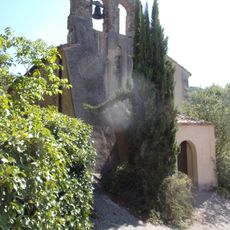
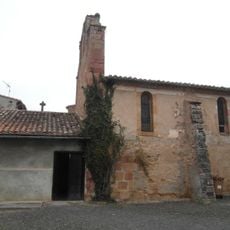
Castle of Rennes-le-Château, Medieval castle in Rennes-le-Château, France.
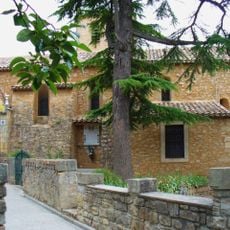
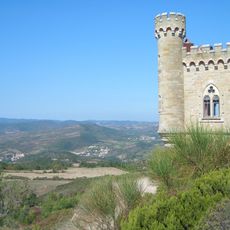
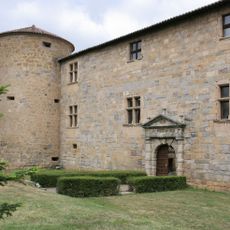
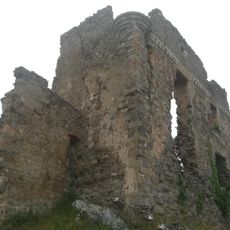
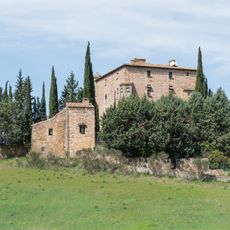
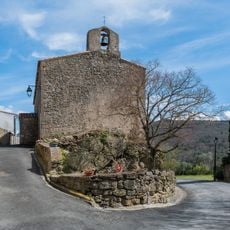
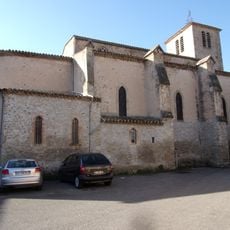
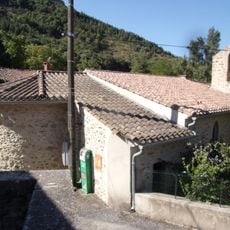
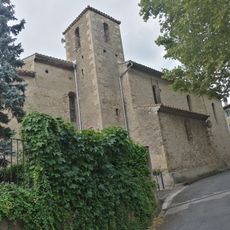
The Château des Hautpoul is a castle in Rennes-le-Château, in the Aude, built within the perimeter of an old oppidum near the church of Sainte-Marie-Madeleine. Reworked in the 16th century, it looks more residential than defensive, though gun ports remain. Its cylindrical stone tower has a shallow conical roof with a projecting rim, and the vaulted rooms of its basement date from the Visigothic period.
The castle stands within the perimeter of an ancient oppidum; its first stones date from the 13th century, though almost nothing of that era survives. One of the two castles of Rennes-le-Château was razed by Simon de Montfort during the Albigensian Crusade, and the stronghold passed from the Trencavel family to the Gilbert de Voisins, who repaired it. In 1361 a siege damaged the fortifications, and in 1376 Henri de Trastámara took the town and Pierre III de Voisins surrendered. Through Blanche de Marquetave's marriage to Pierre d'Hautpoul in 1422 the castle reached the Hautpoul family; it was renovated and enlarged in the 16th and 17th centuries, spared when Huguenots sacked the town in 1573, and sold after the bankruptcy of Marie-Anne Élisabeth d'Hautpoul in 1816.
The castle passed to the Hautpoul family through the marriage of Blanche de Marquetave to Pierre d'Hautpoul in 1422. The last lord of Rennes-le-Château was François d'Hautpoul, marquis de Blanchefort. In 1816 his daughter Marie-Anne Élisabeth d'Hautpoul went bankrupt, and the castle was sold to her servants; she lived there with two servants until her death on 20 May 1820.
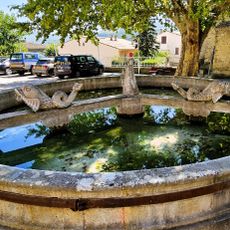
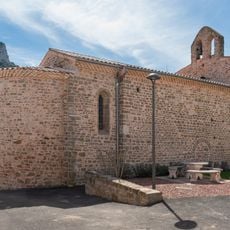
The castle is not open to the public. It stands inside the village next to the church of Sainte-Marie-Madeleine, so it is seen from the surrounding streets. Beneath the walls a cistern once supplied the village's water; behind a metal door a narrow vestibule leads to a staircase down to its floor.
Beneath the castle walls lies a cistern from which the village drew its water. Behind a metal door, a narrow vestibule leads to a staircase descending three metres to the old cistern floor; a two-metre-high tunnel runs north and stops after a few metres, while another heads south for 50 metres beneath the castle, possibly the site of the old castle well.
The community of curious travelers
AroundUs brings together thousands of curated places, local tips, and hidden gems, enriched daily by 93,412 contributors worldwide.