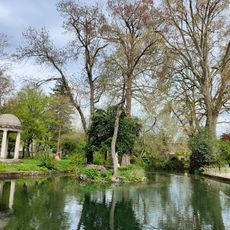
Muséum d'histoire naturelle de Dijon, Natural history museum in Dijon, France.
The Muséum d'histoire naturelle de Dijon is a natural history museum in Burgundy that spans three floors, displaying collections on regional geology, wildlife, and insects. The building's layout follows the structure of a former barracks with open arcades that shape the space between exhibition areas.
The pavilion of the Arquebuse was built around 1608 as the barracks of the arquebusiers, the city's harquebus militia, not in the 19th century. The naturalist Léonard Nodot founded the natural history museum there in 1836, installing its collections in the former barracks. The municipality later added the Hubert Curien Planetarium, opened on 9 September 2005, and the two buildings now form a science centre.
The museum occupies the pavillon de l'Arquebuse, a former barracks of the arquebusiers built around 1608; the name Arquebuse recalls the matchlock gun whose marksmen trained here. The permanent exhibition on biodiversity is housed in this pavilion, while the pavillon du Raines holds temporary exhibitions, the reserves and the laboratory. The site forms the Jardin de l'Arquebuse with the Hubert Curien Planetarium and the botanical garden of flavours and grape varieties.
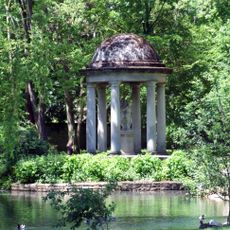
The museum occupies the former Arquebuse pavilion inside the Parc de l'Arquebuse, alongside the Hubert Curien Planetarium and the botanical garden; the three form the Jardin des Sciences. The entrance is reached through the park, not from a street front, so allow time to cross the grounds on foot.
Behind the museum sits a botanical garden designed specifically to support insects and other animals, featuring elements like insect hotels and beehives. This outdoor space gives visitors a chance to explore the concepts from the indoor exhibits in a living setting.
The community of curious travelers
AroundUs brings together thousands of curated places, local tips, and hidden gems, enriched daily by 93,098 contributors worldwide.