Gallo-Roman sites in Montbouy, Archaeological site near the Briare canal in Montbouy, France.
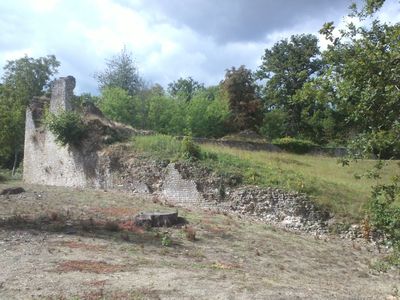
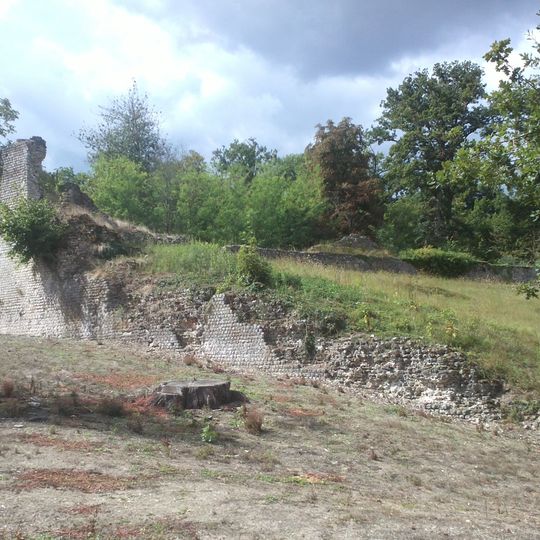
The Gallo-Roman sites in Montbouy are archaeological remains of an ancient settlement featuring thermal baths, an amphitheater, and aqueducts scattered across different locations. The ruins expose Roman masonry foundations and bath facility structures that reveal how this once-important community was organized.
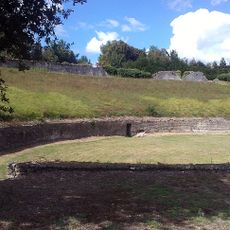
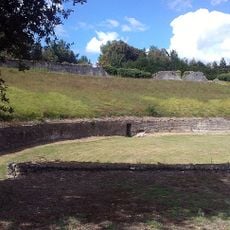
The Craon thermal complex and the Chenevière amphitheatre grew over the first two centuries AD on the territory of the Senones, at the border with the Carnutes. J.-B. Lollois studied the amphitheatre in 1836, and the sanctuary was uncovered later in the same century. The amphitheatre was listed as a monument historique in 1862.
The amphitheater design displays a combination of Roman theater and arena features, indicating the regional adaptation of Roman architecture.
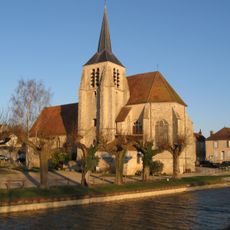
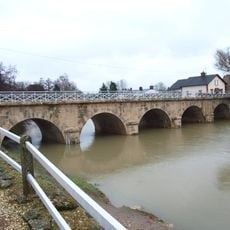
The remains lie about 1 km north of Montbouy on the left bank of the Loing, partly crossed by the Briare canal. The amphitheatre is set against the west slope of the hillside and faces east, 750 m from the spring sanctuary. When the canal water is low, a mosaic appears on the bank opposite lock marker 19, about 1 m below the full water line.
Nine hoards have been found on the site, supporting the picture of a busy crossing point. The field between Montbouy and the ruins is still called champ des médailles by local elders, because so many ancient coins were dug up there over the years.
The community of curious travelers
AroundUs brings together thousands of curated places, local tips, and hidden gems, enriched daily by 93,145 contributors worldwide.