Enceinte gallo-romaine de Tours, Roman defensive walls in Tours, France
The Gallo-Roman walls of Tours are the remains of a major fortified structure that once surrounded the city, with sections still visible today throughout the urban landscape. The structure incorporates an amphitheater in its southern section that served as a monumental gate, making it a distinctive feature of the defensive system.
Built in the first half of the 4th century, the castrum wall responded to insecurity in Gaul after barbarian incursions from 250. It reused stone from earlier buildings and rested on the amphitheatre, converted into a monumental gate. Between 364 and 388 Tours became capital of the Third Lyonnaise. In the 12th century and two centuries later, the wall served as the base for the eastern part of new enclosures.
The walls shaped Tours into a fortified hub that reflected the power of Rome in Gaul, and today they remain embedded in the city's streets and buildings. Walking through the old town, you can see these stones reused in medieval and modern structures, showing how the city rebuilt itself over centuries.
Several sections of the ancient walls remain visible and accessible to visitors, particularly in the old town and at multiple points around Tours. The site is protected as a historic monument, and exploring on foot helps you spot the different wall segments and understand how they fit into the modern city layout.
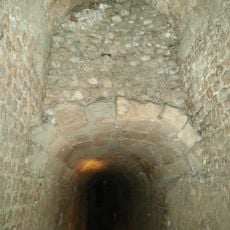
The wall's 1,245-metre circuit enclosed just nine hectares, and its northern side ran directly along the Loire. About fifteen towers reinforced it, and the amphitheatre was converted into a monumental gate on the south. Excavations at the château site between 1974 and 1978 revealed how the rampart was built.
The community of curious travelers
AroundUs brings together thousands of curated places, local tips, and hidden gems, enriched daily by 94,090 contributors worldwide.