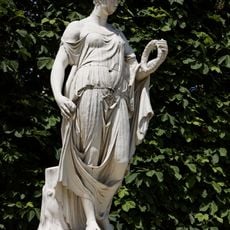
Venus Callipyge, Stone statue in Tuileries Garden, France
Venus Callipyge is a stone sculpture in the Tuileries Garden that depicts a female figure turning to look back over her shoulder. The work stands near the south basin, displaying the craftsmanship typical of 17th-century French royal sculpture.
François Barois carved this statue in marble between 1683 and 1686 for the royal court of Louis XIV. It was later moved and altered, and the marble figure now stands in the Tuileries Garden, where it has been since the garden's 17th-century layout.
The sculpture's name comes from Greek words meaning beautiful and buttocks, reflecting how French artists drew inspiration from classical antiquity. It represents the tastes of royal court patrons who valued references to ancient mythology in their collections.
The statue stands in the Tuileries Garden, in the 1st arrondissement, near the south basin; the garden is open daily and entry is free. Gravel paths and a few steps lead to the basin, and the nearest métro stops are Tuileries and Concorde. The garden closes in the evening, and closing hours vary by season.
The statue in the Tuileries is a stone copy, not the marble original, which is kept in the Louvre. It reproduces a Hellenistic type known through the Venus Callipyge, a Roman marble signed by Apollonios of Athens and held in Naples. Visitors often mistake the garden version for an antique.
The community of curious travelers
AroundUs brings together thousands of curated places, local tips, and hidden gems, enriched daily by 93,108 contributors worldwide.