Mont-Saint-Michel and its Bay, UNESCO World Heritage abbey and tidal island in Normandy, France
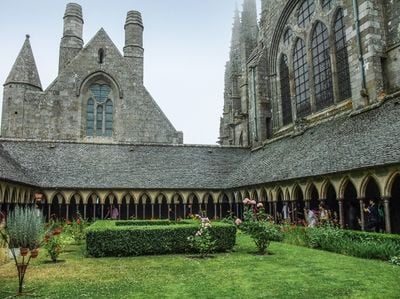
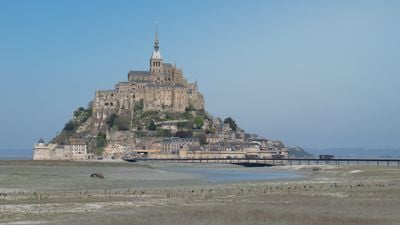
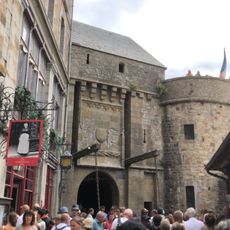
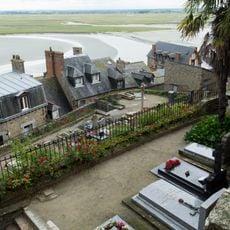
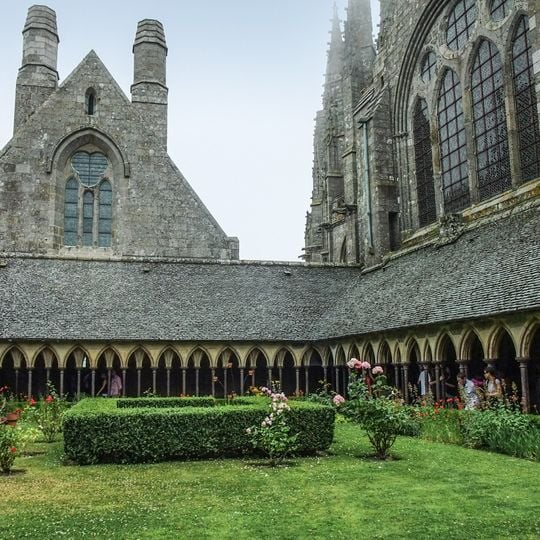
Mont-Saint-Michel and its Bay is a granite tidal island rising 78 metres from the Normandy bay, almost circular and about 900 metres around. The abbey church crowns the summit, with a Romanesque nave from the 11th and 12th centuries and a Flamboyant Gothic choir. Below, a village of narrow lanes and houses, some from the 15th century, climbs the slope, and a covered walkway with pointed arches runs along a courtyard garden.
The island, first called Mont-Tombe, became Mont-Saint-Michel in the 8th century when the Bishop of Avranches built a chapel to Saint Michael, which grew into one of France's most visited pilgrimage sites. In 966 Duke Richard I of Normandy founded a Benedictine abbey there. King Philip II burned part of it in 1203 and paid for the monastery known as La Merveille. It became a royal fortress in 1254, was dissolved in 1789 with seven monks left, and served as a prison until 1863.
The name comes from the Archangel Michael, to whom the Bishop of Avranches dedicated a chapel in the 8th century; the abbey later became one of France's most visited pilgrimage sites. A small monastic community still lives here today, and the former abbey is run by the National Centre for Monuments.
Visitors should check tide schedules, as the island becomes surrounded by water at high tide and accessibility changes throughout the day. Access is either by foot at low tide or over a causeway, depending on current water levels and available shuttle services.
The 2 km causeway built in 1879 stopped sediment from being carried out to sea, raising the sandbanks between the island and the coast and costing Mont-Saint-Michel its island character. After large-scale works finished in 2015, the causeway was replaced by a footbridge and the maritime setting was restored.
The community of curious travelers
AroundUs brings together thousands of curated places, local tips, and hidden gems, enriched daily by 93,428 contributors worldwide.