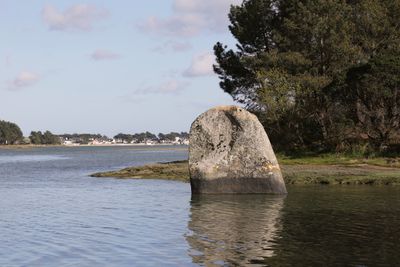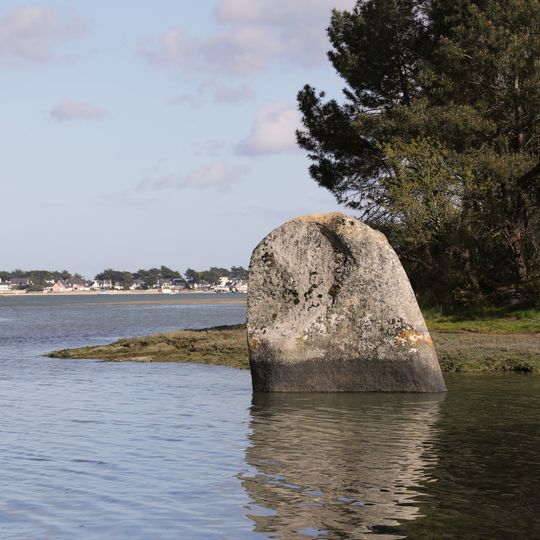
Penglaouic menhir, Granite menhir in Loctudy, France.
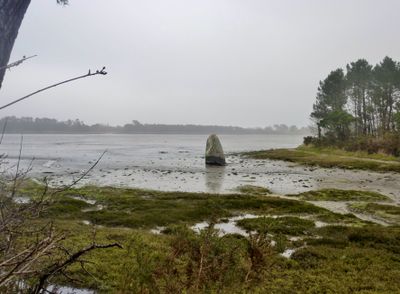
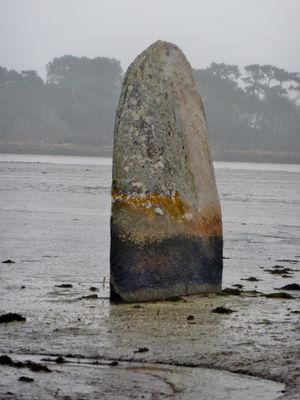
The Penglaouic menhir is a granite monolith standing on the coast between Loctudy and Pont-l'Abbé that rises about 3 meters in height. The single stone rises from rocky ground and is surrounded by seawater at its base.
This megalith was erected about 5000 years ago roughly 2 kilometers inland and originally marked the source of a small stream. Over the course of millennia, coastal erosion and natural shifts transformed the landscape, leaving the monument now near the water.
The name comes from old land registries and means simply 'long stone' in Breton language. Today it stands as a visible link to the prehistoric people who lived in this area.
The monument becomes partially submerged during high tide, so low tide is the best time to visit and see it fully exposed. The site is directly accessible from the shoreline, so pay attention to tidal times and weather conditions.
Originally this stone was an inland marker pointing to a water source, but natural coastal erosion transformed it into a maritime landmark surrounded by seawater. This shift shows how powerful natural forces are over thousands of years in reshaping the land.
The community of curious travelers
AroundUs brings together thousands of curated places, local tips, and hidden gems, enriched daily by 92,011 contributors worldwide.