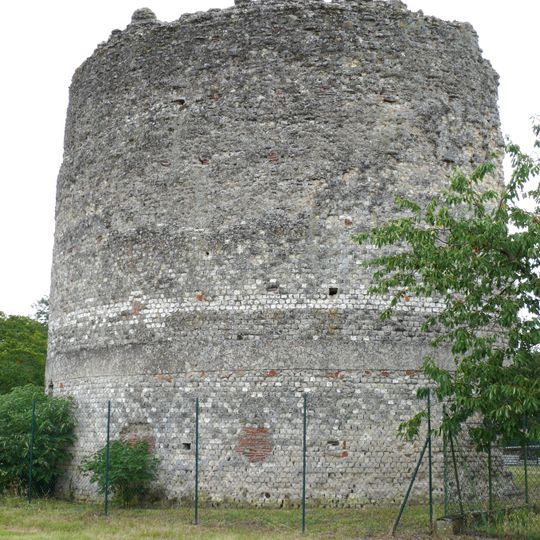
Excisum - Eysses, Archaeological site in Villeneuve-sur-Lot, France.
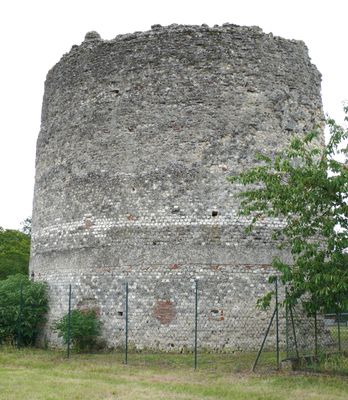
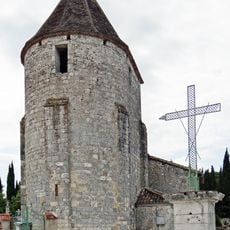
Excisum is a Gallo-Roman site 1.5 km from Villeneuve-sur-Lot. Its visible remnant is a circular tower built in small stonework, with walls 1.1 m thick, an interior diameter of about 11 m and a surviving height of about 10 m. Excavations also revealed the apse of a curia and shop galleries around a courtyard with a temple to Mars.
The site was occupied from the 2nd century BC on the territory of the Nitiobroges, at a crossing of protohistoric roads. The Roman city of Excisum was built between the reigns of Tiberius and Hadrian at the intersection of the Agen–Périgueux and Cahors–Bordeaux routes. It declined progressively from the 3rd century, probably after the first Germanic invasions.
According to J.-R. Marboutin, the name Excisum comes from ad excisum fluvium, "at the cut of the river", not from the road crossing. The excavated sanctuary held a temple to Mars, and the curia's apse faced galleries of shops around a courtyard. Finds from the digs are shown in the museum in the old presbytery of Saint-Sernin.
The museum with archaeological findings is located in a former presbytery roughly 1.5 kilometers from the city center and is accessible on foot or by car. Plan to spend time both viewing the displays and exploring the excavation site itself.
Archaeologists uncovered specialized bronze-working workshops during the 1971 excavations, revealing that this place was an important manufacturing center. These discoveries offer rare insights into the industrial operations of the Roman Empire during that era.
The community of curious travelers
AroundUs brings together thousands of curated places, local tips, and hidden gems, enriched daily by 93,775 contributors worldwide.