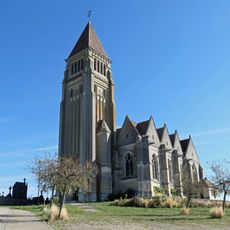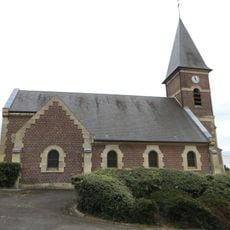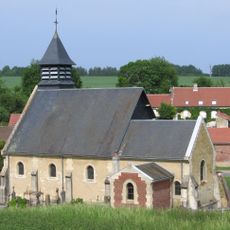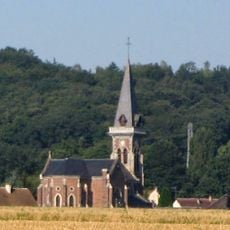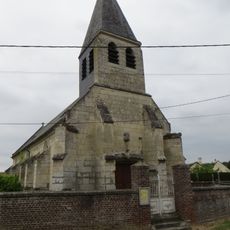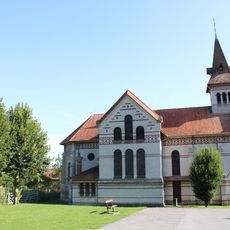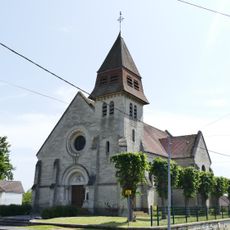
Thiescourt National Cemetery, National necropolis in Thiescourt, France
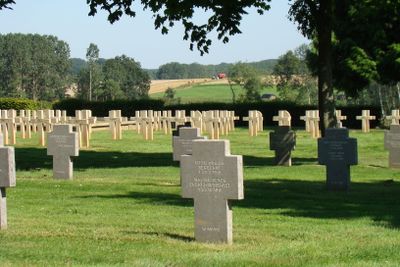
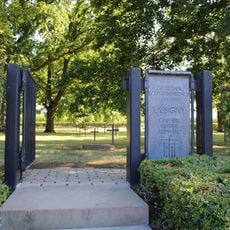
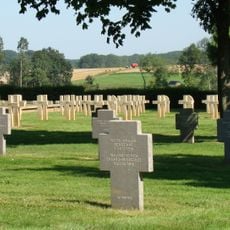
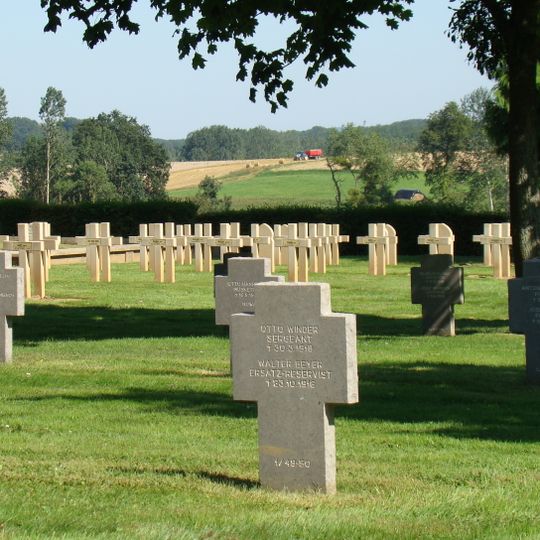
Thiescourt National Cemetery is a French war cemetery of 1,266 bodies, 547 of them in two ossuaries, laid out in rows around a central alley that forms its axis of symmetry. Beside it, with no dividing fence, the German military cemetery holds 1,095 bodies, 707 in individual graves and 388 in two ossuaries. Its stone steles each bear the names of four soldiers, two on each face, and about twenty trees grow at random among them.
The French national necropolis and the German military cemetery were established in 1920 on ground that held a Franco-German mass grave of about 50 bodies. The French necropolis gathered remains from 16 temporary cemeteries, including L'Écouvillon, Mareuil-la-Motte, Saint-Claude, Roye-sur-Matz and Plessis-de-Roye. German soldiers buried here were killed in 1918, notably during the Battle of Noyon in June and the fighting in the Matz sector in August. The site was listed as a monument historique on 14 September 2016.
The German cemetery follows the design of Munich architect Robert Tischler, built on mourning and universal life: about twenty trees stand at random and vegetation grows freely, echoing Germanic mythology's bond between man and nature. Stone steles carry four names each, two per face, and Jewish soldiers lie under rectangular steles with rounded tops.
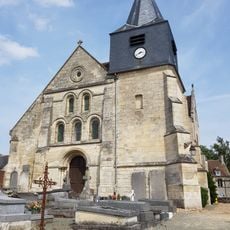
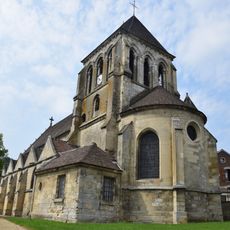
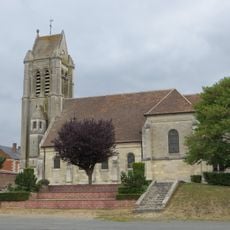
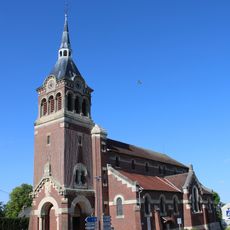
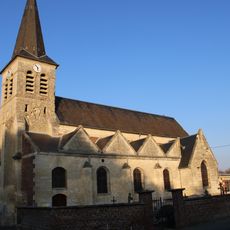
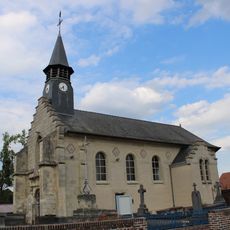
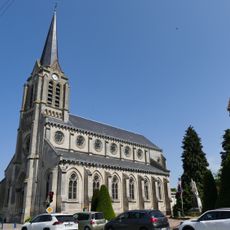
The two cemeteries lie at the village exit, next to the church and adjoining the civil cemetery, with no fence between the French and German sections. The French necropolis is organised in rows around a central path that forms its axis of symmetry; the German graves are grouped under stone steles, each naming four soldiers. Look for the Jewish soldiers' steles, which have a rounded top.
The two cemeteries occupy ground that held a Franco-German mass grave of about 50 bodies, found when the site was laid out in 1920; the decision was then taken to keep a shared burial place there. The German section holds 1,095 bodies, 388 of them in two ossuaries, of which only 90 could be identified. Jewish soldiers lie under rectangular steles with rounded tops, unlike the stone steles naming four soldiers each.
The community of curious travelers
AroundUs brings together thousands of curated places, local tips, and hidden gems, enriched daily by 94,314 contributors worldwide.